The best wire strippers for electronics remove insulation cleanly without nicking delicate conductors, crushing small terminals, or making repetitive repair work unnecessarily tiring.
This roundup compares 10 options across precision gauges, stripping styles, ergonomics, and everyday versatility so you can choose the right tool for your bench.
Best 10 Wire Strippers for Electronics Picks for 2026
Best Heavy-Duty Pick
Klein Tools 11057 Wire Cutter/Stripper
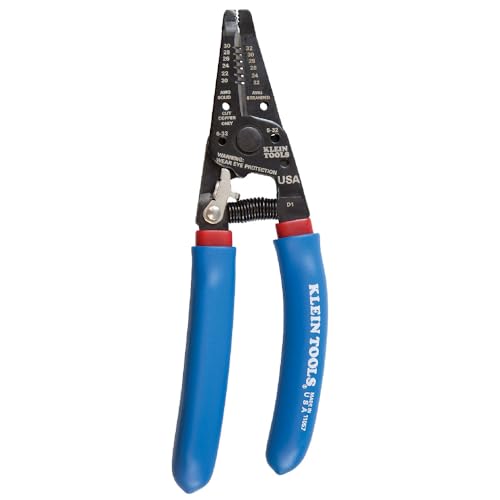
- Strips 20-30 AWG solid and 22-32 AWG stranded wire
- Adds cutting, looping, bending, and screw-shearing functions
- Made in the USA with spring-assisted opening
Best For: Routine electronics and electrical repairs requiring a durable multitool
Best Ergonomic Option
iFixit Mandible Wire Strippers

- Covers 30-10 AWG wires
- Spring-loaded handle resets automatically
- Locking latch supports convenient storage
Best For: Broad-gauge electronics repair with reduced hand fatigue
Best for Micro-Wire Precision
ENGINEER PA-14 Precision Wire Stripper

- Handles stranded AWG 34-22 and solid AWG 32-20
- Sharp jaws target clean, damage-free stripping
- Spring-loaded with soft, oil-resistant grips
Best For: Fine electronics work with micro-thin conductors
Best Value Pick
DOWELL 22-30 AWG Wire Stripper

- Strips 22-30 AWG wire
- Cuts copper and fine iron wire
- Includes a safety lock and ergonomic TPE handle
Best For: Budget-minded DIY electronics repairs and routine wire preparation
Classic Precision Pick
Klein Tools 11055EP Wire Stripper

- Strips 10–18 AWG solid and 12–20 AWG stranded wire
- Adds cutting, looping, bending, and screw shearing
- USA-made with precision-ground stripping holes
Best For: Precise manual stripping of common copper wire sizes
Automatic Versatility Pick
haisstronica 3-in-1 Self-Adjusting Stripper
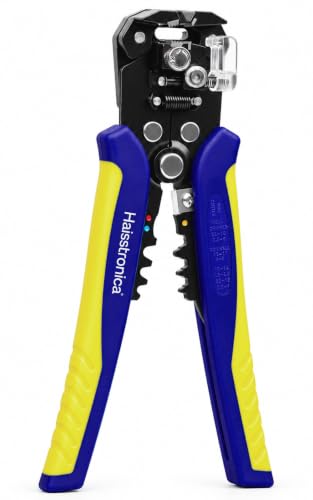
- Self-adjusts across an AWG 24–10 range
- Combines stripping, cutting, and crimping
- Alloy steel blades and ergonomic rubber handles
Best For: Mixed-size electronics repair and DIY wiring tasks
Heavy-Duty Multi-Function Pick
WGGE WG-015 Wire Stripper and Crimper

- Strips 10–22 AWG solid and stranded copper wire
- Crimps insulated and non-insulated terminals
- High-carbon alloy steel with a 24-month warranty
Best For: Copper-wire projects requiring stripping and crimping
Ultra-Fine Precision Pick
Jonard ST-450 Adjustable Stripper

- Strips 26-36 AWG wire
- Adjustable 0.039-2.0-inch stop
- Compact 1-ounce design
Best For: Fine-gauge electronic wiring and repeatable strip lengths
Angled Electronics Workhorse

- Strips 10-20 AWG wire
- 22.5-degree angled jaws
- Spring-loaded high-carbon steel tool
Best For: Circuit-board pin cutting and medium-gauge wire work
Trusted Stranded-Wire Choice

- Strips 16-26 AWG stranded wire
- Narrow nose for confined spaces
- Made in the USA with spring action
Best For: Professional stranded-wire stripping and cutting
Best Heavy-Duty Pick – Klein Tools 11057 Wire Cutter/Stripper
For shoppers comparing wire strippers for electronics, the Klein Tools 11057 is a sturdy option for common solid and stranded wire sizes. It strips, cuts, loops, and bends wire, while its serrated nose and screw-shearing features add practical versatility for electrical repairs and installations.
Best For: Electronics and electrical work involving 20-30 AWG solid or 22-32 AWG stranded wire.
Pros:
- Handles a useful range of solid and stranded wire gauges.
- Precision-ground stripping holes help produce consistent results.
- Combines stripping, cutting, looping, bending, and screw shearing.
- Made in the USA with a coil spring for quick self-opening action.
Cons:
- Its specified gauge range is narrower than some multipurpose models.
- At 5.1 ounces, it is heavier than the lighter electronics-focused options here.
The 11057 makes sense when you want one durable hand tool for wire preparation and related electrical tasks. Easy-to-read markings and an ergonomic grip support routine use, while the heavy-duty construction favors durability over minimal size.
Best Ergonomic Option – iFixit Mandible Wire Strippers
The iFixit Mandible is a practical choice among wire strippers for electronics, especially when repeated work makes hand comfort important. Its spring-loaded handle resets after each use, and the tool covers 30-10 AWG wires for varied repair jobs.
Best For: Electronics repair users who want broad gauge coverage, automatic opening, and easy storage.
Pros:
- Supports a broad 30-10 AWG wire range.
- Spring-loaded operation can reduce hand strain during repeated stripping.
- Designed to remove insulation without harming the wire beneath.
- Locking latch simplifies storage and transport.
Cons:
- The notes do not specify separate solid- and stranded-wire ranges.
- Its plastic, rubber, nylon, and metal construction may appeal less to buyers seeking an all-metal tool.
Choose the Mandible if versatility and comfortable handling matter more than specialized micro-wire performance. Its lifetime guarantee and compact 3.2-ounce weight further suit electronics repair kits that travel between projects.
Best for Micro-Wire Precision – ENGINEER PA-14 Precision Wire Stripper
When delicate conductors are the priority, the ENGINEER PA-14 stands out among wire strippers for electronics. Its sharp high-carbon steel jaws are designed for micro-thin wire, with separate stated ranges for stranded and solid conductors and a focus on clean insulation removal.
Best For: Fine electronics and repair work involving micro-thin stranded or solid wire.
Pros:
- Strips stranded AWG 34-22 and solid AWG 32-20 wire.
- Designed to avoid deformation and damage to the copper core.
- Sharp jaws provide a clean edge to the insulation strip.
- Spring-loaded design, storage latch, and soft oil-resistant grips improve handling.
Cons:
- Its specialized gauge range is not intended for larger wire.
- At about 134-151 g in the supplied details, it is not the lightest option.
The PA-14 is the strongest match for precision-focused buyers who regularly handle very small conductors. Its clearly defined wire ranges and high-carbon steel jaws make it more specialized than a general-purpose stripper, but that focus can help protect delicate cores.
Best Value Pick – DOWELL 22-30 AWG Wire Stripper
The DOWELL wire stripper is a straightforward, budget-conscious option for shoppers seeking wire strippers for electronics and repair tasks. It covers 22-30 AWG wire, cuts copper and fine iron wire, and includes a safety lock for storage.
Best For: DIY users and electronics repair tasks needing basic stripping and cutting at a reasonable price.
Pros:
- Strips 22-30 AWG wires and provides cutting functionality.
- Suitable for copper and fine iron wire according to the supplied notes.
- Safety lock helps protect the tool when it is not in use.
- Ergonomic TPE handle and stainless-steel construction support regular use.
Cons:
- Its 22-30 AWG range is less suitable for very fine or larger wires.
- The supplied notes provide fewer specialized precision features than the PA-14.
The DOWELL is a sensible entry-level pick when you need essential stripping and cutting without paying for a highly specialized tool. Its focused gauge range and safety lock make it convenient for routine electronic engineering, repair, and DIY projects.
Classic Precision Pick – Klein Tools 11055EP Wire Stripper
For electronics work involving common solid and stranded copper conductors, the Klein Tools 11055EP is a straightforward choice among wire strippers for electronics. Its precision-ground stripping holes cover several frequently used wire sizes, while the serrated nose supports bending, shaping, pulling, and looping.
Best For: Electronics technicians and DIY users who want a traditional, USA-made stripper for accurately preparing solid and stranded copper wire.
Pros:
- Strips 10–18 AWG solid and 12–20 AWG stranded wire.
- Combines stripping, cutting, looping, and screw shearing in one tool.
- Precision-ground holes and double-dipped ergonomic grips support controlled work.
- Made in the USA with a one-year manufacturer warranty.
Cons:
- Its fixed stripping holes are less versatile than a self-adjusting design.
- Designed for copper wire and a relatively specific AWG range.
This is a dependable pick when precision and familiar manual operation matter more than automatic adjustment. The dedicated gauge markings and strong nose make it particularly useful for repeatable bench and wiring tasks.
Automatic Versatility Pick – haisstronica 3-in-1 Self-Adjusting Stripper
The haisstronica 3-in-1 is a flexible option for wire strippers for electronics when different wire sizes and multiple tasks are part of the job. Its self-adjusting design handles stripping across the stated AWG range, and the tool also provides cutting and crimping functions.
Best For: Electronics repairs, technicians, and home DIY projects that benefit from self-adjusting stripping and an all-in-one tool.
Pros:
- Self-adjusting mechanism covers wires from AWG 24–10 according to the product title and specifications.
- Combines wire stripping, cutting, and crimping.
- Heat-treated alloy steel blades are polished and black-oxidized for durability.
- Rubber ergonomic handles support comfortable operation.
Cons:
- The supplied notes describe broad compatibility but do not specify crimp-terminal sizes.
- Self-adjusting tools can offer less direct gauge-by-gauge control than fixed precision holes.
Choose this model when convenience and range are priorities. Its combination of automatic adjustment and multiple functions can reduce tool changes during electronics repair and general wiring work.
Heavy-Duty Multi-Function Pick – WGGE WG-015 Wire Stripper and Crimper
The 8-inch WGGE WG-015 is suited to users who want wire strippers for electronics with added crimping capability. It strips 10–22 AWG solid and stranded copper wire, includes cutting and looping functions, and uses a curved non-slip grip for more controlled repetitive work.
Best For: Professionals and DIY users handling common copper wire sizes who also need to crimp insulated and non-insulated terminals.
Pros:
- Strips 10–22 AWG stranded and solid copper wire.
- Crimps both insulated and non-insulated terminals.
- High-carbon alloy steel construction is designed for durability.
- Ergonomic rubber handle and 24-month warranty add practical value.
Cons:
- Cutting is intended for stranded copper wire only.
- Not suitable for solid copper, steel, iron, or other hard metal wires when cutting.
- At 8 inches, it may feel larger than a compact electronics-focused stripper.
The WG-015 makes sense for projects that combine wire preparation and terminal crimping. Its broad stated stripping range is useful, but users should follow the cutting limitation and reserve that function for stranded copper wire.
Ultra-Fine Precision Pick – Jonard ST-450 Adjustable Stripper
For delicate wiring jobs, the Jonard Tools ST-450 is a focused choice among wire strippers for electronics. It handles very fine 26-36 AWG wires and includes an adjustable stop for repeatable stripping lengths from 0.039 to 2.0 inches.
Best For: Precision work on fine-gauge electronic wiring where controlled strip lengths matter.
Pros:
- Strips 26-36 AWG wire for fine electronics work.
- Adjustable stop supports consistent strip lengths from 0.039 to 2.0 inches.
- Compact, lightweight 1-ounce design with a hardened steel blade.
Cons:
- Its 26-36 AWG range is narrower than tools designed for heavier wire.
- The compact design is specialized rather than an all-purpose stripper.
The ST-450 stands out when fine-gauge accuracy and repeatability are more important than broad wire coverage. Its small ABS body and ergonomic grip also make it easy to keep in a precision electronics toolkit.
Angled Electronics Workhorse – WGGE Precision Flush Cutter
The WGGE Precision Flush Wire Cutter and Stripper combines wire preparation and cutting in one six-inch tool. For shoppers comparing wire strippers for electronics, its 10-20 AWG stripping range, angled jaws, and spring-loaded handle suit practical bench and confined-space work.
Best For: Electronics tasks that require stripping 10-20 AWG wire and trimming component pins in tight areas.
Pros:
- Strips 10-20 AWG wires and cuts copper, aluminum, sheathed-core wires, cables, and insulated terminals.
- 22.5-degree angled jaws help reach confined spaces and cut electronic component pins.
- High-carbon steel construction, ergonomic rubber handle, and spring-loaded action support comfortable use.
Cons:
- Its 10-20 AWG range does not cover the finest electronics wire.
- At six inches, it is less compact than a dedicated precision stripper.
This is a versatile option for users who want stripping and flush-cutting functions in one tool. The angled jaws and spring return make it particularly practical for repeated cuts around circuit boards and other restricted work areas.
Trusted Stranded-Wire Choice – Klein Tools 11046 Stripper
The Klein Tools 11046 is a compact stripper and cutter for 16-26 AWG stranded wire. Its narrow nose and clearly marked, precision-ground stripping holes make it a practical option for professionals choosing wire strippers for electronics and other confined-space work.
Best For: Professional users handling 16-26 AWG stranded wire who want a durable, straightforward tool.
Pros:
- Strips and cuts 16-26 AWG stranded wire.
- Narrow nose helps access confined spaces.
- Self-opening spring action and gauge markings on both sides support efficient use.
- Made in the USA from hardened alloy steel.
Cons:
- Designed specifically for stranded wire rather than a broad range of wire types.
- Its 16-26 AWG range may not suit heavier-gauge wiring.
The 11046 favors dependable everyday operation over extra features. Its compact profile, spring-loaded action, and two-sided gauge markings make it a strong fit for repetitive stripping tasks where access and readability matter.
How We Picked the Best Wire Strippers for Electronics
We focused on tools suited to electronics repair, prototyping, hobby projects, and low-voltage wiring rather than heavy construction work alone. The lineup includes fixed-gauge, adjustable, self-adjusting, and compact precision strippers to cover different wire sizes and working styles.
We also considered the stated AWG range, compatibility with solid and stranded copper wire, cutting and crimping functions, jaw design, handle comfort, size, and whether a tool favors maximum precision or broader general-purpose use. Always verify the manufacturer’s specifications before working at the edge of a tool’s rated range.
Quick Comparison
| Best For | Recommended Style | What to Prioritize |
|---|---|---|
| Micro-thin electronics wire | Precision stripper | Narrow, accurate AWG range |
| General bench repairs | Fixed-gauge stripper | Clean repeatability and comfortable handles |
| Mixed wire sizes | Self-adjusting stripper | Broad range and easy setup |
| Portable repair kits | Compact stripper | Small profile and useful cutter |
| Occasional DIY jobs | Multi-function tool | Stripping, cutting, and crimping capability |
Key Buying Factors for Wire Strippers for Electronics
AWG Range and Wire Type
Match the stripper’s rated gauge range to the wire you actually use. Electronics projects often involve small conductors, so a tool designed primarily for thick building wire may remove insulation poorly or damage the conductor. Check whether the rating applies to solid wire, stranded wire, or both.
Precision and Insulation Control
Fixed-gauge slots generally offer predictable results when you repeatedly work with the same wire size. Adjustable tools provide more flexibility but require careful setup. Self-adjusting models are convenient for mixed jobs, though they may not provide the same tactile control as a dedicated precision tool on extremely small wire.
Comfort, Access, and Durability
Look for spring-assisted opening, non-slip handles, a manageable nose length, and a locking feature if the tool will travel in a kit. A compact head helps in crowded enclosures, while robust construction matters for frequent daily use. Built-in cutters are useful, but avoid using precision stripping jaws as a substitute for a dedicated flush cutter when trimming sensitive leads.
Who Should Buy Which Wire Strippers for Electronics?
Choose a narrow-range precision tool if you repair circuit boards, sensors, small connectors, or other assemblies using micro-thin wire. A fixed-gauge Klein Tools or DOWELL-style stripper is a practical choice for repeatable bench work when your wire sizes are predictable. For broader household, maker, and automotive-electronics tasks, a self-adjusting or multi-function model can reduce tool changes.
Buy a compact precision stripper if portability and access matter most. Choose a heavier professional-style stripper if you also cut, crimp, or handle larger conductors regularly. Whichever model you select, test it on scrap wire first and confirm that the blades remove insulation cleanly without scoring the copper.