The right brake controller helps your tow vehicle and travel trailer slow down together, improving stability, control, and confidence on changing roads. The best choice depends on your trailer’s brake setup, towing frequency, installation preferences, and budget.
We compared 10 trailer brake controllers across proportional and time-delay designs, axle compatibility, adjustment features, installation methods, and monitoring options to help you find a practical match for your RV setup.
Best 10 Trailer Brake Controllers for Travel Trailers Picks for 2026
Best Portable Pick
CURT Echo Bluetooth Controller

- Portable 7-way design needs no under-dash wiring
- Proportional braking for 1–2 axles
- App control with programmed-settings backup
Best For: Shared tow vehicles and simple installations
Best Multi-Axle Value
Lrichy Proportional Brake Controller
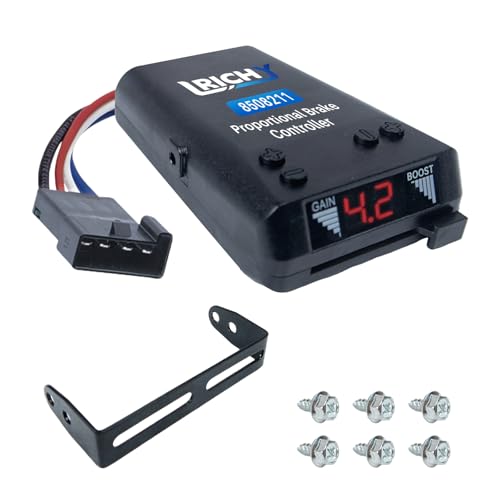
- Supports 1–4 axles and 2–8 brakes
- Sensor-based proportional braking
- LED diagnostics and manual override
Best For: Larger travel trailers and varied brake configurations
Best Advanced Control
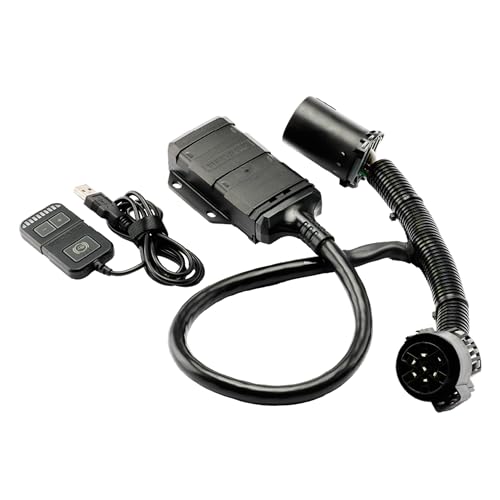
- Dual road and off-road braking modes
- Six-axis sensing with sway assistance
- Remote, app, CarPlay, and Android Auto control
Best For: Long-haul towing and varied road conditions
Best Display and Diagnostics
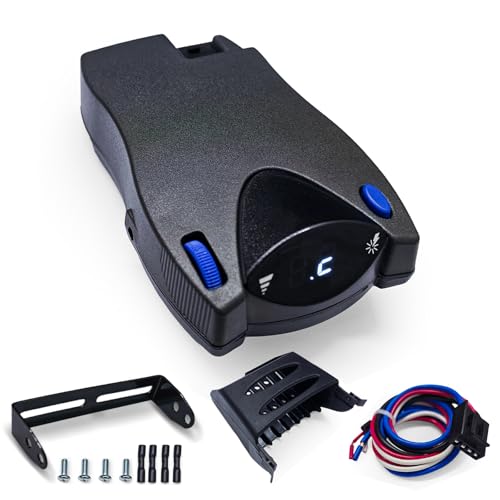
- Supports 1–4 axles and 2–8 brakes
- Bright display with voltage and alert information
- Boost, reverse braking, and continuous diagnostics
Best For: Owners prioritizing visible settings and troubleshooting
Practical Time-Delay Pick

- Time-delay control for 1–4 axles
- LED settings and fault display
- Includes overload and short-circuit protection
Best For: Light-duty and occasional travel-trailer towing
Responsive Proportional Choice
Timilge BC06 Proportional Controller

- Matches braking intensity to tow-vehicle deceleration
- Supports 1–4 axles and 2–8 brakes
- Digital LED voltage display
Best For: Travel-trailer drivers seeking proportional braking
Low-Profile Adjustable Pick

- Slim design with dash-clearance bracket
- Adjustable power and ramp time
- Handles 1–3 axles and 2–6 brakes
Best For: Compact dashboard installations and smaller trailer setups
Best All-Around Control
Briidea Proportional Brake Controller

- Motion-sensing proportional braking
- Boost mode and LED status display
- Supports 1–4 braked axles
Best For: Travel-trailer owners wanting adjustable, smooth braking
Best Budget-Friendly Simplicity
8507111 Time-Delay Brake Controller

- Gradual time-delay braking
- LED output and status display
- Supports 1–4 axle trailers
Best For: Straightforward daily and highway towing
Best Wireless Setup
POBWAV 51180 Bluetooth Controller

- Bluetooth app-based adjustment
- Plug-in 7-way installation
- Portable proportional braking
Best For: Owners wanting portable, no-drill trailer-brake control
Best Portable Pick – CURT Echo Bluetooth Controller
For travel trailers shared between multiple tow vehicles, the CURT Echo is one of the most convenient trailer brake controllers for travel trailers. It plugs between compatible 7-way connectors, avoids under-dash wiring, and uses a smartphone app for setup and adjustments.
Best For: RV owners who want a portable, tool-free controller for trailers with 1–2 axles and 2–4 brakes.
Pros:
- Transfers easily between compatible vehicles without under-dash wiring.
- Uses proportional braking through a triple-axis accelerometer.
- Continues using programmed settings if Bluetooth communication is lost.
Cons:
- Requires an active, fused 12-volt circuit through the vehicle’s 7-way connector.
- App-based control and notifications require Bluetooth communication.
- Smartphone pairing and setup are required before use.
The Echo is especially practical for families or occasional towers who need one controller for more than one vehicle. Confirm 7-way power compatibility and app requirements before purchasing.
Best Multi-Axle Value – Lrichy Proportional Brake Controller
This Lrichy unit is a practical choice among trailer brake controllers for travel trailers when you need support for up to four axles. Its internal sensors provide proportional braking, while the LED display shows settings, diagnostics, and alerts.
Best For: Travel-trailer owners needing proportional control for 2, 4, 6, or 8 trailer brakes.
Pros:
- Supports 1–4 axle trailers with 2–8 brakes.
- Adjusts braking based on tow-vehicle braking intensity and speed.
- Includes mounting brackets, screws, and a plug-and-play connection port.
- Offers manual braking through the lever and includes a two-year warranty.
Cons:
- Vehicle-specific plug-and-play harness is not included.
- Installation requires mounting and vehicle wiring.
With broad axle coverage and a readable diagnostic display, this controller suits larger or changing trailer setups. Verify the required harness for your tow vehicle before ordering.
Best Advanced Control – REDARC Tow-Pro Link
The REDARC Tow-Pro Link combines proportional road braking with a manual off-road mode, making it a versatile option among trailer brake controllers for travel trailers. Its six-axis sensor, remote, app connectivity, and sway-control feature add flexibility for long-distance and challenging towing.
Best For: Truck and SUV owners who want dual braking modes, app or remote control, and trailer sway assistance.
Pros:
- Installs in about 15 minutes on most vehicles with a 7-pin connection.
- Provides proportional Everyday Mode and user-controlled Manual Off-Road Mode.
- Supports control through a pre-paired remote, app, Apple CarPlay, or Android Auto.
- SwayStop Plus uses six-axis sensing to help correct trailer sway.
Cons:
- Compatibility is described for most trucks and SUVs rather than every vehicle.
- Advanced app and vehicle-display features may require additional setup.
This is the most feature-rich option in the group for owners who tow in varied conditions. Its dual modes and sway-control function can be valuable for extended RV trips, provided the vehicle has a compatible 7-pin connection.
Best Display and Diagnostics – Lrichy 90885 Controller
The Lrichy 90885 offers proportional braking for up to four axles, plus a bright display and continuous diagnostics. For travel-trailer owners comparing trailer brake controllers for travel trailers, its boost settings, reverse operation, and removable mounting design provide useful day-to-day flexibility.
Best For: Drivers who want visible braking information, adjustable boost, and support for 2–8 electric trailer brakes.
Pros:
- Supports trailers with 1–4 axles and 2, 4, 6, or 8 brakes.
- Provides proportional braking in reverse and can be disabled when needed.
- Displays settings, trailer voltage, and system alerts in real time.
- Offers continuous diagnostics, a removable connector, and a two-year warranty.
Cons:
- Vehicle-specific plug-and-play harness is not included.
- Requires installation rather than a portable 7-way plug-in setup.
The 90885 is a sensible fit when straightforward feedback and broad trailer compatibility matter more than wireless portability. Its display and diagnostics can make adjustments and troubleshooting easier while towing.
Practical Time-Delay Pick – Briidea BR-121
For shoppers comparing trailer brake controllers for travel trailers, the Briidea BR-121 is a straightforward time-delay option for light-duty and occasional towing. It supports trailers with 1 to 4 braked axles and provides an LED display for viewing settings, output voltage, and fault information.
Best For: Light-duty or occasional towing where adjustable time-delay braking and basic safety monitoring are priorities.
Pros:
- Works with 1 to 4 braked axles, or 2 to 8 brakes.
- LED display shows gain settings, output voltage, and fault diagnosis.
- Includes overload, overcurrent, short-circuit, and fault detection protection.
- Mounting bracket and installation accessories support flexible placement under the dashboard.
Cons:
- Time-delay braking does not automatically mirror the tow vehicle’s braking intensity.
- Positioning and wiring are still required before use.
- The supplied notes identify it primarily for light-duty and occasional towing.
The BR-121 emphasizes accessible controls, visible diagnostics, and broad axle compatibility. It is a sensible fit for occasional travel-trailer use, especially when a simple adjustable time-delay controller meets your towing needs.
Responsive Proportional Choice – Timilge BC06 Proportional Controller
Among trailer brake controllers for travel trailers, the Timilge BC06 stands out for proportional braking. It senses how the tow vehicle slows and aims to match the trailer’s braking intensity, while its digital display shows voltage delivery in real time.
Best For: Drivers who want proportional braking with adjustable power and synchronization for 1- to 4-axle trailers.
Pros:
- Proportional operation responds to gradual stops and harder braking.
- Supports 1 to 4 axles, covering 2 to 8 trailer brakes.
- Digital LED display shows voltage delivery for real-time observation.
- Wiring ports accommodate vehicle-specific brake controller harnesses.
Cons:
- The four wires still require correct power, stop-light, ground, and trailer-brake connections.
- The controller should be powered down or disconnected when the truck is shut off or unused for long periods.
- Vehicle-specific harness availability may vary by tow vehicle.
The BC06 combines proportional braking with adjustable power and sync controls, so it offers a more responsive approach than a basic time-delay unit. Confirm the wiring and harness setup for your vehicle before choosing it.
Low-Profile Adjustable Pick – CURT Venturer NEXT 51116
For buyers seeking trailer brake controllers for travel trailers, the CURT 51116 Venturer NEXT offers a compact time-delay design with adjustable power and ramp time. Its low-profile housing and specialized bracket are intended to help preserve dashboard clearance.
Best For: Tow vehicles where a slim, adjustable controller for 1- to 3-axle trailers is preferred.
Pros:
- Low-profile design helps create a less obtrusive dashboard installation.
- Unique bracket system is designed for improved dash clearance.
- Power and ramp time are fully adjustable.
- Operates 2 to 6 trailer brakes across 1 to 3 axles.
Cons:
- Its stated capacity is limited to 1 to 3 axles, rather than 4 axles.
- It uses time-delay braking rather than proportional braking.
- The supplied notes do not specify an included vehicle-specific harness.
The Venturer NEXT is a focused option for smaller trailer-brake setups and dashboard-conscious installations. Its adjustable ramp time and power provide tuning flexibility, while the low-profile format keeps the controller relatively discreet.
Best All-Around Control – Briidea Proportional Brake Controller
For drivers comparing trailer brake controllers for travel trailers, the briidea Proportional Trailer Brake Controller offers motion-sensing braking for smoother stops. Its boost mode, LED display, and support for up to four braked axles make it suited to a range of towing setups.
Best For: Travel-trailer owners who want proportional braking, adjustable boost, and broad vehicle compatibility.
Pros:
- Motion sensors adjust trailer braking to the tow vehicle’s deceleration.
- Boost mode helps fine-tune braking for different vehicle-and-trailer weight distributions.
- Supports 1–4 braked axles and includes overcurrent, short-circuit, and fault protection.
- LED display shows settings, output voltage, and boost levels.
Cons:
- Requires under-dash installation and mounting.
- May offer more adjustment features than occasional tow users need.
The briidea is a strong fit when smooth proportional braking and flexible setup matter more than a minimal installation. Its manual switch and status display add useful control for frequent or heavier towing.
Best Budget-Friendly Simplicity – 8507111 Time-Delay Brake Controller
The 8507111 time-delay controller is a straightforward option among trailer brake controllers for travel trailers. It gradually applies braking power, provides an LED readout, and supports adjustable output for different trailer weights and road conditions.
Best For: Daily and highway towing where gradual braking, simple adjustments, and a compact under-dash design are priorities.
Pros:
- Time-delay braking helps reduce sudden jerks during stops.
- LED display shows braking output and system status.
- Adjustable output and manual override provide added control.
- Supports 1–4 axle trailers and many 12V tow vehicles.
Cons:
- Wiring harness is not included and may be required for some vehicles.
- Time-delay braking is less responsive to deceleration than a proportional system.
This controller keeps the feature set practical and installation compact. It makes sense for owners who prefer gradual, adjustable braking and do not specifically need motion-sensing proportional control.
Best Wireless Setup – POBWAV 51180 Bluetooth Controller
For a less permanent approach to trailer brake controllers for travel trailers, the POBWAV 51180 uses Bluetooth app control and a 7-way RV blade plug. Its proportional braking system is designed to match trailer braking force with vehicle deceleration while avoiding dash-mounted wiring.
Best For: RV and travel-trailer owners who want portable, plug-in installation and smartphone-based brake adjustments.
Pros:
- Bluetooth app enables brake adjustment and monitoring from a smartphone.
- 7-way plug-in design avoids drilling, complicated wiring, and permanent modifications.
- Motion sensing provides proportional braking performance.
- Compact design can transfer between compatible vehicles and save settings for different trailers.
Cons:
- App-based control requires a compatible smartphone.
- Requires a vehicle with a compatible 7-way RV blade socket.
- Supplied notes do not specify support for a particular number of braked axles.
The 51180 is especially appealing for owners who tow with multiple vehicles or trailers and want to avoid a permanent cab installation. Its portability and proportional braking combine convenience with responsive control.
How We Picked the Best Trailer Brake Controllers for Travel Trailers
We focused on the features that matter during real-world travel-trailer towing: braking response, compatibility with one or more axles, installation requirements, adjustment range, display or app feedback, and safety protections. The lineup includes proportional controllers that respond to tow-vehicle deceleration, as well as time-delay models that apply a preset amount of trailer braking.
We also considered whether each controller is suitable for plug-and-play installation, a dash-mounted setup, or a wireless connection through a 7-way socket. Always confirm the manufacturer’s compatibility information for your tow vehicle and trailer before purchasing.
Quick Comparison
| Controller type | Best suited for | Main advantage |
|---|---|---|
| Proportional | Frequent or varied towing | Smoother braking that follows the tow vehicle |
| Time-delay | Budget-conscious owners | Simple adjustment and broad compatibility |
| Wireless or Bluetooth | Vehicles without a permanent controller | Flexible installation with less dashboard wiring |
| Multi-axle models | Larger travel trailers | Supports higher brake-count configurations |
Key Buying Factors for Trailer Brake Controllers for Travel Trailers
Proportional Vs. Time-Delay Braking
Proportional controllers use an internal sensor to match trailer braking to the tow vehicle’s deceleration. They generally provide smoother stops and are especially useful on long trips, hills, or in changing traffic. Time-delay controllers apply braking after an adjustable delay and can be less expensive, but they may require more careful tuning to avoid abrupt or insufficient braking.
Axle and Brake Compatibility
Check whether the controller supports your trailer’s number of axles and electric brakes. Some models cover one to two axles, while others support up to four axles or eight brakes. A controller with more capacity can offer flexibility, but it does not eliminate the need to verify wiring, vehicle limits, and manufacturer requirements.
Installation and Controls
Traditional controllers typically require a wired connection and a convenient location for the control knob or display. Plug-and-play harnesses can simplify installation when your vehicle is prewired. Wireless and Bluetooth models are useful when you want to avoid mounting a large module, but they depend on a secure 7-way connection, a powered mobile device, or both.
Adjustment, Boost, and Diagnostics
Look for easily accessible gain and manual-braking controls. Boost settings can provide stronger initial trailer braking when needed, while overload, short-circuit, or error alerts can help identify electrical problems. A clear LED display or app can make setup easier, particularly when switching between trailers.
Who Should Buy Which Trailer Brake Controllers for Travel Trailers?
- Frequent travelers: Choose a proportional controller for smoother, more natural braking and better adaptability.
- Occasional or budget-conscious users: A time-delay model can provide dependable control when properly adjusted.
- Owners of newer tow vehicles: Consider a plug-and-play or compact controller that works with the vehicle’s existing wiring.
- Drivers who want minimal installation: A wireless or Bluetooth controller can reduce permanent dashboard modifications.
- Large or multi-axle trailer owners: Select a model rated for the trailer’s full brake count, with adjustment range for its weight and road conditions.
Before your first trip, test the trailer brakes in a safe area, adjust gain gradually, and confirm that the trailer brakes engage smoothly without locking up. Recheck the settings whenever you change trailers, loads, or towing conditions.