The right orbital sander can make automotive sanding faster, smoother, and less tiring, whether you are feathering body filler, preparing panels for paint, or refining a finish. This roundup compares 10 options across pneumatic, corded, and cordless designs.
We focus on the features that matter in a garage or body shop: orbit size, speed control, dust management, vibration, power source, pad compatibility, and the practical demands of automotive work.
Best 10 Orbital Sanders for Automotive Work Picks for 2026
Professional Pneumatic Pick
3M 5-Inch Non-Vacuum Random Orbital Sander
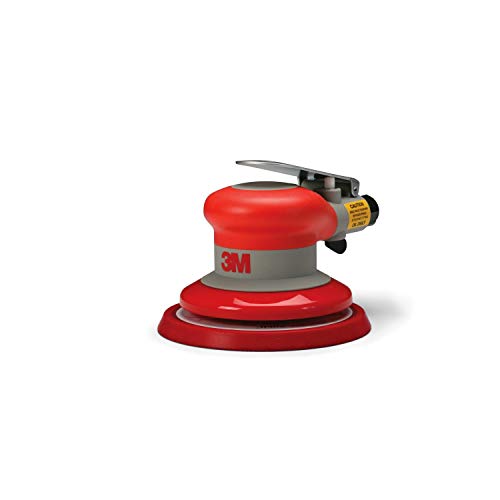
- 0.28 HP pneumatic motor
- Smooth 3/16-inch orbit at 12,000 rpm
- Durable aluminum and composite construction
Best For: Professional shops with an air-compressor setup
Best Cordless Control
DEWALT 20V MAX Brushless Orbital Sander

- Brushless 20V cordless motor
- 8,000–12,000 OPM variable speed
- Low-profile body with dust collection
Best For: DEWALT battery owners needing portable sanding
Best Corded Value
DEWALT DWE6423 5-Inch Variable-Speed Sander

- 3-amp motor with variable speed
- Counterweight helps reduce vibration
- Dust port and locking dust bag included
Best For: Shops wanting continuous corded sanding power
Heavy-Duty Air Option
Professional 5-Inch Dual-Action Palm Sander

- 12,000 rpm pneumatic operation
- Built-in regulator for speed control
- Light air motor for overhead work
Best For: Panel sanding with a capable 90 PSI compressor
Best Corded Compact Pick
SKIL SR211601 Random Orbital Sander

- 2.8-amp motor with up to 13,000 OPM
- Variable speed and low-vibration ergonomic design
- Cyclonic dust box with three sanding sheets included
Best For: DIY users needing a compact corded sander for automotive prep
Best Automotive Air-Sander Kit
5-Inch Pneumatic Palm Sander Kit

- 10,000 RPM speed with a 3/16-inch orbit
- Includes sanding discs, sponge pads, and wool pads
- Designed for extended use with a suitable compressor
Best For: Auto body users who already have a high-capacity air compressor
Best Lightweight Pneumatic Pick

- 10,000 RPM motor with adjustable speed
- Lightweight palm grip and vibration-dampening housing
- Uses a standard 5-inch hook-and-loop pad
Best For: Shop users handling automotive prep, metal, or finishing work
Best Pneumatic Value
ZFE 5/6-Inch Random Orbital Air Sander

- 5- and 6-inch backing plates included
- Lightweight 1.5-pound palm design
- Accessories include pads, paper, and dust tube
Best For: Versatile automotive sanding and polishing on a budget
Best for Auto-Body Speed
6-Inch Low-Noise DA Air Sander
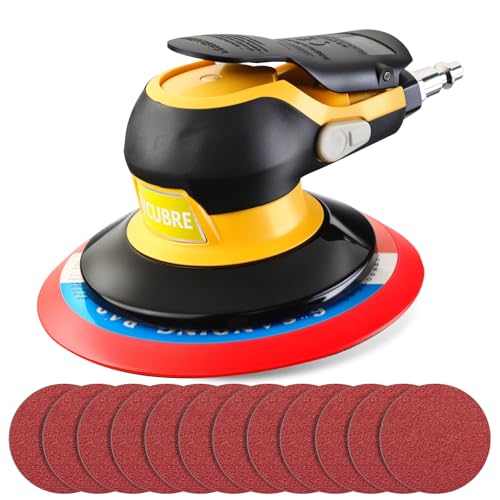
- 12,000–13,000 RPM unloaded speed
- Lightweight design with adjustable speed
- Noise-reduction technology for quieter operation
Best For: Fast sanding across larger auto-body surfaces
Best for Detail Work
ZFE Mini 1/2/3-Inch Air Sander Set
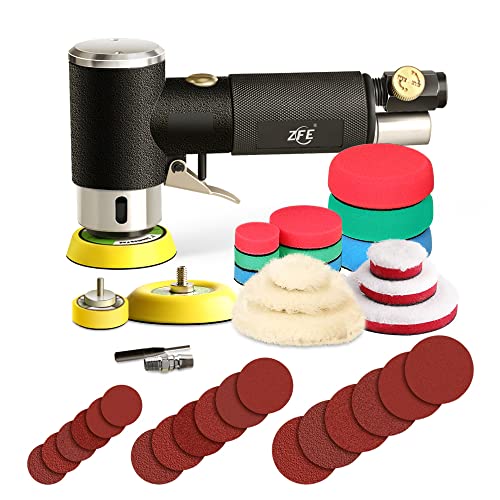
- Three compact backing-plate sizes
- 15 buffing pads and 18 sandpapers included
- 15,000 RPM speed for spot work
Best For: Small automotive repairs, rust spots, and detailing
Professional Pneumatic Pick – 3M 5-Inch Non-Vacuum Random Orbital Sander
For demanding automotive work, this 3M pneumatic sander delivers a smooth, controlled approach to surface preparation and finishing. Its 3/16-inch orbit, 12,000 rpm speed, and Stikit adhesive-disc pad make it well suited to metal, composites, and other repair surfaces when a suitable air system is available.
Best For: Professional automotive shops that need a durable, continuously usable air-powered sander.
Pros:
- Powerful 0.28 HP motor for sanding and finishing applications
- Precision-balanced motor supports smooth operation and control
- Aluminum body and composite cover help withstand shop use
- Low-profile design works well with 3M sanding abrasives
Cons:
- Requires a compressed-air setup rather than a battery or wall outlet
- Non-vacuum design does not provide integrated dust extraction
- Stikit pad is intended for adhesive-backed discs, limiting paper compatibility
This is a strong choice among orbital sanders for automotive work when durability, pneumatic power, and extended operating time matter more than cordless convenience or built-in vacuum collection.
Best Cordless Control – DEWALT 20V MAX Brushless Orbital Sander
The DEWALT DCW210B is a practical cordless option for automotive work where mobility around a vehicle matters. Its brushless motor, variable 8,000-to-12,000 OPM range, low-profile body, and hook-and-loop pad provide useful control for different sanding applications.
Best For: DEWALT 20V MAX users who want cordless sanding without managing an air hose.
Pros:
- Brushless motor is designed for runtime and efficiency
- Variable speed helps match operation to the application
- Low-profile height allows closer access to the work surface
- Dust-sealed switch and rubber overmold grip support shop usability
Cons:
- Sold as a tool only, so the battery and charger are not included
- Dust collection accessories may require additional connectors or a compatible DEWALT vacuum
- Cordless runtime depends on the separately purchased lithium-ion battery
For mobile repairs and prep work, this is one of the more convenient orbital sanders for automotive work, especially if your shop already uses DEWALT 20V MAX batteries.
Best Corded Value – DEWALT DWE6423 5-Inch Variable-Speed Sander
DEWALT Random Orbit Sander, Variable Speed, 5-Inch (DWE6423), Power Source Corded Electric
Check Price On AmazonThe DEWALT DWE6423 offers consistent corded power for automotive sanding and finishing tasks. Its 3-amp motor, variable 8,000-to-12,000 OPM speed range, separate counterweight, and improved dust collection make it a balanced choice for shop-based work.
Best For: Garage and shop users who prefer continuous corded power and a straightforward dust-collection setup.
Pros:
- 3-amp motor provides variable operation from 8,000 to 12,000 OPM
- Separate counterweight helps reduce vibration during use
- Shorter height brings the operator closer to the workpiece
- Dust port works directly with specified DEWALT dust collectors
Cons:
- Corded design requires access to a power outlet
- Included dust bag is less mobile than a cordless setup
- A 1-1/4-inch vacuum hose may require the separately sold DWV9000 connector
This DEWALT is a dependable pick among orbital sanders for automotive work when uninterrupted power, reduced vibration, and easy access to dust collection are key priorities.
Heavy-Duty Air Option – Professional 5-Inch Dual-Action Palm Sander
Professional Air Random Orbital Palm Sander, Dual Action Pneumatic Sander, Low Vibration, Heavy Duty
Check Price On AmazonThis professional air random orbital palm sander is built for automotive prep work requiring a compact pneumatic tool. It combines a 5-inch hook-and-loop pad, 12,000 rpm free speed, built-in speed regulation, and a lighter air-motor assembly for vertical or overhead sanding.
Best For: Air-equipped users sanding vehicle panels in vertical, overhead, or hard-to-position areas.
Pros:
- Lightweight air-motor assembly suits vertical and overhead applications
- Built-in regulator provides speed control
- 5-inch hook-and-loop pad allows quick abrasive changes
- Wear-resistant construction is designed for extended service
Cons:
- Requires 90 PSI air pressure and averages 10.5 CFM consumption
- Air-powered operation requires a capable compressor and hose setup
- Rear exhaust may direct expelled air toward the user or work area
Among orbital sanders for automotive work, this model stands out for maneuverability and pneumatic control, but its relatively high air consumption makes compressor capacity an important buying consideration.
Best Corded Compact Pick – SKIL SR211601 Random Orbital Sander
SKIL 5” Random Orbital Sander with Cyclonic Dust Box & 3pc Sanding Sheet - SR211601, Multicolor
Check Price On AmazonFor shoppers comparing orbital sanders for automotive work, the SKIL SR211601 is a compact corded option with variable speed control, a 2.8-amp motor, and up to 13,000 orbits per minute. Its balanced design and cyclonic dust box make it practical for controlled sanding and cleanup.
Best For: DIY users who want a lightweight, corded sander for automotive prep and other general sanding tasks.
Pros:
- Variable speed control helps match power to different materials.
- Cyclonic dust collection uses an easy-to-empty transparent container.
- Compact, ergonomic design and low-vibration balance support longer sessions.
- Includes three sanding sheets and a one-year limited warranty.
Cons:
- Corded operation requires access to a 120-volt outlet.
- The included sanding sheet assortment is limited to three pieces.
The SKIL is a sensible choice when compact handling, adjustable speed, and integrated dust collection matter more than cordless convenience or pneumatic power.
Best Automotive Air-Sander Kit – 5-Inch Pneumatic Palm Sander Kit
This pneumatic option is built specifically with auto body work in mind. It runs at up to 10,000 RPM, uses a 3/16-inch orbit, and includes sanding discs plus polishing sponge and wool pads for sanding and finishing tasks.
Best For: Auto repair and body-work users with a sufficiently large air compressor for extended pneumatic sanding.
Pros:
- Designed for continuous use over several hours.
- Includes 120-grit sandpapers and multiple sanding and polishing pads.
- Supports a 5-inch pad and can accept optional 6-inch or PSA pads.
- Suitable for car repair, furniture, wood sanding, and polishing.
Cons:
- Requires an air compressor rated at no less than 12 CFM and 3-1/2 kW or 100 L, according to the supplied notes.
- Optional 6-inch and PSA pads must be purchased separately.
Choose this kit if your workspace already has the required compressor and you value included consumables for both sanding and polishing. It is less convenient for users without substantial pneumatic equipment.
Best Lightweight Pneumatic Pick – 5-Inch Dual-Action Air Sander
Among orbital sanders for automotive work, this 5-inch air-powered palm sander emphasizes lightweight handling and adjustable speed. Its dual-action motion is intended to help produce a swirl-free finish, while the 1/4-inch inlet and 8 CFM consumption suit compatible shop compressors.
Best For: Automotive, metal, and furniture users seeking a lightweight pneumatic sander for prep and finishing.
Pros:
- 10,000 RPM motor supports rapid material removal.
- Dual-action random orbit design is suited to sanding and polishing.
- Lightweight composite housing is designed to reduce fatigue and damp vibration.
- Standard 5-inch hook-and-loop pad accepts compatible sandpaper.
Cons:
- Requires an air compressor and consumes approximately 8 CFM.
- The supplied details list a coarse 36-grit specification, which may not suit fine finishing without additional abrasives.
- Air-powered operation is less portable than a cordless tool.
This model is a practical shop choice when low weight, pneumatic efficiency, and dual-action finishing are priorities. Plan on purchasing abrasives appropriate to the surface and finish you need.
Best Pneumatic Value – ZFE 5/6-Inch Random Orbital Air Sander
For shoppers comparing orbital sanders for automotive work, this ZFE pneumatic model offers flexible 5- and 6-inch sanding with a useful accessory bundle. Its lightweight palm design, integrated speed control, and included dust-collection tube suit paint preparation, metal polishing, and general bodywork tasks.
Best For: Automotive paint surfaces, metal derusting, deburring, and users who want both sanding and polishing accessories.
Pros:
- Includes 5- and 6-inch backing plates, sandpapers, polishing pads, and microfiber cloths.
- Lightweight 1.5-pound design with an ergonomic palm grip.
- Adjustable speed control up to 10,000 RPM.
- Dust bag and 1-meter vacuum tube are included.
Cons:
- Requires an air compressor because it is pneumatic.
- The supplied notes do not specify air-consumption requirements or compressor size.
This is a practical, accessory-rich choice for occasional or regular automotive refinishing when you already have a compatible air supply. The two backing-plate sizes add versatility for different sanding areas.
Best for Auto-Body Speed – 6-Inch Low-Noise DA Air Sander
For orbital sanders for automotive work that prioritize fast material removal, this 6-inch pneumatic DA sander reaches a stated unloaded speed of 12,000–13,000 RPM. Its lightweight construction, adjustable speed switch, and noise-reduction design make it suited to longer auto-body sanding sessions.
Best For: Auto-body preparation, larger sanding areas, and users seeking high speed with adjustable control.
Pros:
- High unloaded working speed of 12,000–13,000 RPM at 0.8 MPa.
- Lightweight ergonomic shape helps reduce operator fatigue.
- Adjustable speed supports different materials and sanding tasks.
- Noise-reduction design aims to create a quieter work environment.
Cons:
- Recommended for use with a 15-gallon-or-larger air compressor.
- Only one 6-inch sander is listed in the included components.
This model is a focused choice for auto-body users who value speed and a larger 6-inch pad. Confirm that your compressor can meet the recommended capacity before buying.
Best for Detail Work – ZFE Mini 1/2/3-Inch Air Sander Set
For orbital sanders for automotive work that need to reach small spots, this mini pneumatic set includes 1-, 2-, and 3-inch backing plates. Its compact format, 15,000 RPM speed, and included polishing and sanding supplies are useful for spot sanding, rust removal, and detailing.
Best For: Automotive spot repairs, tight areas, rust spots, solder-joint removal, and polishing or detailing work.
Pros:
- Three backing-plate sizes support focused sanding and polishing.
- Includes 15 buffing pads and 18 sandpapers.
- Reaches a stated maximum speed of 15,000 RPM.
- Designed for low vibration and lower energy consumption.
Cons:
- Small pads are less suited to sanding large vehicle panels.
- Requires an air supply because it is air-powered.
- The compact tool weighs 2.3 pounds, heavier than some full-size palm sanders listed here.
This set stands out when precision matters more than coverage. The multiple pad sizes and extensive consumables make it especially useful for localized automotive repairs and detailing rather than full-panel sanding.
How We Picked the Best Orbital Sanders for Automotive Work
We evaluated these sanders for the jobs automotive users commonly perform, including paint removal, surface preparation, filler shaping, edge blending, and polishing. Our comparison considers power delivery, control, pad size, orbit action, ergonomics, vibration, dust collection, and the operating costs associated with electricity, batteries, or compressed air.
Because no single tool suits every workspace, the selection includes compact pneumatic sanders for body shops, corded models for continuous garage use, and cordless options for portability. Accessory bundles were also considered, but included abrasives and pads should be treated as starting supplies rather than a substitute for quality automotive-grade consumables.
Quick Comparison
| Type | Best For | Main Advantage | Trade-Off |
|---|---|---|---|
| Pneumatic 5-inch | Body repair and panel prep | Lightweight, continuous operation | Requires a suitable compressor |
| Pneumatic 6-inch | Larger panels and fast coverage | Broader sanding path | Higher air demand and bulk |
| Corded electric | Home garages and long sessions | Consistent power without batteries | Power cord limits mobility |
| Cordless electric | Portable repairs and detail work | No hose or outlet required | Battery runtime and added weight |
| Mini pneumatic | Spot repairs and tight areas | Excellent access and control | Not ideal for large surfaces |
Key Buying Factors for Automotive Sanders
Orbit, Pad Size, and Speed
A 5-inch random-orbit sander is a versatile choice for most repairs, while a 6-inch pad can cover broad panels more quickly. Smaller orbit movements generally offer smoother finishing; larger movements can remove material faster. Variable speed helps you reduce aggression near edges and control heat on paint or delicate surfaces.
Air Requirements and Power
Pneumatic models can be comfortable during extended use, but check the tool’s required CFM and your compressor’s delivered CFM at the stated pressure. A compressor that cannot keep up will cause inconsistent speed and interruptions. Electric models are simpler to deploy, while cordless sanders trade unlimited runtime for mobility.
Dust Control and Ergonomics
Dust collection protects visibility, improves cleanup, and reduces airborne debris. Confirm whether the sander supports a shop vacuum, dust bag, or compatible extraction hose. Low vibration, a balanced palm grip, and accessible speed controls matter during long panel sessions.
Consumables and Compatibility
Confirm the backing-plate diameter, hook-and-loop pattern, and available replacement parts before buying. Use the appropriate abrasive grit for the material and stage of work, and avoid excessive pressure, which can produce swirl marks, uneven removal, or premature pad wear.
Who Should Buy Which Orbital Sanders for Automotive Work?
Choose a pneumatic 5-inch model if you have a capable compressor and want a lightweight tool for frequent bodywork. Select a 6-inch air sander when broad panels and faster coverage are priorities. A corded DEWALT or SKIL-style electric model is usually the most straightforward choice for a home garage with reliable outlet access.
A cordless DEWALT option suits mobile repairs, driveways, and jobs where hoses or extension cords are inconvenient. Compact mini air sanders are best for spot repairs, narrow sections, and detail work rather than complete panels. For the most flexible setup, pair a general-purpose 5-inch sander with quality abrasives, dependable dust extraction, and a smaller tool for hard-to-reach areas.