A small garage workshop needs effective dust control without sacrificing valuable floor space. The best dust extractors for small garages balance collection power, filtration, portability, and manageable storage.
This roundup compares compact collectors, cyclone separators, air filtration systems, and mobile options so you can match your tools, workspace, and cleanup routine to the right setup.
Best 10 Dust Extractors for Small Garages Picks for 2026
Compact Power Pick
SHOPMAX 13.2-Gallon Dust Collector

- 1.48 HP motor with up to 108 CFM airflow
- Compact body with carry handle and cord wrap
- HEPA filter, 4-inch hose, and four adapters included
Best For: Space-conscious garages and portable tool-side dust collection
Air-Cleaning Specialist
WEN 3410 Remote Air Filtration System
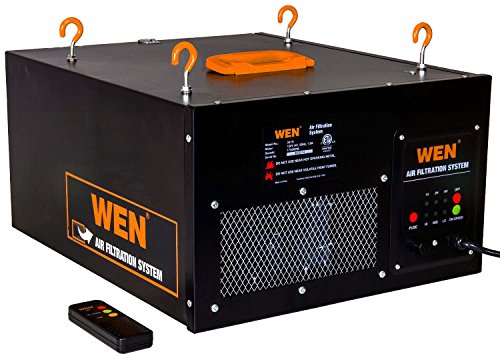
- 300/350/400 CFM airflow settings
- 1-micron filter with replaceable pre-filter
- Remote control and programmable shutoff timer
Best For: Filtering airborne dust in garages up to 400 square feet
High-Suction Workhorse
DYNAVEX 12-Gallon Dust Extractor

- 1.5 HP motor delivers 142 CFM airflow
- 12-gallon tank limits emptying interruptions
- 0.5-micron HEPA filtration and tool-linked startup
Best For: Woodworking garages handling sustained sawing, sanding, and routing
Space-Saving Separator
Dustopper PRO Cyclone Separator Kit

- Pre-separates debris to help protect vacuum filters
- Low-profile design suits tight garage layouts
- Includes two high-flow sweep elbows
Best For: Existing shop-vac systems needing less filter cleaning and maintenance
Compact Mobile Collector
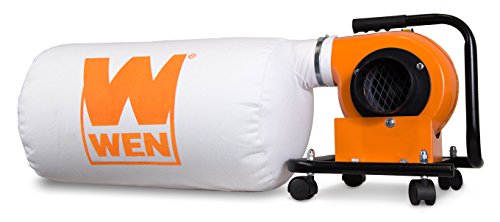
- 660 CFM airflow with a 5.7-amp motor
- 12-gallon, 5-micron zippered bag
- Lockable casters and optional wall mount
Best For: Small woodworking garages needing flexible storage
Stainless Separator

- 10-gallon stainless steel tank
- Four-wheel portable canister design
- Cartridge filter and 2.1-meter hose
Best For: General garage and household floor cleanup
Flexible Cyclone Unit
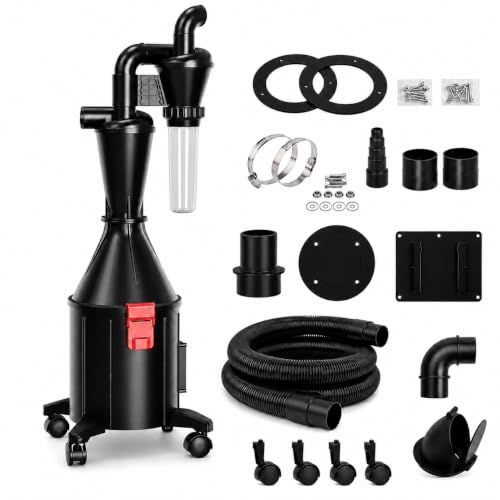
- Wall-mounted or wheeled installation
- Cyclone separation protects vacuum filters
- 4.8-gallon removable container
Best For: Space-conscious workshops and woodworking garages
Best Cyclone Separator Kit
Portable 5-Gallon Dust Collector

- Captures dust before it reaches the vacuum filter
- Includes bucket, casters, hose, and fittings
- Fits standard 1.5- to 2.5-inch vacuum hoses
Best For: Shop-vac owners managing dust in compact garages
Best Ceiling-Mounted Air Cleaner
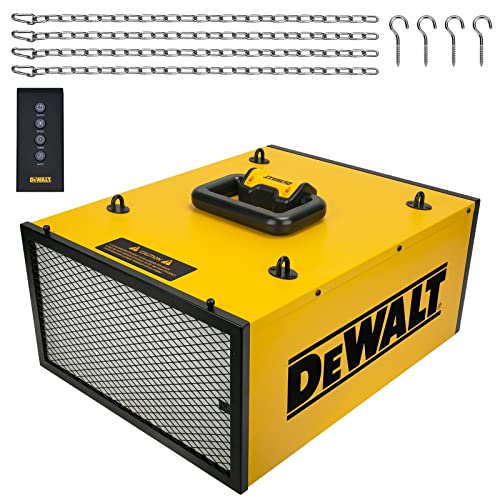
- Two-stage filtration with an H11 HEPA filter
- Hangs overhead to save garage floor space
- Remote, four modes, and up to an 8-hour timer
Best For: Woodworking garages needing overhead air filtration
Best High-Airflow Garage Filter

- 360-degree intake for broad air circulation
- 1,050/1,350 CFM vortex fan with two speeds
- Includes ionizer, remote, timer, and hanging hardware
Best For: Larger garages needing circulating dust and odor filtration
Compact Power Pick – SHOPMAX 13.2-Gallon Dust Collector
For dust extractors for small garages, the SHOPMAX offers a compact footprint with a 1.48 HP motor and up to 108 CFM of airflow. Its carrying handle, included hose adapters, and built-in cord wrap make it practical when storage space is limited.
Best For: Small garages needing a portable, compact collector for connecting to several workshop tools.
Pros:
- Compact 14.76-by-14.76-inch footprint fits limited spaces.
- Includes a 4-inch anti-static hose and four hose adapters.
- High-efficiency HEPA filter helps capture smaller particles.
- Three-year limited manufacturer warranty.
Cons:
- Its 3.2-gallon dust capacity may require frequent emptying.
- Only one speed and power level are listed.
The SHOPMAX is a sensible choice when portability and easy storage matter more than a large collection container. Its single-speed design keeps operation straightforward, while the smaller capacity suits lighter-duty garage work.
Air-Cleaning Specialist – WEN 3410 Remote Air Filtration System
The WEN 3410 is an overhead air-filtration unit rather than a tool-connected extractor, making it a useful companion for dust extractors for small garages. It filters airborne particles across rooms up to 400 square feet and can be controlled remotely.
Best For: Small garages that need ongoing airborne dust filtration after cutting, sanding, or other dusty work.
Pros:
- Three airflow settings from 300 to 400 CFM.
- Uses a 1-micron filter and 5-micron pre-filter.
- RF remote works from up to 26 feet and does not require direct line of sight.
- Programmable timer can shut the unit off automatically.
Cons:
- It is an air-filtration system, not a collection container for tool dust.
- At 31 pounds, it is less convenient to move than a compact canister.
Choose the WEN when the priority is cleaning residual airborne dust throughout the garage. It complements a source-capture extractor, but it should not be treated as a replacement for a hose-connected dust collector.
High-Suction Workhorse – DYNAVEX 12-Gallon Dust Extractor
The DYNAVEX combines a 1.5 HP motor with 142 CFM airflow and a 12-gallon tank, giving small garages a larger-capacity option among dust extractors for small garages. Its wheels, tool-linked start feature, hose, adapters, and HEPA filtration support active woodworking setups.
Best For: Woodworkers who want strong suction, a large collection tank, and automatic startup when using compatible tools.
Pros:
- 142 CFM airflow from a 10-amp, 1.5 HP motor.
- 12-gallon tank reduces how often the collector needs emptying.
- Auto-start feature activates with a connected tool up to 550 watts.
- Includes a 0.5-micron HEPA filter, hose, clamps, replacement filters, and adapters.
Cons:
- The auto-start socket is limited to tools up to 550 watts.
- Continuous use through the linked socket cannot exceed one hour.
- Wheels require optional installation.
With its strong stated airflow and generous tank, the DYNAVEX is suited to heavier woodworking sessions. Verify your tool’s wattage before relying on the linked-start function, and allow space for its larger 15.75-by-15.75-inch footprint.
Space-Saving Separator – Dustopper PRO Cyclone Separator Kit
The Dustopper PRO is a low-profile cyclone separator rather than a standalone vacuum or extractor. For dust extractors for small garages, it can sit on a standard 5-gallon bucket and separate debris before it reaches the vacuum filter, helping preserve airflow and reduce maintenance.
Best For: Garage users who already own a shop vacuum and want a compact pre-separation stage.
Pros:
- Separates dust and debris before they reach the vacuum filter.
- Low-profile design is easier to fit around tools and workspaces.
- Includes two high-flow sweep elbows to reduce sharp-turn restrictions.
- Made in the USA and designed for a standard 5-gallon bucket.
Cons:
- It requires a compatible shop vacuum and a bucket to create a complete system.
- It is a separator, not a powered dust extractor.
- Restricted airflow can create excessive vacuum pressure and deform a weak bucket.
The Dustopper PRO is a practical space-saving upgrade for an existing vacuum-based setup. Use a sturdy bucket, maintain adequate airflow, and stop operation if the bucket begins to deform, as recommended in the supplied product guidance.
Compact Mobile Collector – WEN DC3401
For shoppers comparing dust extractors for small garages, the WEN DC3401 offers a compact rolling design with a 5.7-amp motor, 4-inch dust port, and 12-gallon collection bag. Its casters and optional wall mount provide useful flexibility when floor space is limited.
Best For: Small woodworking garages needing a mobile collector with optional wall storage.
Pros:
- Moves up to 660 CFM through its 6-inch impeller.
- Compact 17-pound design includes a carrying handle.
- Includes lockable swivel casters, a 12-gallon 5-micron bag, and a two-year warranty.
Cons:
- Uses a brushed motor with one speed and one power level.
- The 4-inch port may require adapters for some tools.
The DC3401 is a practical choice when mobility and storage flexibility matter more than advanced controls. Its compact footprint and optional wall mount make it especially suitable for smaller work areas.
Stainless Separator – 10-Gallon Dust Separator
Among dust extractors for small garages, this 10-gallon dust separator stands out as a portable attachment with a stainless steel tank and four wheels. It is designed for garage and household cleanup on hard floors, carpets, tile, and hardwood.
Best For: Garage users who want a portable separator for general indoor floor cleanup.
Pros:
- 10-gallon stainless steel tank provides useful capacity.
- Portable canister design has four wheels and two handles.
- Includes a cartridge filter, 2.1-meter hose, and three-year warranty.
Cons:
- Its listed 70 dB noise level may be noticeable in enclosed spaces.
- The notes identify it as an attachment rather than a complete high-airflow dust collector.
This separator is a sensible option for buyers prioritizing tank capacity and broad floor-surface compatibility. Its wheeled design should also make it easier to reposition around a compact garage.
Flexible Cyclone Unit – PM03 Wall-Mount Collector
For small garages where floor space is tight, the PM03 provides two setup options: wall mounting or a wheeled configuration. Its cyclone separator is designed to separate dust and debris from the airflow, helping protect a connected vacuum filter during woodworking and general cleanup.
Best For: Compact workshops needing a wall-mounted or mobile dust-separation setup.
Pros:
- Two installation modes support either space-saving storage or mobility.
- Cyclone separation helps reduce dust reaching the vacuum filter.
- Includes a removable 4.8-gallon container, 2.5-meter hose, and 2-to-2.5-inch adapter.
Cons:
- Its 2.5-inch connection may not match every vacuum or tool without additional fittings.
- The 4.8-gallon capacity is smaller than the 10- and 12-gallon options here.
The PM03 is appealing when installation flexibility is a priority. Its compact 12-by-12-by-20-inch form and dual wall-mounted or wheeled modes suit garages that need to reclaim floor space.
Best Cyclone Separator Kit – Portable 5-Gallon Dust Collector
Oneida Air Systems Dust Collector & Cyclone Separator Kit DD Deluxe 5-Gal - Clear Bucket - Portable
Check Price On AmazonFor small garages, the Oneida Air Systems DD Deluxe is a compact way to turn an existing shop vacuum into a more effective dust extractor. Its cyclone design separates dust before it reaches the vacuum filter, while the included casters make the 5-gallon setup easier to move around the workspace.
Best For: Garage users who already own a compatible shop vacuum and want to reduce filter clogging during woodworking, cleanup, or general workshop tasks.
Pros:
- Cyclone design is intended to capture 99% of dust and debris before the vacuum filter.
- Includes the separator, bucket, lid, casters, hose, adapters, clamp, gasket, and hardware.
- Works with materials including wood dust, drywall dust, pet hair, soot, and metal shavings.
- Tapered ports fit standard 1.5- to 2.5-inch vacuum hose fittings.
Cons:
- Requires a separate shop vacuum for suction.
- Best results are noted on hard floors, which may limit some cleanup applications.
- The included collection bucket is relatively small at 5 gallons.
This is a practical pick when floor space and maintenance are concerns. It does not replace a complete dust extractor, but it can extend shop-vac filter life and reduce suction loss without requiring a new vacuum.
Best Ceiling-Mounted Air Cleaner – DEWALT HEPA Dust Collector
The DEWALT DWXAF101 is a useful option for small garages where floor space is limited. It hangs from the ceiling, uses two-stage filtration with a washable pre-filter and H11 HEPA filter, and offers remote-controlled settings for cleaning workshop air while you work or after you leave.
Best For: Woodworking garages that need overhead air filtration, automatic shutoff, and flexible fan-speed control without occupying valuable floor space.
Pros:
- Two-stage filtration includes a washable cotton pre-filter and H11 HEPA filter.
- Ceiling installation preserves floor space and includes hooks and chains.
- Offers low, medium, high, and automatic modes with 1-, 2-, 4-, and 8-hour timers.
- Filter replacement indicator and included remote simplify maintenance and operation.
Cons:
- At 64 dB, it may be noticeable in a small enclosed garage.
- It is an air-filtration system rather than a direct-connect tool dust extractor.
- Ceiling mounting requires suitable installation space and support.
Choose this model when airborne workshop dust is the main concern and overhead mounting makes sense. Its controls and timer are convenient, while the three-year warranty adds reassurance for regular garage use.
Best High-Airflow Garage Filter – ALORAIR Purecare 1350IG
The ALORAIR Purecare 1350IG is designed for circulating and filtering air across larger workshop areas while remaining suitable for garage installation. Its 360-degree intake, strong vortex fan, remote control, and ceiling-hanging hardware make it a flexible choice for reducing airborne dust and odors from woodworking activities.
Best For: Larger garages or workshop areas where broad air circulation, ceiling or workbench placement, and odor reduction are priorities.
Pros:
- 360-degree intake is designed to circulate air across areas up to 1,700 square feet.
- Strong vortex fan offers 1,050/1,350 CFM operation with two-stage speed selection.
- Built-in ionizer is intended to help reduce dust and odors.
- Includes remote control, timer settings from 1 to 9 hours, and hanging hardware.
Cons:
- Cannot be shipped to California according to the supplied product notes.
- Its 20.5-inch square footprint and 27-pound weight may be substantial for a very small garage.
- MERV-11 filtration is specified to stop 90% of 3-10 micron particles and 85% of 1-micron particles, rather than providing HEPA filtration.
This model makes the most sense when air circulation matters more than a compact footprint. Verify installation space and local availability first, especially if you are in California, and treat it as an ambient air cleaner rather than a tool-mounted extractor.
How We Picked the Best Dust Extractors for Small Garages
We selected these dust-control products based on the needs of compact workshops: usable airflow, collection capacity, filtration performance, portability, installation flexibility, and compatibility with common woodworking tools. The list includes dedicated dust collectors, cyclone separators, wall-mounted systems, and overhead air cleaners because small garages often benefit from combining source capture with airborne-particle filtration.
We also considered practical ownership details, including footprint, tank or bag capacity, mobile bases, remote controls, clear containers, and the likelihood that a system can be stored when the garage returns to vehicle or household use.
Quick Comparison
- Best for compact floor space: Wall-mounted or portable units with wheeled bases.
- Best for improving tool capture: A dedicated collector paired with a cyclone separator.
- Best for airborne dust: An overhead air filtration system with multiple speed settings.
- Best for low-maintenance monitoring: Clear tanks, buckets, or separator containers.
- Best for flexible cleanup: Systems that support hoses, multiple tools, or vacuum-style operation.
Key Buying Factors for Dust Extractors for Small Garages
Airflow and Tool Compatibility
Check the extractor’s airflow rating and hose connection before buying. Benchtop tools may need less airflow than planers, jointers, or table saws. A unit that is convenient but undersized can leave dust at the source, while a larger collector may require more space and power.
Filtration and Dust Type
Fine wood dust is more difficult to capture than larger chips. Look for a suitable filter or separator, and remember that a cyclone mainly protects the filter and reduces how often the main container needs emptying; it does not replace fine-particle filtration. Overhead air cleaners are useful for suspended dust but should complement, not replace, source extraction.
Capacity, Footprint, and Mobility
For a small garage, compact dimensions and easy movement may matter more than maximum capacity. Wheeled bases, wall-mount options, clear containers, and smaller tanks make storage and emptying easier. Measure doorways, shelves, and the space around your tools before choosing.
Noise, Controls, and Electrical Needs
Remote controls and multiple speeds are convenient for overhead filtration systems. Also check motor requirements, outlet capacity, hose length, and operating noise, especially if the workshop shares walls with living areas.
Who Should Buy Which Dust Extractors for Small Garages?
Choose a compact portable collector if you need one movable unit for several stationary tools. A cyclone separator is a strong choice when you already own a shop vacuum or dust collector and want to protect its filter while extending maintenance intervals. Select a wall-mounted or compact design when floor space is the main limitation.
For workshops where fine dust remains suspended after cutting or sanding, add an overhead air filtration system. Buyers working with larger chip-producing tools should prioritize airflow and capacity, while occasional DIY users may prefer a simpler, lower-maintenance setup. In many small garages, the most effective arrangement is a correctly sized source collector plus a separator and, when needed, overhead filtration.