A head-up display can help truck drivers monitor speed, navigation, and vehicle data without repeatedly looking down at the instrument cluster. The best models project essential information into your sightline while keeping installation relatively simple.
This roundup compares 10 options ranging from basic GPS speedometers to feature-rich systems with OBD2 diagnostics, wireless connectivity, CarPlay, and Android Auto. Use the buying guide below to match the display to your truck, driving habits, and preferred power connection.
Best 10 Car Head Up Displays for Trucks Picks for 2026
Best OBD2 + GPS Value
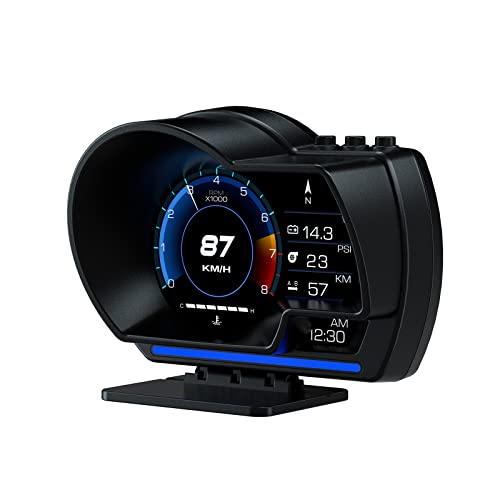
- OBD2 and GPS modes
- Speed, RPM, voltage, and temperature data
- Adjustable alerts and mounting options
Best For: Drivers wanting vehicle data and speed alerts in one display
Best All-Vehicle Flexibility
HUD-V3 Connected Head-Up Display

- GPS-based broad compatibility
- CarPlay and Android Auto support
- Dual power options and heat protection
Best For: Truck owners wanting easy installation across vehicle types
Best Large-Screen OBD Display
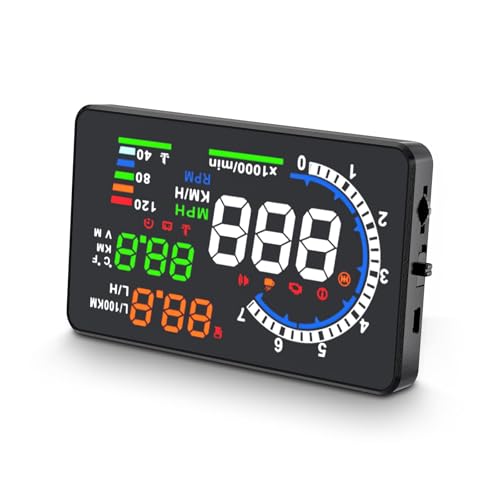
- 5.5-inch HD display
- Displays speed and vehicle data
- Includes fault and overspeed functions
Best For: Drivers with compatible trucks who want a larger readout
Best Diagnostic Data Controls

- Live data and fault-code functions
- Adjustable multi-system alerts
- Customizable OBD2 and GPS displays
Best For: Compatible vehicle owners seeking detailed diagnostics and alerts
Connected-Drive HUD
Wireless CarPlay Truck Display

- Wireless Apple CarPlay and Android Auto
- OBD or cigarette-lighter power options
- Stable anti-glare dashboard-mounted design
Best For: Truck drivers wanting hands-free smartphone connectivity
Vehicle-Data HUD

- Large 5.5-inch display with auto brightness
- Shows speed, RPM, temperature, voltage, and fuel use
- Includes alerts and selected diagnostic functions
Best For: OBD2-equipped trucks needing vehicle data at a glance
GPS Speed HUD

- USB plug-and-play power with no OBD port needed
- Large windshield-projected GPS speed readout
- Automatic brightness and 10Hz satellite refresh
Best For: Drivers wanting a simple speed display for USB-equipped trucks
Best OBD-II Value
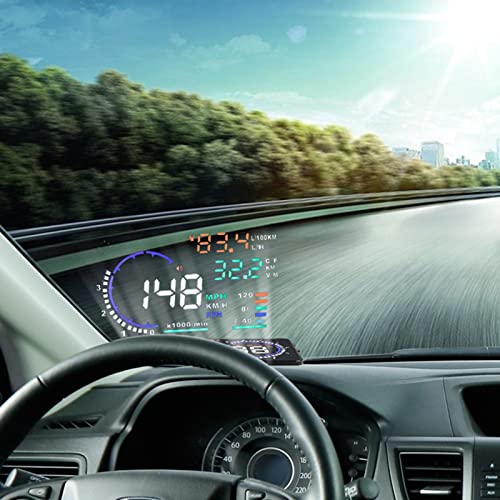
- Reads speed plus multiple vehicle parameters
- Offers configurable overspeed and vehicle alerts
- Requires OBD-II or EUOBD compatibility
Best For: Truck drivers wanting broad vehicle-data monitoring
Best Simple GPS Pick

- USB-powered with no OBD port required
- Uses GPS/BDS positioning with a 10Hz refresh
- Large MPH readout with auto brightness
Best For: Drivers wanting a basic plug-and-play speed display
Best Connected Upgrade

- Adds wireless Apple CarPlay and Android Auto
- Supports mirroring, Bluetooth audio, and calls
- Fits pickups, SUVs, vans, RVs, and older vehicles
Best For: Truck owners wanting portable smartphone integration
Best OBD2 + GPS Value – P6 Dual-System HUD
For drivers comparing car head up displays for trucks, the P6 is a versatile option when your vehicle supports OBD2. It projects speed and other driving data at a glance, while its dual OBD2+GPS design can provide basic GPS readings if the vehicle does not support the OBD2 protocol.
Best For: Drivers who want speed, vehicle data, alerts, and basic diagnostic functions in one compact display.
Pros:
- Combines OBD2 and GPS modes for broader usability.
- Displays speed, voltage, fuel consumption, RPM, and water temperature.
- Offers speeding alerts and automatic brightness adjustment.
- Includes dashboard and windshield installation options.
Cons:
- OBD2 features depend on vehicle compatibility.
- The supplied notes do not identify specific truck model compatibility.
The P6 is a practical pick for buyers who want more than a basic speedometer, especially if they value adjustable alerts and diagnostic data. Confirm your truck’s OBD2 compatibility before relying on its full feature set.
Best All-Vehicle Flexibility – HUD-V3 Connected Head-Up Display
The HUD-V3 stands out among car head up displays for trucks because it uses GPS and smartphone connectivity rather than relying on model-specific OBD wiring. It is designed for trucks, SUVs, RVs, pickup trucks, older vehicles, modified vehicles, and new-energy cars, with plug-and-play installation.
Best For: Truck owners seeking broad compatibility, smartphone-based features, and a simple installation process.
Pros:
- GPS operation avoids OBD compatibility restrictions.
- Supports CarPlay and Android Auto functions.
- Includes both OBD and cigarette-lighter power options.
- Designed to operate from -20°C to 75°C with overheat protection.
Cons:
- Bluetooth and Wi-Fi setup is required for phone connectivity.
- Some advanced functions depend on the connected smartphone and vehicle audio setup.
For buyers prioritizing compatibility over in-depth OBD data, the HUD-V3 is one of the more flexible choices here. Its GPS-based design and dual power options make it especially appealing for trucks with uncertain diagnostic-port support.
Best Large-Screen OBD Display – A8 5.5-Inch HUD
If a larger readout is your priority when shopping for car head up displays for trucks, the A8 offers a 5.5-inch HD screen. It presents speed and selected vehicle information clearly, but it requires an OBDII or EOBD-compatible vehicle and does not support OBD I or JOBD systems.
Best For: Drivers with a compatible truck who prefer a large display and built-in vehicle data monitoring.
Pros:
- Large 5.5-inch, 800×480 display.
- Shows speed, water temperature, voltage, distance, and other data.
- Includes speeding and voltage alarms.
- Can read, display, and clear vehicle fault information.
Cons:
- Only supports OBDII and EOBD systems.
- Not compatible with OBD I or JOBD vehicles.
The A8 makes sense when screen size and OBD-based information are more important than universal compatibility. Check your truck’s model year and diagnostic standard before purchasing.
Best Diagnostic Data Controls – MH OBD2 + GPS HUD
The MH HUD is aimed at buyers who want detailed driving information and configurable warnings from their car head up displays for trucks. It combines OBD2 diagnostics with GPS mode, but its supplied compatibility list excludes pickup trucks, RVs, hybrids, diesel vehicles, and several named vehicle brands.
Best For: Owners of compatible gasoline vehicles who want extensive data displays, adjustable alarms, and fault-code functions.
Pros:
- Displays speed, RPM, fuel consumption, temperature, voltage, altitude, and more.
- Can scan and clear engine fault codes and read live data streams.
- Offers adjustable speed, temperature, voltage, and RPM alarms.
- Supports OBD2 and GPS modes with customizable units and brightness.
Cons:
- The notes specifically list pickup trucks and RVs as incompatible.
- Also excludes diesel, hybrid, and several named vehicle brands.
- OBD2 features require a compatible vehicle produced after 2008.
The MH provides the richest diagnostic-oriented feature set in this group, but it is a poor match for many truck applications because pickup trucks are specifically listed as incompatible. Verify compatibility carefully before considering it for a truck.
Connected-Drive HUD – Wireless CarPlay Truck Display
For drivers comparing car head up displays for trucks, this model emphasizes smartphone connectivity rather than raw vehicle diagnostics. It supports wireless Apple CarPlay and Android Auto, includes both OBD and cigarette-lighter power cables, and has a stable dashboard-mounted design.
Best For: Truck drivers who want wireless navigation, calls, messages, music, and voice-assistant access on a dedicated dashboard display.
Pros:
- Supports wireless Apple CarPlay and Android Auto for compatible phones.
- Includes OBD and cigarette-lighter power options for flexible installation.
- Anti-glare display includes automatic brightness adjustment for changing light conditions.
- High-friction silicone base and adjustable viewing angle help keep the unit steady.
Cons:
- The image appears on the unit’s anti-glare glass lens, not directly on the windshield.
- The OBD cable supplies power only and does not read raw vehicle data.
- The projected image is invisible while wearing sunglasses.
This is a practical choice when a truck’s priority is hands-free phone integration and a clean, cable-light setup. Buyers expecting a true windshield projection or OBD diagnostics should consider those limitations first.
Vehicle-Data HUD – 5.5-Inch OBD2 Truck Gauge
This 5.5-inch model is one of the more data-focused car head up displays for trucks. It connects through an OBD2 port and shows speed, RPM, water temperature, voltage, and fuel consumption, with alerts for speeding and voltage issues.
Best For: Truck owners with compatible OBD2 vehicles who want larger on-screen vehicle information and basic diagnostic functions.
Pros:
- Large 5.5-inch HD display with automatic brightness adjustment.
- Shows GPS speed, engine RPM, water temperature, voltage, and fuel consumption.
- Offers speeding and voltage alerts for additional driving awareness.
- Can detect faults, provide failure alarms, and clear failure codes according to the supplied specifications.
Cons:
- Requires a compatible OBD2 or EOBD vehicle, generally widely used after 2003.
- Its plug-and-play installation depends on having access to the vehicle’s OBD2 port.
- The supplied description does not specify compatibility with every truck model or protocol variation.
Choose this HUD if vehicle data matters more than wireless phone features. Its broad gauge readout and diagnostic-oriented functions make it appealing for compatible trucks, but checking OBD2 compatibility before purchase is important.
GPS Speed HUD – USB Truck Windshield Display
For a simple speed-focused option among car head up displays for trucks, this compact GPS HUD uses USB power instead of an OBD connection. Its windshield projection, large font, automatic brightness, and satellite-based speed tracking make installation straightforward for trucks with a USB port.
Best For: Truck and motorcycle drivers who want an easy-to-install GPS speed display without connecting to the vehicle’s OBD system.
Pros:
- USB-powered at 5V and compatible with most vehicles equipped with a USB port.
- Uses GPS and BDS with a 10Hz refresh rate and connection to up to 32 satellites.
- Projects speed into the driver’s line of sight with a large, easy-to-read font.
- Automatic brightness adjustment supports daytime and nighttime use.
Cons:
- GPS speed can vary by approximately 0.6–1.8 MPH.
- Signal may be affected in tunnels, underground garages, heavy rain or fog, and by metallic windshield film.
- It primarily provides GPS speed rather than the broader vehicle data offered by OBD-based displays.
This is the most straightforward pick for drivers who only need visible speed information and USB plug-and-play power. It is especially useful when avoiding OBD wiring, though GPS conditions can affect availability and accuracy.
Best OBD-II Value – Multi-Color Windshield HUD
For drivers comparing car head up displays for trucks, this OBD-II/EUOBD model stands out for its broad dashboard readouts and configurable warnings. It displays speed and other vehicle data in the driver’s forward view, with automatic power operation when the vehicle starts or shuts down.
Best For: OBD-II-compatible trucks and cars whose drivers want vehicle data, diagnostic information, and configurable alerts in one display.
Pros:
- Displays speed, engine speed, water temperature, battery voltage, fuel consumption, mileage, and fault codes.
- Supports MPH and km/h, with adjustable brightness and automatic brightness optimization.
- Provides overspeed, high-temperature, low-voltage, shift, and fatigue-driving reminders.
- Includes a 180-day unconditional return and refund guarantee according to the supplied listing.
Cons:
- Requires a vehicle with an OBD-II or EUOBD interface.
- The listing provides limited information about installation beyond the interface connection.
This is a feature-rich choice for truck owners who want more than a simple speed readout, provided their vehicle uses a compatible diagnostic port.
Best Simple GPS Pick – USB GPS Speed HUD
This GPS speedometer is a straightforward option for shoppers seeking car head up displays for trucks without using the truck’s OBD port. Its USB-powered design, large speed display, and automatic brightness adjustment make it easy to add to compatible vehicles.
Best For: Truck, car, and motorcycle owners who want a plug-and-play speed display powered by a USB port.
Pros:
- Uses GPS and BDS positioning with a 10Hz refresh rate and support for up to 32 satellites.
- USB 5V power avoids requiring an OBD connection.
- Large MPH display with anti-reflective shading is designed for quick viewing.
- Automatic brightness adjustment adapts to changing light conditions.
Cons:
- GPS speed can vary by approximately 0.6–1.8 MPH.
- Signal performance may be affected in tunnels, underground garages, heavy rain, fog, or vehicles with metallic windshield film.
- The listing states MPH is the default and specifies a display range up to 115 MPH.
Choose this model when simple, readable GPS speed information matters more than engine or diagnostic data. Its main limitation is dependence on a clear satellite signal.
Best Connected Upgrade – Wireless CarPlay HUD
For truck owners who want navigation and smartphone connectivity rather than speed data alone, this VIVIHUD model combines a head-up display with wireless Apple CarPlay and Android Auto. It is designed for pickups, SUVs, vans, RVs, and older vehicles without built-in CarPlay.
Best For: Drivers seeking a portable infotainment upgrade with wireless navigation, music, calls, and smartphone integration.
Pros:
- Supports wireless Apple CarPlay and Android Auto for maps, music, calls, messages, and voice assistants.
- Offers HD anti-reflection technology for daylight, tunnel, rainy-weather, and night visibility.
- Includes screen mirroring, Bluetooth audio, hands-free calling, and app synchronization.
- Adjustable viewing angle and a non-slip base help keep the unit stable on uneven roads.
Cons:
- Requires a compatible iPhone or Android smartphone for its connected features.
- The supplied notes do not specify a full list of displayed vehicle metrics or GPS accuracy details.
- It adds a separate screen rather than replacing the vehicle’s factory display.
This is the most versatile choice for connected driving in a truck, especially if the factory infotainment system lacks CarPlay or Android Auto. It is less suitable if your priority is detailed engine monitoring.
How We Picked the Best Car Head Up Displays for Trucks
We focused on displays that suit truck dashboards and prioritize readable information, straightforward installation, and useful driving data. The selection includes GPS-only units, OBD2-compatible gauges, dual-system models, and smart displays with CarPlay or Android Auto. We also considered screen size, visibility, power options, alert functions, and compatibility with different vehicle types.
Because truck electrical systems and dashboard layouts vary, compatibility should be confirmed before purchase. OBD2 features may not work with every vehicle, while GPS-powered models can provide speed data without accessing the truck’s diagnostic port.
Quick Comparison
| Display type | Best for | Main advantage | Potential limitation |
|---|---|---|---|
| GPS speedometer | Simple speed monitoring | Broad vehicle compatibility | Limited vehicle data |
| OBD2 gauge display | Engine and driving metrics | Access to vehicle information | Requires a compatible OBD2 port |
| OBD2/GPS dual system | Flexible truck installations | Backup data source and broader functionality | More cables and setup considerations |
| CarPlay or Android Auto HUD | Connected navigation and media | Smartphone integration | Higher cost and greater setup complexity |
Key Buying Factors for Car Head-Up Displays for Trucks
Compatibility and Power
Check whether the unit uses OBD2, USB, a 12-volt accessory socket, or a combination of connections. A GPS model is often the safest choice for older or modified trucks, while OBD2 models can add engine data when supported.
Screen Size and Visibility
Larger screens are easier to read in a truck’s wider cabin, but they need sufficient dashboard space. Look for adjustable brightness, automatic dimming, and clear MPH or KM/H settings. The projected image should remain readable without obstructing the road.
Information and Alerts
Decide which data matters most: speed, RPM, coolant temperature, voltage, fuel-related information, navigation, or overspeed warnings. Avoid paying for gauges you will not use, and verify which readings your truck can actually provide.
Smartphone Features
CarPlay and Android Auto can make a HUD more useful for navigation and calls, but wireless pairing, Bluetooth behavior, and phone compatibility vary. A basic speed display may be more dependable if you want minimal distractions.
Who Should Buy Which Car Head Up Displays for Trucks?
Choose a GPS speedometer if you want a simple, broadly compatible display with minimal installation. Select an OBD2 gauge unit if monitoring engine data and electrical readings is important. A dual OBD2/GPS model is better for buyers who want flexibility or a backup speed source.
For frequent navigation, hands-free calling, and smartphone access, consider a CarPlay or Android Auto model. Truck owners who drive at night should prioritize automatic brightness adjustment, while daytime drivers may benefit most from a larger screen and strong contrast. Before ordering, measure the available dashboard area, confirm the preferred speed units, and check that the mounting position provides a clear but unobstructed view.