The best bench grinders for workshops make routine sharpening, deburring, shaping, and light metal finishing faster and more consistent. This roundup compares 10 models across compact, high-speed, low-speed, variable-speed, and combination designs.
Use the guide below to match motor power, wheel size, speed control, work lights, and accessories to the jobs you actually perform.
Best 10 Bench Grinders for Workshops Picks for 2026
Heavy-Duty Power Pick
DEWALT DW758 8-Inch Bench Grinder

- 3/4 HP motor with 3,600 RPM operation
- Durable cast iron construction
- 12-1/2-inch spacing for larger work
Best For: Industrial grinding and larger workpieces
Precision Sharpening Pick
BUCKTOOL 8-Inch Low-Speed Bench Grinder

- 1,750 RPM motor for controlled sharpening
- Includes wide 80- and 120-grit wheels
- LED light and adjustable 0–45° rests
Best For: Woodworkers and precision tool sharpening
Compact Value Pick
WEN BG4276 6-Inch Bench Grinder
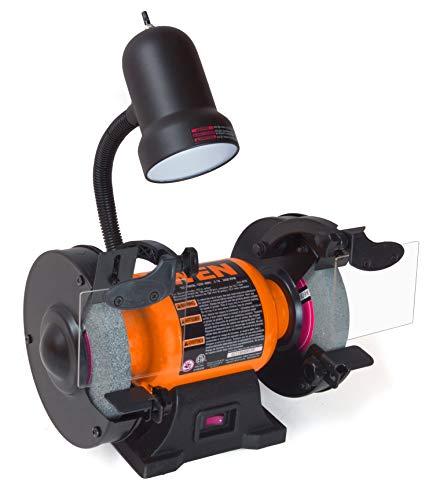
- Compact 6-inch format for smaller benches
- Up to 3,450 RPM for general sharpening
- Flexible work light and two included wheels
Best For: Home workshops and routine tool maintenance
Versatile Combo Pick
BUCKTOOL Belt Sander and Grinder Combo
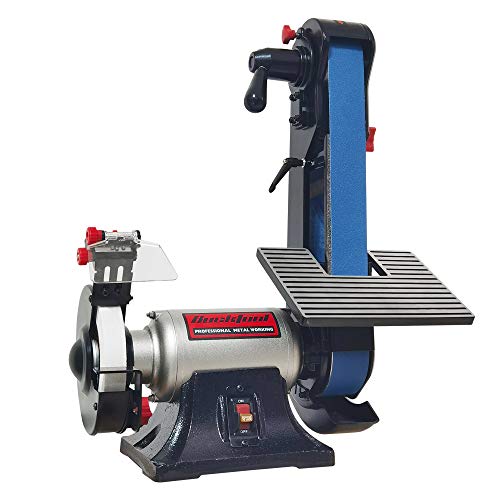
- Combines 6-inch grinding and 2×42-inch sanding
- Belt tilts from horizontal to vertical
- LED light and quick belt changes
Best For: Metalworking, knife making, and mixed-material projects
Best High-Speed Value
Woodskil 6-Inch 1/2HP Bench Grinder
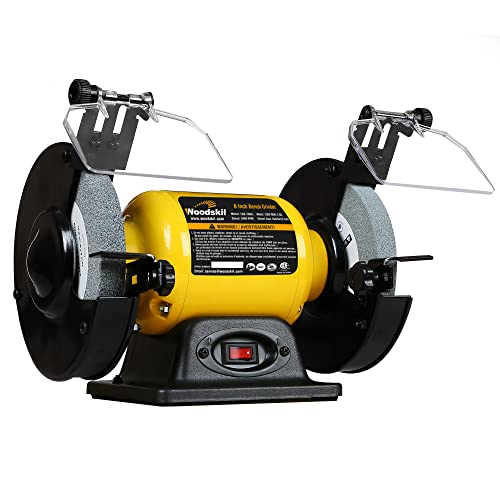
- 1/2HP motor reaches 3,450 RPM
- 36- and 60-grit wheels included
- Steel base, eye shields, and spark arrestors
Best For: Fast general sharpening and metalwork
Best Adjustable Speed
WEN BG625V 6-Inch Variable-Speed Grinder

- 2,000–3,400 RPM variable-speed range
- Flexible work light improves visibility
- Includes 36- and 80-grit wheels
Best For: Variable-speed tool and knife restoration
Best Premium Control
Woodskil 8-Inch Digital Variable-Speed Grinder
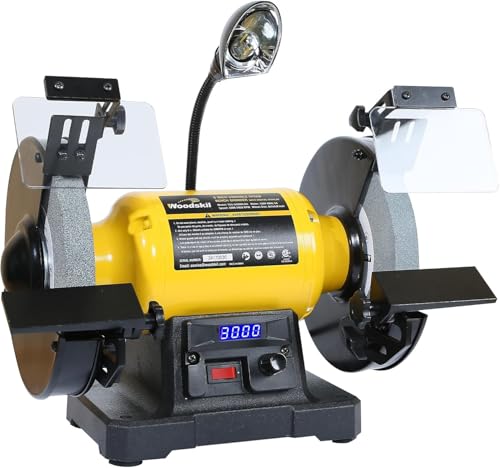
- 3/4HP, 5-amp motor with 2,000–3,450 RPM
- Digital display shows real-time speed
- 8-inch wheels and built-in 2W work light
Best For: Precision-focused workshop grinding and deburring
Reliable Starter
WEN BG4260 6-Inch Bench Grinder
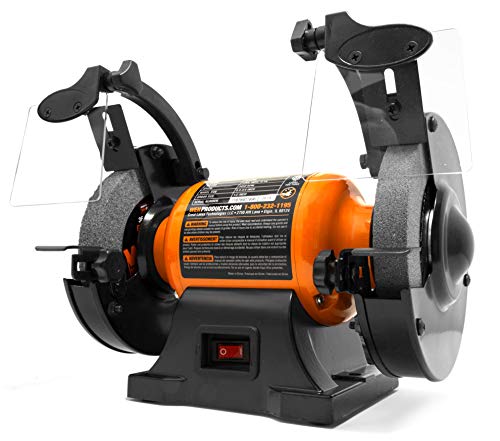
- 2.1-amp motor reaches 3450 RPM
- Includes 36- and 60-grit wheels
- Pivoting rests and adjustable eye guards
Best For: Basic DIY sharpening and tool restoration
Best Heavy-Duty Pick
VEVOR 8-Inch Grinder and Belt Sander
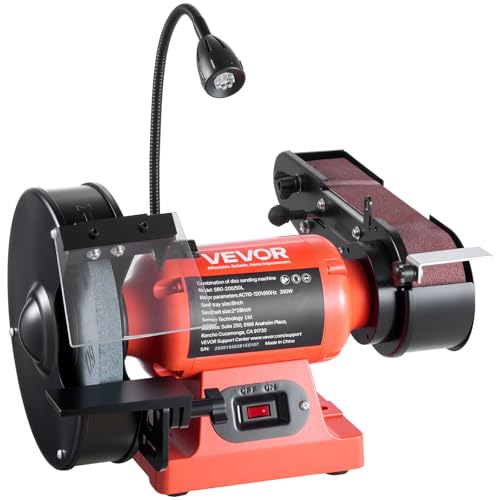
- 8-inch grinder and 2-by-28-inch belt sander
- 0–90-degree adjustable sanding arm
- LED light and vibration-reducing rubber feet
Best For: Mixed metalworking, woodworking, and knife projects
Controlled Sharpening
6-Inch Variable-Speed Bench Grinder

- 1725–3450 RPM variable-speed range
- Brushless motor with cast-iron base
- Includes wheel dresser, water tray, and LED light
Best For: Adjustable-speed sharpening and polishing
Heavy-Duty Power Pick – DEWALT DW758 8-Inch Bench Grinder
For demanding bench grinders for workshops applications, the DEWALT DW758 combines a 3/4 HP induction motor with a rugged cast iron build. Its 3,600 RPM speed supports fast material removal, while the 8-inch wheels and generous 12-1/2-inch spacing accommodate larger workpieces.
Best For: Industrial-style grinding, larger workpieces, and users who prioritize power and durability.
Pros:
- Powerful 3/4 HP induction motor runs at 3,600 RPM.
- Cast iron base and motor housing are built for durability.
- Precision-machined aluminum tool rests support accurate positioning.
- Includes 36- and 60-grit wheels, eye shields, and spark deflectors.
Cons:
- High-speed operation may be less suitable for delicate sharpening tasks.
- Its larger 8-inch format requires more bench space than a compact grinder.
The DW758 is a straightforward choice when fast stock removal and a robust industrial-style construction matter more than low-speed control or compact size.
Precision Sharpening Pick – BUCKTOOL 8-Inch Low-Speed Bench Grinder
Among bench grinders for workshops, the BUCKTOOL 8-inch low-speed model is tailored to controlled sharpening and detail work. Its 1,750 RPM induction motor, wide WA wheels, adjustable rests, and built-in LED light make it well suited to chisels, gouges, axes, and similar tools.
Best For: Woodworkers, turners, carvers, and anyone sharpening tools at a controlled low speed.
Pros:
- 1,750 RPM low-speed induction motor helps support controlled sharpening.
- Includes 80- and 120-grit wheels, with compatibility for a 1-1/2-inch CBN wheel.
- Adjustable tool rests cover 0 to 45 degrees.
- LED work light, 3x magnifying eye shield, and rubber feet add practical convenience.
Cons:
- Low-speed operation is slower for aggressive material removal.
- At 16.8 kg, it is relatively heavy to reposition.
This BUCKTOOL emphasizes visibility, stability, and sharpening control, making it a stronger fit for precision tool maintenance than rapid grinding.
Compact Value Pick – WEN BG4276 6-Inch Bench Grinder
WEN BG4276 2.1-Amp 6-Inch Single Speed Bench Grinder with Flexible Work Light, Black,orange
Check Price On AmazonThe WEN BG4276 is a compact option for bench grinders for workshops where everyday tool touch-ups matter more than heavy-duty capacity. Its 2.1-amp motor spins 6-inch wheels at up to 3,450 RPM, and the flexible work light helps illuminate sharpening and grinding tasks.
Best For: Home workshops, routine sharpening, and users who want a compact grinder with useful lighting.
Pros:
- Compact 6-inch design suits smaller workbenches.
- 2.1-amp motor reaches speeds up to 3,450 RPM.
- Flexible work light improves visibility during operation.
- Includes 36- and 60-grit wheels and adjustable eye guards.
Cons:
- Six-inch wheels provide less working capacity than 8-inch models.
- Single-speed operation offers less control for specialized sharpening.
With its small footprint, included wheels, flexible light, and two-year warranty, the BG4276 is a practical starting point for general workshop maintenance.
Versatile Combo Pick – BUCKTOOL Belt Sander and Grinder Combo
For workshops that need more than a conventional grinder, this BUCKTOOL combo pairs a 6-inch bench grinder with a 2-by-42-inch belt sander. The 3.5-amp induction motor drives the wheel at 3,450 RPM and the belt at 4,480 FPM, while the tilting belt and two worktables support varied projects.
Best For: Metalworking, knife making, woodworking, and projects requiring both grinding and belt sanding.
Pros:
- Combines a 6-inch grinder with a 2-by-42-inch sanding belt.
- Belt housing tilts from horizontal to vertical and supports 0–90° belt positioning.
- Quick-release tension and tracking mechanism simplifies belt changes.
- Includes LED lighting, a 60-grit wheel, and two worktables.
Cons:
- Combo design has a taller 24.53-inch profile and needs more vertical space.
- Its 1/3 HP motor is less powerful than the 3/4 HP motors in the other 8-inch grinders listed.
- It includes one grinding wheel rather than a pair of wheels.
This model is the most flexible choice here for users who would otherwise need separate grinding and sanding equipment, especially when working across metal and wood.
Best High-Speed Value – Woodskil 6-Inch 1/2HP Bench Grinder
For shoppers comparing bench grinders for workshops, the Woodskil 6-inch model offers a straightforward high-speed setup for sharpening, shaping, and maintaining metal tools. Its 1/2HP motor runs at 3,450 RPM and pairs coarse and fine aluminum oxide wheels for versatile shop work.
Best For: Hobbyists, woodworkers, and DIY users who want a fast, stable grinder for general tool maintenance and metalwork.
Pros:
- Powerful 2.8A, 1/2HP motor with a 3,450 RPM maximum speed
- Includes 36-grit and 60-grit aluminum oxide wheels for rough and finer work
- Pre-drilled steel base is designed for stable, wobble-free operation
- Includes eye shields, spark arrestors, CSA certification, and a two-year limited warranty
Cons:
- Fixed high-speed operation offers less speed control than variable-speed models
- Its 6-inch wheel size may be limiting for larger grinding tasks
The Woodskil is a practical choice when speed, basic versatility, and a rigid base matter more than adjustable RPM control. It is especially suitable for routine sharpening and maintenance in a home workshop or garage.
Best Adjustable Speed – WEN BG625V 6-Inch Variable-Speed Grinder
WEN BG625V 2.5-Amp 6-Inch Variable Speed Bench Grinder with Flexible Work Light , Black
Check Price On AmazonAmong bench grinders for workshops, the WEN BG625V stands out for its variable-speed control and built-in flexible work light. Its 2.5-amp motor adjusts from 2,000 to 3,400 RPM, making it easier to match the grinder’s speed to different sharpening and restoration tasks.
Best For: DIY users who want speed flexibility and improved visibility when reviving tools, knives, and drill bits.
Pros:
- Variable-speed motor adjusts from 2,000 to 3,400 RPM
- Flexible work light illuminates the grinding area
- Includes 36-grit and 80-grit wheels for coarse and finer work
- Pivoting tool rests and adjustable eye guards support controlled operation
Cons:
- Its 2.5-amp motor is less powerful than the 3/4HP model in this roundup
- Only a 6-inch wheel size is provided
The BG625V is a well-rounded option for users who value control over maximum motor power. The adjustable speed and flexible light make it particularly convenient for varied home-workshop projects.
Best Premium Control – Woodskil 8-Inch Digital Variable-Speed Grinder
For demanding bench grinders for workshops, this Woodskil model combines an 8-inch wheel size with a 3/4HP, 5-amp motor and digital speed feedback. The 2,000–3,450 RPM range, built-in work light, and rigid steel base are useful when precision and visibility are priorities.
Best For: Workshop users who need stronger performance, adjustable speed, and real-time RPM information for chisels, knives, deburring, and metal grinding.
Pros:
- Powerful 5-amp, 3/4HP motor with a 2,000–3,450 RPM range
- Digital display provides real-time speed readings
- Built-in 2W work light supports visibility in the work area
- 8-inch wheels, adjustable tool rests, rubber pads, and a pre-drilled steel base enhance shop usability
Cons:
- Larger 8-inch design takes more bench space than the 6-inch models
- Its higher-power feature set may be more than needed for occasional basic sharpening
The Woodskil Digital Display model is the strongest fit here for users who want more power and measurable speed control. Its larger wheels and stability features make it a compelling choice for a more capable workshop setup.
Reliable Starter – WEN BG4260 6-Inch Bench Grinder
For straightforward bench grinders for workshops use, the WEN BG4260 offers a compact 6-inch design, a 2.1-amp motor, and a top speed of 3450 RPM. It includes coarse and medium-grit wheels for common sharpening, shaping, and tool-restoration tasks.
Best For: DIY users and workshops needing an affordable, single-speed grinder for tools, knives, and drill bits.
Pros:
- Includes both 36-grit and 60-grit grinding wheels.
- Pivoting tool rests and adjustable eye guards support practical, repeatable work.
- Compact 14-pound metal construction with a two-year warranty.
Cons:
- Single-speed operation offers less control than variable-speed models.
- Its 6-inch wheels provide less grinding surface than larger units.
The BG4260 is a sensible choice when you want basic sharpening and grinding capability without extra functions. Its included wheel combination and adjustable supports make it well suited to routine workshop maintenance.
Best Heavy-Duty Pick – VEVOR 8-Inch Grinder and Belt Sander
Among bench grinders for workshops that also need sanding capability, this VEVOR combo pairs an 8-inch grinding wheel with a 2-by-28-inch belt sander. Its 350W motor, adjustable sanding arm, LED light, and steel base cover a broad range of metalworking and woodworking jobs.
Best For: Makers and fabricators who want one machine for coarse grinding, belt sanding, knife sharpening, and tool shaping.
Pros:
- Combines a 3450-RPM grinding wheel with a 1500-RPM sanding belt.
- Sanding arm adjusts from 0 to 90 degrees for horizontal or vertical work.
- Heavy-duty steel body, rubber feet, eye shield, and LED work light improve usability.
Cons:
- Its 29.1-pound weight makes it less convenient to move around the shop.
- The combo design takes more bench space than a basic grinder.
This model stands out when versatility matters more than a compact footprint. The integrated belt sander expands its usefulness for woodworking and finishing while the dedicated wheel handles conventional grinding.
Controlled Sharpening – 6-Inch Variable-Speed Bench Grinder
For workshops that need more speed control, this 6-inch variable-speed grinder adjusts from 1725 to 3450 RPM. Its 2.5-amp brushless induction motor, cast-iron base, water tray, LED light, and included diamond dresser support sharpening, grinding, and polishing work.
Best For: DIYers and workshop users who want adjustable speeds for varied materials and more controlled sharpening or finishing.
Pros:
- Variable speed from 1725 to 3450 RPM suits different grinding and polishing tasks.
- Includes 36-grit and 60-grit wheels plus a diamond wheel dresser.
- Cast-iron base, anti-vibration feet, LED light, and adjustable shields support stable operation.
Cons:
- It is larger and heavier than the compact WEN-style 6-inch option.
- The 6-inch wheel size is less suited to users specifically seeking larger grinding wheels.
This grinder is a strong fit when adjustable speed and stability are priorities. The water tray and dresser add practical support for repeated sharpening, while the solid base helps keep work steady.
How We Picked the Best Bench Grinders for Workshops
We selected models that cover the main workshop use cases: general sharpening, tool maintenance, metalworking, knife work, and occasional sanding. We compared wheel diameter, motor output, operating speed, speed adjustment, work-area visibility, included accessories, and overall versatility.
Because workshop needs vary, the list includes both straightforward single-speed grinders and more adaptable machines. Combination units with belt sanders are also included for users who want grinding and sanding capability in one footprint.
Quick Comparison
| Type | Best For | Main Advantage |
|---|---|---|
| 6-inch single-speed | Basic sharpening and maintenance | Compact, simple, and usually affordable |
| 8-inch grinder | Frequent workshop use | Larger wheels and longer working life |
| Low-speed grinder | Sharpening heat-sensitive tools | Helps reduce heat buildup |
| Variable-speed grinder | Mixed materials and precision work | More control over grinding speed |
| Grinder and belt-sander combo | Metal shaping and finishing | Two functions in one machine |
Key Buying Factors for Bench Grinders for Workshops
Wheel Size and Motor Power
Six-inch grinders are generally easier to fit on a crowded bench and suit routine sharpening. Eight-inch models typically provide larger wheels and are better suited to frequent use or larger workpieces. Motor amperage and horsepower indicate capacity, but they do not replace proper technique or a stable work surface.
Speed Control
Single-speed machines are easy to operate and work well for common grinding tasks. Variable-speed models are more flexible when switching between sharpening, polishing, deburring, and different materials. Low-speed designs are especially useful when minimizing heat is a priority.
Safety and Visibility
Look for adjustable eye shields, spark deflectors, sturdy tool rests, and a bright work light. A grinder should be securely bolted down, operated with appropriate eye protection, and used with wheels that are correctly rated for its speed.
Accessories and Compatibility
Check the included wheel types, arbor size, replacement-wheel availability, and whether the machine supports accessories such as CBN wheels, wire wheels, or a belt-sanding attachment. A wheel dresser can help maintain a flat, effective grinding surface.
Who Should Buy Which Bench Grinders for Workshops?
For General Home and Small-Shop Maintenance
Choose a compact 6-inch single-speed grinder if you mainly sharpen lawn tools, drill bits, chisels, and household hardware. It offers a practical balance of size, price, and capability.
For Frequent or Heavier Workshop Use
An 8-inch model is the better fit when the grinder will see regular use or handle larger tools. Prioritize a rigid base, dependable rests, and readily available replacement wheels.
For Sharpening and Knife Work
Choose a low-speed or variable-speed grinder when controlling heat and maintaining an edge matter most. Adjustable speed gives you more control, while suitable sharpening wheels and careful passes remain essential.
For Metalworkers Seeking More Versatility
A grinder-and-belt-sander combination makes sense when you also need to shape, blend, or finish metal. Confirm that the belt size, tracking adjustment, and available replacement abrasives match your workflow.