Choosing the right AC recovery machine for automotive use can save time, reduce refrigerant loss, and make service work more consistent. The best models balance recovery speed, compatibility, accuracy, and ease of setup.
Below, we focus on machines that fit real shop needs, including portable units, fully automatic systems, and options for both R134a and newer refrigerants.
Best 10 AC Recovery Machine for Automotive Use Picks for 2026
Dual-Refrigerant Automation
Airtek AC-Dual Fully Automatic
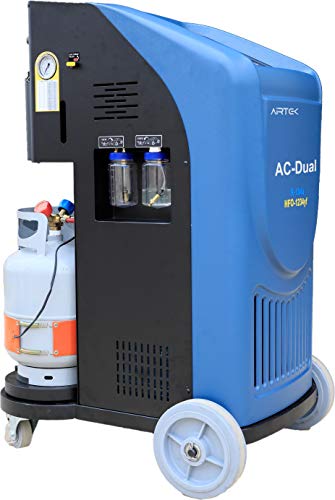
- Dual R134a and HFO-1234yf support
- Fully automatic, enter-and-walk-away workflow
- Claims 95% recovery rate
Best For: Shops servicing newer and older vehicles, including EVs and hybrids
R-134a Shop Workhorse
Robinair 34288NI Economy Recovery Machine

- All-in-one recover, recycle, evacuate, recharge
- Exceeds SAE J2788 accuracy and efficiency targets
- Automatic oil drain and air purge features
Best For: Standard non-hybrid R-134a service work
Certified Recovery Utility
Mastercool 69110 SAE J2810 Recovery System
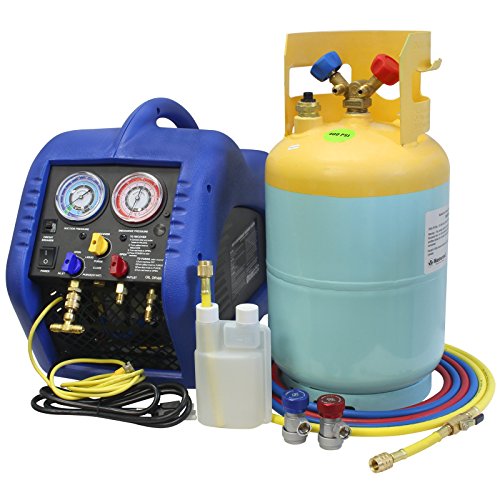
- SAE J2810 certified recovery unit
- Works with R134a, R12, R22, and R410A
- Includes 30 lb tank and conversion hoses
Best For: Technicians needing a versatile certified recovery setup
Portable Dual-Cylinder Speed
VEVOR 1 HP Dual Cylinder Recovery Machine

- Dual-cylinder design for faster recovery
- Lightweight 30.8 lb portable build
- Supports many refrigerants, including R134a and 1234yf
Best For: Mobile techs and small shops needing faster recovery
Automated R134a Shop Unit
VEVOR Fully Automatic R134a Recovery Machine
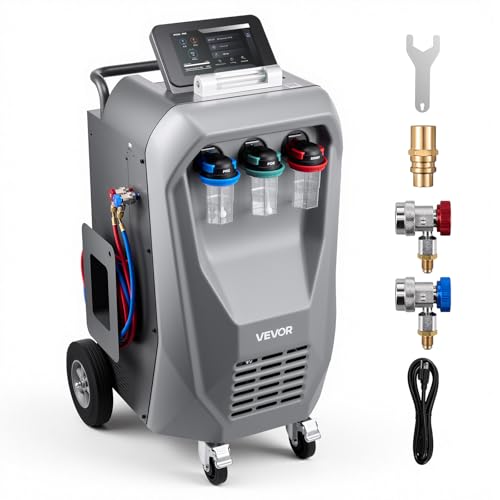
- Fully automatic workflow for recovery, vacuum, recharging, and oil replacement
- 10.1-inch touchscreen with vehicle database and real-time data
- Safety protections include high/low pressure shutdown and overcurrent protection
Best For: Automotive shops needing a dedicated R134a recovery and recharge machine
Portable Recovery Runner
Robinair RG3 Portable Refrigerant Recovery Machine

- Compact 18-pound design for easy carry and transport
- Handles common CFC, HFC, and HCFC refrigerants including R-410A
- Recover both liquid and vapor with simple 2-valve controls
Best For: Portable recovery work where compact size and broad refrigerant compatibility matter
1234yf Shop Specialist
VEVOR Fully Automatic 1234yf Recovery Machine

- Fully automatic station for recovery, vacuum, filtration, recharging, and oil replacement
- 7-inch touchscreen with vehicle database and 98.5%+ accuracy
- Safety protections include pressure monitoring, shutoff, and overcurrent protection
Best For: 1234yf-focused shops that want automated automotive recovery and recharge service
Heavy-Duty Portable Option
3/4 HP A2L Recovery Machine for Auto AC

- 3/4 HP motor with up to 4.85 lb/min liquid recovery
- Works with R134a, R1234yf, R32, and other common refrigerants
- Portable handle, shoulder strap, and fluorescent gauges
Best For: Technicians needing portable automotive AC recovery with A2L support
Fastest Recovery Focus
Robinair RG6 Speed-Driven Recovery Machine

- Twin-cylinder oil-less compressor for fast recovery
- Oversized condenser and fan help shorten cycle times
- Self-purge and 550 psi shut-off add safety
Best For: Techs who want fast, rugged refrigerant recovery
Budget-Friendly Shop Pick
3/4 HP Portable Recovery Machine

- 3/4 HP oil-less compressor for vapor and liquid recovery
- Wide refrigerant compatibility for auto and household AC
- Self-purge, overload protection, and 558 psi shut-off
Best For: Shoppers wanting a versatile portable recovery unit
Dual-Refrigerant Automation – Airtek AC-Dual Fully Automatic
Airtek AC-Dual Fully Automatic Machine, HVAC Automotive Recovery and Recharge of R134 and HFO1234yf
Check Price On AmazonIf you want an AC recovery machine for automotive use that can handle both modern refrigerants, the Airtek AC-Dual is built around convenience. It supports R134a and HFO-1234yf, switches between systems in about 10 minutes, and runs fully automatic so you can enter the job info and walk away.
Best For: Shops that service domestic, foreign, electric, and hybrid vehicles and want dual-refrigerant coverage.
Pros:
- Dual R134a and HFO-1234yf recovery and recharge support
- Fully automatic operation reduces hands-on monitoring
- Claims 95% recovery rate for efficient refrigerant handling
- Includes two empty refrigerant tanks and oil-injection controls for non-EV and hybrid work
Cons:
- Heavy 275-pound machine is not especially portable
- May be more machine than a shop needs if it only services one refrigerant type
The Airtek AC-Dual makes sense for technicians who need broad vehicle coverage and want less manual intervention during service. Its dual-system design and automatic workflow are the main reasons to consider it.
R-134a Shop Workhorse – Robinair 34288NI Economy Recovery Machine
The Robinair 34288NI is a practical AC recovery machine for automotive use when your focus is standard R-134a systems. It combines recover, recycle, evacuate, and recharge functions with simple operation, while aiming for strong accuracy and efficiency in a shop setting.
Best For: Technicians working on standard non-hybrid R-134a mobile A/C systems.
Pros:
- Recovers, recycles, evacuates, and recharges in one unit
- Exceeds SAE J2788 standards and recovers more than 95% of refrigerant
- Programmable vacuum function up to 99 minutes
- Automatic oil drain and air purge help reduce manual steps
Cons:
- Designed for standard non-hybrid R-134a systems only
- Weighs 206 pounds, so it is not a lightweight option
For shops that mainly service R-134a vehicles, this Robinair model offers a balanced mix of automation and control. It is a strong fit if you want proven workflow features without moving into dual-refrigerant territory.
Certified Recovery Utility – Mastercool 69110 SAE J2810 Recovery System
For buyers who want a straightforward AC recovery machine for automotive use with broad refrigerant compatibility, the Mastercool 69110 is built for recovery rather than recharge automation. It includes a 30 lb DOT tank, conversion hoses, and an oil-less compressor, making it a versatile choice for service jobs.
Best For: Technicians who need a certified recovery unit with flexible refrigerant compatibility.
Pros:
- SAE J2810 certified for professional recovery work
- Handles R134a, R12, R22, and R410A
- Includes 30 lb DOT tank and conversion hoses
- Automatic low-pressure cut-off adds safety during operation
Cons:
- Focused on recovery, not a full recover-recycle-recharge machine
- Bulkier accessory setup may be more than a simple DIY user needs
This Mastercool unit is a solid pick when certification, safety, and refrigerant flexibility matter most. It suits technicians who want a dependable recovery system with a more traditional toolset.
Portable Dual-Cylinder Speed – VEVOR 1 HP Dual Cylinder Recovery Machine
If portability and fast recovery matter, this VEVOR AC recovery machine for automotive use leans into speed and compact size. Its dual-cylinder design is rated for a maximum liquid recovery rate of 7.7 lb/min, and it supports a wide range of refrigerants including R134a and HFO-1234yf.
Best For: Mobile techs and small shops that want a lightweight, fast-recovery machine.
Pros:
- Dual-cylinder design for faster recovery than single-cylinder models
- Lightweight 30.8 lb build is easy to move
- Supports many refrigerants, including R134a and 1234yf
- High-pressure protection and self-cleaning purge add convenience
Cons:
- Recovery-focused machine without recharge features described in the notes
- May be overkill if you only need a basic, occasional-use tool
This VEVOR model is a good fit when you want quicker recovery in a more portable package. Its mix of speed, safety features, and broad refrigerant compatibility makes it appealing for varied service work.
Automated R134a Shop Unit – VEVOR Fully Automatic R134a Recovery Machine
If you want an AC recovery machine for automotive use that can handle recovery, vacuum, filtration, recharging, and oil replacement in one workflow, this VEVOR unit is built for that job. It is designed around fully automatic operation, a 10.1-inch touchscreen, and a vehicle database that helps match recovery and recharge amounts with high accuracy.
Best For: Shops servicing R134a automotive A/C systems, including standard and high-voltage vehicles, that want an automated all-in-one recovery station.
Pros:
- Fully automatic mode combines recovery, vacuum, filtration, recharging, and oil replacement
- 10.1-inch touchscreen shows steps and real-time data clearly
- Built-in database supports automatic matching with accuracy of at least 98.5%
- Protection features include high- and low-pressure shutdown plus overcurrent protection
Cons:
- Heavy unit at 209 pounds, so it is not very mobile
- Designed for R134a, so it is not a universal refrigerant solution
- Requires correct adapter selection for the refrigerant port
Overall, this is a strong choice when your priority is automation and repeatable service flow rather than portability. Its safeguards, touchscreen controls, and automotive-focused compatibility make it better suited to a dedicated shop environment.
Portable Recovery Runner – Robinair RG3 Portable Refrigerant Recovery Machine
The Robinair RG3 is a practical AC recovery machine for automotive use when portability matters more than full automation. It is compact, lightweight, and designed to recover both liquid and vapor refrigerant, making it useful for a wide range of common CFC, HFC, and HCFC jobs, including R-410A.
Best For: Technicians who need a small, easy-to-carry recovery machine for residential, appliance, marine, or light service work.
Pros:
- Weighs just 18 pounds and has a compact footprint for easy transport
- Works with common CFC, HFC, and HCFC refrigerants, including R-410A
- Can recover both liquid and vapor refrigerant with a 1/3 HP oil-less compressor
- Simple 2-valve controls and easy-to-read gauges make operation straightforward
Cons:
- Not an automotive all-in-one service station; it is focused on recovery only
- Manual operation is simpler, but less automated than touchscreen systems
- Best suited to smaller recovery jobs rather than full-shop volume use
For users who want a rugged, portable recovery unit instead of a larger service machine, the RG3 is a dependable fit. Its versatility and easy carry design make it especially appealing when you need a machine that moves with the job.
1234yf Shop Specialist – VEVOR Fully Automatic 1234yf Recovery Machine
If you are shopping for an AC recovery machine for automotive use on 1234yf systems, this VEVOR model is built as a fully automatic station for recovery, vacuum, filtration, recharging, and oil replacement. The 7-inch touchscreen and vehicle database help streamline the process while keeping recovery and recharge amounts accurate to at least 98.5%.
Best For: Shops and technicians servicing 1234yf automotive A/C systems on standard and high-voltage vehicles.
Pros:
- Fully automatic mode covers recovery, vacuum, filtration, recharging, and oil replacement
- 7-inch touchscreen provides step-by-step operation and real-time data
- Vehicle database supports automatic matching with at least 98.5% accuracy
- Pressure, overcurrent, and overheating protections add a safety-first design
Cons:
- Heavy at 191.8 pounds, so it is better suited to a fixed workspace
- Built specifically for 1234yf rather than a wider refrigerant mix
- Requires the correct adapter for the refrigerant port
This model makes the most sense if your shop already works on 1234yf-equipped vehicles and wants a more automated service process. Its touchscreen workflow, protection features, and automotive focus make it a strong specialty choice.
Heavy-Duty Portable Option – 3/4 HP A2L Recovery Machine for Auto AC
If you need an AC recovery machine for automotive use that can also handle residential and commercial jobs, this 3/4 HP oil-less unit is built for efficient refrigerant recovery rather than charging or vacuuming. Its wide refrigerant compatibility and portable layout make it a practical pick for technicians working in garages, tight service areas, or low-light conditions.
Best For: Technicians who want a portable, A2L-compatible recovery machine for auto AC and mixed HVAC service.
Pros:
- 3/4 HP 120V motor with up to 4.85 lb/min liquid recovery rate
- Compatible with R134a, R410A, R22, R404A, R507, R32, and R1234yf
- Reinforced handle and shoulder strap improve portability
- Fluorescent gauges help with readings in darker work areas
Cons:
- Recovery only; it does not vacuum or charge refrigerant
- Requires a complete service setup with separate tools
- Heavier than some compact portable units at 34.4 pounds
This model stands out if compatibility matters most, especially for modern automotive refrigerants like R1234yf and R32. The built-in self-cleaning support, replaceable filter drier, and 558 PSI auto shut-off add useful protection for regular shop use.
Fastest Recovery Focus – Robinair RG6 Speed-Driven Recovery Machine
For shoppers comparing an AC recovery machine for automotive use, the Robinair RG6 is built around speed and ruggedness. Its twin-cylinder oil-less compressor, oversized condenser area, and large fan are designed to shorten cycle times, which is especially useful when you want fast liquid and vapor recovery in hot conditions.
Best For: Technicians who prioritize fast recovery speed and durable jobsite handling.
Pros:
- Twin-cylinder oil-less compressor for fast liquid and vapor recovery
- Oversized condenser area and larger fan help reduce cycle times
- High-pressure shut-off at 550 psi adds protection
- Built-in self-purge feature helps prevent refrigerant mix issues
Cons:
- Heavier than the lightest portable models at 27 pounds
- Does not list A2L compatibility in the supplied notes
- More focused on speed than extra transport accessories
The RG6 is a strong fit when turnaround time matters more than extras. It offers simple controls, oversized gauges, and a rugged shell, making it a dependable choice for technicians who want a fast, straightforward recovery machine.
Budget-Friendly Shop Pick – 3/4 HP Portable Recovery Machine
This AC recovery machine for automotive use is built as a portable 3/4 HP option for vapor and liquid refrigerant recovery. It includes a self-purge function, pressure gauges, and a replaceable filter drier, making it a practical match for auto, household, and commercial AC recovery tasks.
Best For: Buyers who want a portable, all-around recovery unit with strong refrigerant compatibility.
Pros:
- 3/4 HP oil-less compressor supports quick vapor and liquid recovery
- Compatible with a wide range of refrigerants, including R134a and R410A
- Self-purge function helps clear residual refrigerant from the unit
- Auto shut-off at 558 psi and overload protection support safer use
Cons:
- Not approved for explosive, flammable, or corrosive refrigerants
- Cannot be used with single-use refrigerant tanks
- At 29.8 pounds, it is portable but not ultra-light
Overall, this model makes sense if you want broad compatibility and practical safety features without moving up to a more specialized recovery machine. The compact handle design and upgraded cooling layout also help it suit routine shop and field work.
How We Picked the Best AC Recovery Machine for Automotive Use
For this roundup, we prioritized refrigerant compatibility, recovery speed, automation level, tank and compressor capacity, and practical features that matter in a working shop. We also looked for models suited to an AC Recovery Machine for Automotive Use, not just general HVAC service.
Quick Comparison: What the Main Differences Mean
Fully automatic machines reduce operator steps and are better for repeat service bays. Portable recovery units are easier to move and can be a smart fit for mobile technicians or smaller shops. Higher-capacity compressors and dual-cylinder designs generally recover faster, while certified systems and accurate controls are better for shops that want tighter process control.
Key Buying Factors for AC Recovery Machine for Automotive Use
Refrigerant Compatibility
Match the machine to the vehicles you service. Many shops still need strong R134a support, while newer vehicles may require R1234yf or A2L compatibility. If you work on mixed fleets, choose a unit that covers the widest range you realistically need.
Recovery Speed and Compressor Design
Recovery speed affects bay turnover. Look at horsepower, single- versus dual-cylinder design, and whether the machine is built for liquid and vapor recovery. Faster is not always better if the machine is oversized for your workload, but slow recovery can bottleneck busy shops.
Automation and Controls
Automatic shut-off, digital displays, and guided recovery/recharge programs reduce mistakes and make training easier. Manual systems can cost less, but they usually require more attention during every cycle.
Portability and Tank Setup
If you move between vehicles or service locations, portability matters. For fixed installations, a heavier machine with a larger tank and more robust compressor may be worth the tradeoff.
Certification and Service Use
Shops that want a more professional, compliance-minded setup should look for SAE-oriented features, clear operating procedures, and reliable refrigerant handling. That is especially important when the machine is used daily.
Who Should Buy Which AC Recovery Machine for Automotive Use?
Choose a fully automatic system if you want the easiest workflow and the least chance of operator error. Pick a portable recovery machine if mobility and flexibility matter most. If you service older vehicles, a solid R134a-focused unit may be enough. If you handle newer systems too, prioritize dual-refrigerant or 1234yf-ready options. For high-volume automotive A/C work, invest in a faster, more durable machine with strong recovery capability and practical controls.