OBD2 Scanner Car Code Reader review is best understood as a practical DIY tool, not a luxury gadget.
If you want a simple way to read and clear engine codes, check readiness status, and get a quick voltage readout, this listing is aimed squarely at you.
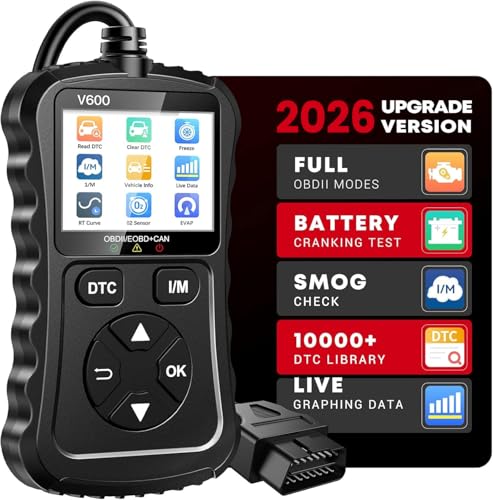
OBD2 Scanner Review Summary
This OBD2 Scanner makes sense for drivers who want an approachable diagnostic tool that does more than the absolute minimum.
The listing emphasizes broad OBDII compatibility, a large fault-code database, live data, freeze-frame viewing, I/M readiness checks, and a voltage test function, so it fits the person who wants a compact scanner for routine maintenance, warning-light triage, and basic troubleshooting without a steep learning curve.
The strongest case for this product is its mix of simplicity and breadth.
The plug-and-play format, shortcut keys, and clear screen are all geared toward fast use in a driveway or garage, while the added voltage monitor gives you an extra clue when a battery or charging issue might be part of the problem.
It is also positioned for a wide audience, including many 1996+ U.S. vehicles and many EU and Asian models, which improves the odds that one scanner can serve multiple cars in the same household.
The main caution is also clear from the listing: this is an engine-code reader, not a full professional diagnostic platform, and the compatibility notes matter.
It does not claim truck or motorcycle coverage, and some Japanese models after 2005 are called out specifically.
That makes it a better fit for standard passenger vehicles than for buyers who need advanced service functions, brand-specific diagnostics, or heavy-duty vehicle support.
Review Scorecard
| Category | Score | Why it scores this way |
|---|---|---|
| Ease of use | 8/10 | Plug-and-play design, shortcut keys, and a compact layout are aimed at beginners. |
| Diagnostic breadth | 7/10 | Reads and clears engine codes, supports live data, freeze frame, and readiness checks. |
| Compatibility | 7/10 | Broad OBDII coverage is claimed, but the listing also includes vehicle-specific cautions. |
| Value for DIY use | 8/10 | The feature mix is strong for routine home troubleshooting without extra complexity. |
| Build and handling | 7/10 | Impact-resistant housing and a flexible cable are practical, if not premium. |
| Readability | 8/10 | The bright color screen is a useful touch for low-light garage work. |
| Practical extras | 7/10 | Voltage testing and multi-language support add real utility beyond basic code reading. |
Key Features and Specifications of OBD2 Scanner
The listing positions this scanner as a compact OBD2 diagnostic tool for reading and clearing engine fault codes, with a database of more than 30,000 codes.
It also supports live data streaming, graphical analysis, freeze frame viewing, MIL status checks, and I/M readiness monitoring.
Those are the features that matter most for everyday car ownership, because they help you answer two questions quickly: what triggered the light, and is the car ready for inspection?
Several hardware and usability details stand out.
The scanner uses a bright color display, six operation buttons, dedicated I/M and DTC shortcut keys, and a plug-and-play design.
The body is described as impact-resistant with a non-slip housing, and the cable is said to be long and flexible.
That combination points to a tool meant to be handled in real-world garage conditions rather than kept pristine in a drawer.
The added voltage test function is one of the more useful differentiators in the listing.
A quick voltage readout can help you notice electrical instability before it becomes a deeper problem, especially when a car is acting inconsistently or the battery may be weak.
It is not a substitute for a full electrical diagnostic process, but it is a sensible extra for a low-cost scanner class.
The compatibility claims are broad but not unlimited.
The listing says it supports most 1996+ U.S. cars, over 2000 EU and Asian models, plus SUVs and light trucks, and it supports all OBDII protocols.
It also mentions 10 languages.
At the same time, the notes caution that it cannot detect trucks or motorcycles and that some Japanese models manufactured after 2005 may have OBD diagnostic limitations.
That is the kind of detail buyers should check before assuming universal fit.
| Spec area | Listing detail |
|---|---|
| Core function | Read and clear engine error codes |
| Extra diagnostics | Live data, graphical analysis, freeze frame, MIL status, I/M readiness |
| Code database | 30,000+ fault codes claimed |
| Extra utility | Voltage test function |
| Controls | 6 buttons, I/M and DTC shortcuts |
| Screen | Bright color screen |
| Compatibility | Most 1996+ U.S. cars; many EU and Asian models; all OBDII protocols |
| Languages | 10 languages claimed |
Pros and Cons of OBD2 Scanner
Pros
- Easy to approach for first-time users.
- Covers the core tasks most owners actually need: reading codes, clearing codes, and checking readiness.
- Voltage testing adds value beyond a bare-bones code reader.
- The screen, buttons, and plug-and-play design are meant for quick use.
- Broad compatibility claims make it appealing as a household scanner.
Cons
- It is not presented as a professional-grade scan tool with deep manufacturer-specific coverage.
- The listing contains compatibility caveats that buyers should not ignore.
- Truck and motorcycle support is explicitly ruled out.
- The feature set is useful, but it is still centered on basic OBD2-level diagnostics.
Who Should Buy OBD2 Scanner?
This is a sensible buy for drivers who want a straightforward code reader for routine troubleshooting.
If your main goal is to find out why the check-engine light came on, confirm whether a fault is still present, and see whether the car is ready for inspection, the feature mix is well matched to that job.
It also fits households with more than one compatible vehicle, especially when the cars are standard passenger models and you want a single tool that can handle multiple basic diagnostics.
The multi-language support may also matter if the scanner will be used by different drivers or in a mixed-language environment.
You should probably skip it if you need advanced service resets, brand-specific module access, or heavy-duty vehicle support.
It is also not the right choice if your use case centers on motorcycles or trucks, since the listing explicitly says it cannot detect those.
And if you own a vehicle known to have unusual OBD behavior, the compatibility notes deserve a close check before purchase.
How the OBD2 Scanner Fits Real-World Use
Quick Fault Checks
For everyday use, the most important job is simple: identify the code, clear it if appropriate, and confirm whether it returns.
The scanner’s focus on engine codes, MIL status, freeze frame data, and readiness checks is aligned with that workflow.
That makes it useful for the common “what does this light mean?” situation that frustrates most drivers.
Electrical Clues
The voltage test function is a small but meaningful advantage.
When warning lights seem inconsistent, or the car behaves oddly during start-up, voltage information can point you toward a battery or charging issue faster than a code-only reader would.
It does not replace a multimeter or a full charging-system test, but it is a smart addition in this category.
Beginner-Friendly Handling
The practical design choices matter here: six buttons, shortcut keys, a readable screen, and a compact shell.
Those are the details that reduce friction when someone is using the scanner for the first few times.
If a product is supposed to live in a glovebox or tool drawer and come out only when needed, simplicity is not cosmetic; it is the feature.
Compatibility Checks Matter
The broad vehicle support is attractive, but the caution notes are just as important.
A scanner is only helpful when it actually communicates with the car you own, so the best buyer habit is to match the vehicle year, market, and model against the listing before ordering.
That is especially true if you own a Japanese model from the mid-2000s onward or anything outside standard passenger-car OBDII use.
Alternatives to OBD2 Scanner
If you want a comparable entry-level scanner, the Ancel AD310 is a common baseline choice for basic code reading and clearing.
For a slightly more feature-rich option in the same general category, the BlueDriver OBD2 Scanner is worth comparing if you want a more app-connected experience.
If you prefer a well-known DIY automotive brand, the Autel OBD2 scanner line is another credible search term for buyers comparing screen tools and handheld diagnostic readers.
Is OBD2 Scanner Worth It?
Yes, if your goal is simple, dependable OBD2 diagnostics for a standard passenger vehicle. The feature set is practical, the interface sounds beginner-friendly, and the added voltage test gives it a little more usefulness than the most basic code readers.
The value drops if you need advanced diagnostics or you are shopping for vehicles outside the listing’s comfort zone.
For a driver who mainly wants to read codes, clear them, and get a better picture of what the car is doing, this looks like a reasonable buy.
For anyone who needs deeper coverage, it is better to compare it with stronger scan tools before deciding.