The best welding machines for hobbyists make it easier to repair equipment, build small projects, and learn essential fabrication skills without investing in an industrial setup. This roundup compares compact 110V welders, flux-core and MIG models, multiprocess machines, and simple stick welders.
We focused on portability, beginner-friendly controls, useful process options, included accessories, and practical performance for common home workshop tasks.
Best 10 Welding Machines for Hobbyists Picks for 2026
Portable Small-Job Pick
Lincoln Electric Weld-Pak 90i FC

- 15-pound inverter design with shoulder strap
- Simple wire-speed and voltage controls
- Includes protective case and welding accessories
Best For: DIY repairs, maintenance, and small welds up to 1/4 inch
Versatile Beginner Pick
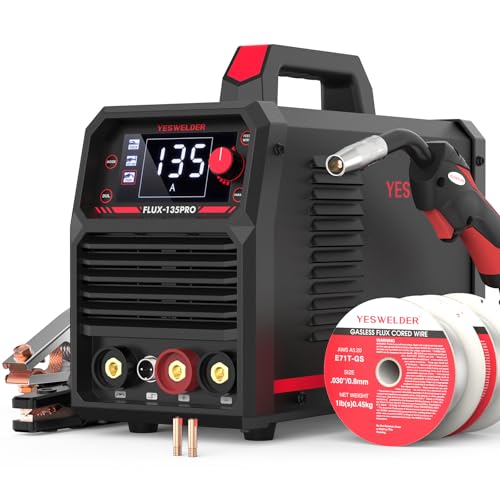
- Gasless MIG, Stick, and Lift TIG capability
- Synergic control helps prevent thin-metal burn-through
- Portable 11.4-pound design with digital display
Best For: Beginners needing flexible light-duty welding processes
Ultra-Portable Stick Pick

- 3.7-pound design fits a toolbox or backpack
- 20–200A adjustable current range
- Includes rods, gloves, and chip hammers
Best For: Mobile DIY repairs and compact stick-welding setups
Ready-to-Weld Kit Pick

- Includes .035-inch flux-cored wire and gloves
- Portable 15-pound 120V inverter welder
- Thermal protection and simple adjustment controls
Best For: DIY, home repairs, and light-gauge welding with starter supplies
Best Complete Kit

- Supports several common stick-rod types
- Includes helmet, goggles, gloves, rods, and tools
- Portable design with LED display and anti-stick function
Best For: Beginners and DIY users wanting a ready-to-use stick-welding kit
Best MIG Option
Lincoln Weld-Pak 90i Combo Kit
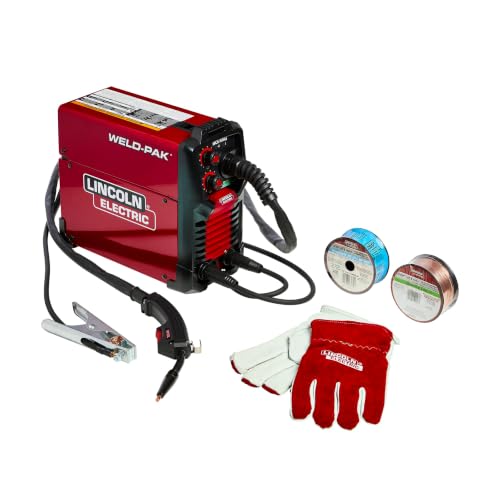
- Handles MIG and flux-cored welding
- Includes two wire spools and metal-working gloves
- Portable 120V inverter with adjustable controls
Best For: Small home repairs and DIY projects using wire welding
Best Ultra-Portable Pick
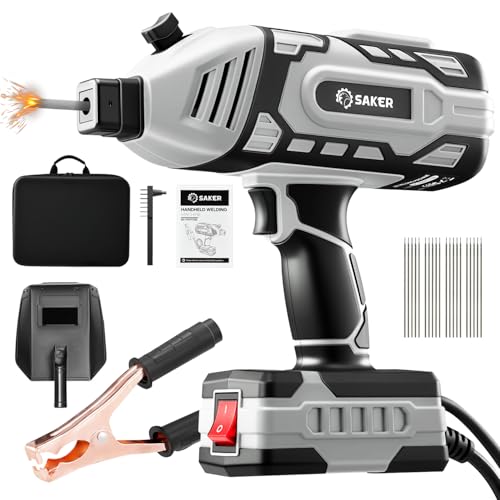
- Lightweight 3.3-pound handheld design
- Adjustable 20–120A output with five settings
- Hot-start ignition and overheat protection
Best For: DIY users needing a compact stick welder for mobile repairs
Best All-Around Pick
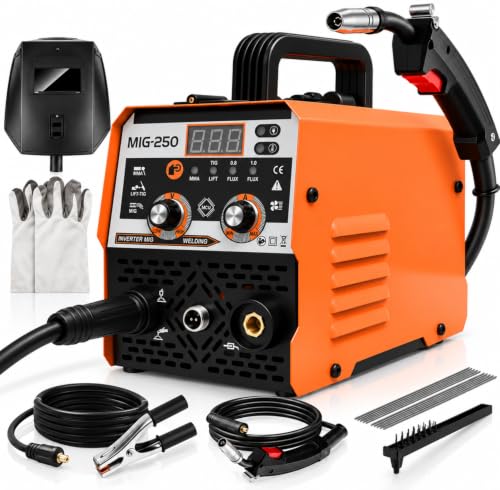
- MIG, Lift TIG, and stick modes
- Synergic digital controls for easier setup
- Includes helmet, gloves, wire, and rods
Best For: DIY repairs and versatile home-shop welding
Best for Outdoor Repairs

- Gasless flux-core, stick, and Lift TIG modes
- Lightweight 7.7-pound portable design
- Includes torch, wire, clamp, and contact tips
Best For: Outdoor repairs and portable garage projects
Best Beginner Kit

- 135A output for material up to 1/8 inch
- Automatic voltage and wire-feed adjustment
- Includes helmet, gloves, wire, and cables
Best For: First-time welders building a home workshop
Portable Small-Job Pick – Lincoln Electric Weld-Pak 90i FC
For hobbyists comparing welding machines for hobbyists, the Lincoln Electric Weld-Pak 90i FC is a straightforward flux-core option for home repairs and light-duty projects. Its 120V input, two-knob control layout, included accessories, and 15-pound inverter design make it practical for beginners who need portable equipment.
Best For: DIY projects, home repairs, maintenance, and small welds up to 1/4 inch.
Pros:
- Portable 15-pound design with a shoulder strap and protective metal case.
- Simple controls for adjusting wire speed and voltage.
- Includes a welding gun, nozzle, contact tip, work cable, and clamp.
- Works anywhere 120V input power is available.
Cons:
- Flux-core operation is best suited to small jobs rather than broad production work.
- Requires corded 120V power.
Choose this Lincoln when portability and simple setup matter more than advanced process flexibility. The inverter power source and infinitely adjustable welding voltage provide useful control for occasional hobby work.
Versatile Beginner Pick – YESWELDER 135A 3-in-1
Among welding machines for hobbyists, the YESWELDER 135A stands out for offering gasless flux-core MIG, Stick, and Lift TIG capability in one compact unit. Synergic control helps simplify setup, while the 110V power requirement suits many home workshops and mobile projects.
Best For: Beginners and hobbyists who want multiple welding processes for mild steel up to 3/32 inch.
Pros:
- Supports gasless flux-core MIG, Stick, and Lift TIG.
- Synergic control automatically matches recommended voltage to wire speed.
- Lightweight 11.4-pound design with a carrying handle.
- Includes .030-inch and .035-inch flux-core wire, an electrode holder, ground clamp, and MIG torch.
Cons:
- Lift TIG torch is an extra requirement.
- Rated for mild steel up to 3/32 inch, limiting heavier work.
- Gasless operation does not provide the shielding-gas setup of conventional MIG welding.
This is a useful choice if you want one machine to explore several processes without moving to a larger platform. Its display, micro-adjustment, and built-in protection add convenience for learning and light general-purpose work.
Ultra-Portable Stick Pick – Hpoouo 200A Mini Welder
For hobbyists seeking highly portable welding machines for hobbyists, the Hpoouo 200A mini stick welder is designed to fit in a toolbox or backpack. Its adjustable 20–200A range, 110V input, and included rods make it a convenient starter for home repairs and DIY metalwork.
Best For: Portable stick welding on mild steel, cast iron, and other compatible materials from 0.06 to 0.2 inch thick.
Pros:
- Compact 3.7-pound welder measures 7.8 by 3.9 by 5.3 inches.
- Adjustable 20–200A current range for varied DIY work.
- Hot start, anti-stick, and arc-force functions support easier arc starting.
- Includes 20 welding rods, chip hammers, gloves, and instructions.
Cons:
- Stick welding requires electrode handling and cleanup.
- Stainless steel use is specified for E308L-16 rods only.
- Polarity may need to be changed depending on the rod type.
This mini welder makes sense when carrying weight and storage space are major concerns. Its protective functions and broad stated rod compatibility add flexibility, but users should follow the supplied polarity guidance for each electrode.
Ready-to-Weld Kit Pick – Lincoln Weld-Pak 90i FC Combo
The Lincoln Weld-Pak 90i FC combo is a practical option for shoppers comparing welding machines for hobbyists and wanting essential consumables included. This 120V flux-cored welder combines simple controls, portable inverter construction, welding wire, and gloves for DIY and light maintenance tasks.
Best For: Hobbyists, home repairs, mobile maintenance, and light-gauge or thin-plate welding.
Pros:
- Portable 15-pound design with a shoulder strap.
- Includes a spool of .035-inch NR-211 flux-cored wire and working gloves.
- Easy-to-turn controls allow welding-parameter adjustments.
- Automatic thermal protection helps shut off output if the machine overheats.
Cons:
- Flux-cored process is intended for small and light-duty weld jobs.
- Uses corded 120V power.
- Its 30% duty cycle at 90A may require pauses during extended work.
This combo is especially convenient for first-time buyers who do not want to source wire and gloves separately. It retains the portable, uncomplicated design of the Weld-Pak 90i FC while adding useful starter accessories.
Best Complete Kit – Portable 120A ARC Welder
For hobbyists seeking welding machines for hobbyists that are ready to use, this portable 110V ARC welder combines a 20–120A-style output range with IGBT inverter technology, anti-stick operation, and a useful accessory package. Its LED display and compact 7.63-pound design make it practical for garage projects, repairs, and work away from a fixed shop.
Best For: Beginners and DIY users who want a portable stick-welding kit with accessories included.
Pros:
- Supports E6013, E6011, E6010, E7018, and E308 rods from 1/16 to 1/8 inch.
- IGBT inverter, anti-stick function, LED current display, and 360-degree cooling support easier operation.
- Includes goggles, helmet, gloves, rods, ground wire, storage bag, and other essentials.
Cons:
- It is an ARC/stick welder rather than a MIG wire-feeder system.
- The supplied information specifies 110V operation, which may limit placement near suitable outlets.
This is a practical all-in-one choice for occasional repairs and first welding projects. The included protective gear and accessories add convenience, while the portable format suits users who need to move between a garage, farm, or job site.
Best MIG Option – Lincoln Weld-Pak 90i Combo Kit
The Lincoln Weld-Pak 90i is a strong option for hobbyists comparing welding machines for hobbyists and preferring MIG or flux-cored wire. It plugs into standard 120V power, offers a 20–120A range with fine-tuning controls, and includes wire and large metal-working gloves for small repairs and DIY projects.
Best For: Home users and hobbyists handling small welds who prefer a portable MIG/flux-cored setup.
Pros:
- Supports both MIG and flux-cored welding with included .030 and .035 wire spools.
- Lightweight inverter design, shoulder strap, and top-mounted spool make it mobile and convenient.
- Infinite voltage adjustment and easy-turn controls help fine-tune weld characteristics.
- Automatic thermal protection shuts off output if the unit becomes too hot.
Cons:
- Its 90A rating and 30% duty cycle are aimed at small jobs rather than extended heavy welding.
- The kit is corded and requires access to 120V input power.
For hobbyists who want the smoother operation and convenience of a wire-feeder welder, this Lincoln package is more approachable than a basic stick setup. Its output and duty cycle are best matched to maintenance, home repairs, and light DIY work.
Best Ultra-Portable Pick – Saker 120A Handheld Welder
Among welding machines for hobbyists, the Saker stands out for its very small footprint and 3.3-pound handheld design. Its 110V IGBT inverter provides adjustable 20–120A output through a five-speed knob, while hot-start ignition and thermal protection are useful for approachable home repairs and occasional metalwork.
Best For: DIY users who prioritize a lightweight stick welder for storage, transport, and quick repairs.
Pros:
- Weighs 3.3 pounds and measures about 9.8 by 9.45 inches for easy transport and storage.
- Five-step current adjustment provides 20–120A output control.
- IGBT inverter, hot-start ignition, 360-degree cooling, and overheat protection support stable operation.
Cons:
- The supplied notes specifically identify support for 3/32-inch rods, offering less stated rod-size flexibility than some alternatives.
- Only the portable welding machine is listed among the included components, so protective gear and consumables may need to be purchased separately.
This Saker is a sensible choice when portability matters more than a complete starter bundle. Its compact size and adjustable output suit car-trunk storage, fencing repairs, automotive work, and general household projects.
Best All-Around Pick – Portable 145A 3-in-1 Welder
For hobbyists comparing welding machines for hobbyists, this 145A model stands out for combining flux-core MIG, Lift TIG, and stick welding in a compact package. Its synergic controls and digital display can simplify setup for beginners while still allowing experienced users to adjust voltage and current manually.
Best For: DIY metal repair, home garages, and hobbyists who want three welding processes in one portable machine.
Pros:
- Supports MIG, Lift TIG, and stick welding.
- Synergic control automatically adjusts settings based on wire diameter and process.
- Includes a helmet, gloves, wire, rods, brush, and welding cables.
- Compact 7.16-pound design is easy to carry and store.
Cons:
- Lift TIG torch is not specifically listed among the included accessories.
- The supplied specifications contain inconsistent weight and dimension information.
This is a flexible starter-friendly choice if you value portability and an included accessory kit. Its three-process design also gives hobbyists room to take on different repair and fabrication tasks without buying separate machines.
Best for Outdoor Repairs – SEESII 135A Portable Welder
Among welding machines for hobbyists, the SEESII 135A is geared toward portable, gasless work. Its flux-core MIG mode avoids the need for a gas cylinder, while stick mode is designed to handle rusty metal and the 30A–135A range is rated for mild steel up to 5/16 inch.
Best For: Outdoor DIY projects, farm repairs, and hobbyists who need a lightweight 110V machine for flux-core or stick welding.
Pros:
- Three modes: gasless flux-core MIG, MMA stick, and Lift TIG.
- Lightweight 7.7-pound design for one-handed carrying.
- Includes a MIG torch, ground clamp, brush, contact tips, and one-pound wire spool.
- Automatic over-current and overheat protection is included.
Cons:
- Lift TIG torch is not included.
- Gasless flux-core operation may produce a less clean finish than shielded-gas welding.
The SEESII makes the most sense when mobility and simple outdoor operation matter more than a complete TIG setup. Its included flux wire and compact IGBT inverter help keep initial setup straightforward.
Best Beginner Kit – BESTMIG 135A Flux Welder
For beginners shopping for welding machines for hobbyists, the BESTMIG 135A offers a ready-to-use flux-core package with MIG, Lift TIG, and stick functions. Its digital technology automatically adjusts voltage and wire-feed speed, while the included helmet and gloves reduce the need for immediate accessory purchases.
Best For: New welders setting up a home workshop for flux-core projects, DIY repairs, and metal work up to 1/8 inch.
Pros:
- True 135A output is rated for material up to 1/8 inch thick.
- Automatic parameter adjustment helps simplify setup.
- Includes an auto-darkening helmet, gloves, wire, torch, electrode holder, and ground clamp.
- Supports MIG, Lift TIG, and stick welding.
Cons:
- TIG torch is not included.
- Designed around gasless flux-core wire rather than a stated shielding-gas setup.
The BESTMIG is a practical entry package for hobbyists who want essential safety gear and welding accessories included. Its automatic controls can shorten the learning curve, while the multi-process design provides useful flexibility as skills develop.
How We Picked the Best Welding Machines for Hobbyists
We evaluated these machines for the needs of home users rather than full-time fabrication shops. Key considerations included input voltage, welding processes, portability, controls, duty cycle, included accessories, and the type of metal each machine is suited to handle. We also considered whether a model is approachable for beginners while retaining enough flexibility for occasional repairs and DIY projects.
Product specifications and package contents can vary by seller, so confirm the current listing before ordering. A machine’s rated amperage is only one part of its capability; electrode size, wire type, material thickness, duty cycle, and available household power all affect real-world results.
Quick Comparison
- Flux-core welders: A practical choice for outdoor work and general steel repairs because they do not require a shielding-gas cylinder.
- Multiprocess welders: Offer MIG, flux-core, lift TIG, and stick functions in one compact unit, making them useful for experimenting with different techniques.
- Stick welders: Simple, portable, and effective for heavier steel, though they generally require more practice to start and maintain an arc.
- Accessory bundles: Can add value for beginners, but inspect the quality and completeness of the included helmet, gloves, wire, leads, and consumables.
Key Buying Factors for Welding Machines for Hobbyists
Power and Material Thickness
Most compact models in this roundup use a standard 110V outlet, which is convenient for garages and home workshops. They are typically best for light- to medium-duty steel projects. Check the manufacturer’s recommended material range rather than relying only on the maximum amperage.
Welding Process
Flux-core welding is often the easiest starting point for basic steel projects. MIG-capable machines provide cleaner welds when used with shielding gas, while stick welding is useful outdoors and on thicker material. Lift TIG can produce more controlled welds, but it requires additional equipment and more technique.
Portability and Controls
Small inverter welders are easier to store and transport. Digital displays, synergic settings, variable current controls, and clear wire-feed adjustments can shorten the learning curve. A shoulder strap or compact case is helpful when the welder must move around a property.
Safety and Duty Cycle
Use a properly rated welding helmet, gloves, flame-resistant clothing, ventilation, and suitable eye and skin protection. Duty cycle indicates how long a machine can weld during a stated period before cooling; choose a model with enough capacity for the length and frequency of your projects.
Who Should Buy Which Welding Machines for Hobbyists?
Choose a compact flux-core model if you want a straightforward welder for household repairs, brackets, garden equipment, or small steel projects. Choose a multiprocess machine if you want to learn several methods or prefer one machine that can adapt to changing jobs. Choose a stick welder if portability, outdoor use, and thicker steel matter more than the easiest learning curve. Choose an accessory bundle if you are starting from scratch, but treat the included safety gear as a convenience and verify that it meets appropriate safety standards.