The best rotary tools for home mechanics make it easier to clean, polish, deburr, sand, grind, and handle precision repairs in the garage or workshop. The right kit should offer useful speed control, dependable power, comfortable handling, and accessories that match your projects.
We compared 10 corded and cordless models across power, control, portability, accessory selection, and overall versatility. Whether you need a compact tool for occasional repairs or a fuller kit for regular DIY work, this roundup helps narrow the choices.
Best 10 Rotary Tools for Home Mechanics Picks for 2026
Versatile Value
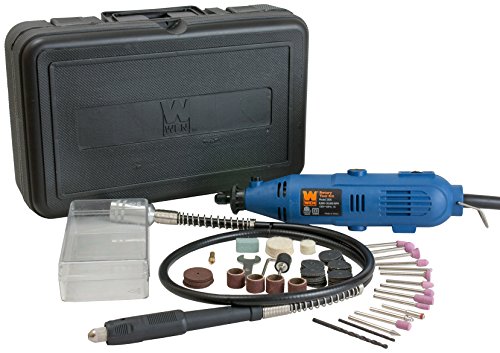
- 8,000–30,000 RPM variable speed
- 80-piece accessory set included
- Flex shaft and spindle lock
Best For: Home mechanics wanting a broad, budget-friendly starter kit
Controlled Performance

- 1.6-amp motor with 5,000–35,000 RPM
- Electronic speed control
- Two attachments and 32 accessories
Best For: Regular workshop use requiring steady speed and comfortable handling
Accessory-Packed Comfort
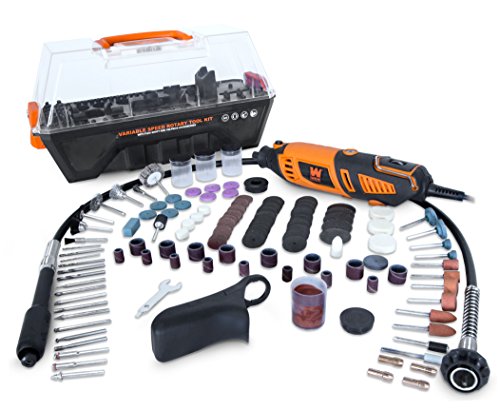
- 190-piece accessory kit
- Removable steady-grip handle
- Flex shaft and carrying case
Best For: Home mechanics wanting maximum versatility and organized storage
Premium Feature Set
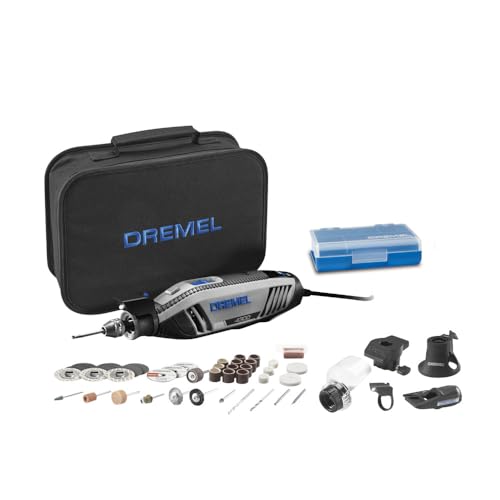
- 1.8-amp motor with electronic feedback
- Universal three-jaw chuck
- Pivot light and five attachments
Best For: Demanding workshop projects and hard-to-reach mechanical work
Best Cordless Value

- Cordless 12V operation with five speeds
- 114 accessories and two collet sizes
- Lightweight design for portable repair work
Best For: Portable home repairs, maintenance, and general DIY tasks
Best Flex-Shaft Control
DEKOPRO Corded Rotary Tool Kit

- Six speeds up to 35,000 rpm
- 42-inch flex shaft for detailed control
- 129 accessories with multiple collets
Best For: Extended corded work, polishing, deburring, and precision tasks
Best All-Around Kit
HARDELL 12V Cordless Rotary Tool

- 12V motor with 5,000–30,000 RPM range
- 94 accessories for repairs, polishing, and cutting
- Lightweight body with two collets and storage
Best For: General home-mechanic repairs and DIY projects
Best Budget-Style Detail Kit
EWORK 448-Piece Mini Rotary Tool

- 448-piece assortment spans common DIY tasks
- Five speeds from 8,000–23,000 RPM
- Lightweight pen grip with built-in LED
Best For: Light-duty detailing and small-part work
Best Organized Design
Fanttik F2 PRO Cordless Rotary Tool

- Five speeds from 5,000–25,000 RPM
- 3,000mAh battery with stated 20–120-minute runtime
- Magnetic holder, case, LEDs, and battery indicator
Best For: Portable, organized detail work and light repairs
Versatile Value – WEN 2305 Rotary Tool Kit
For home mechanics seeking rotary tools for home mechanics projects, the WEN 2305 provides a broad selection of useful functions in a corded package. Its variable-speed control, included accessories, and flex shaft make it suitable for detail work, deburring, polishing, sanding, and light drilling tasks.
Best For: Home mechanics who want an affordable, versatile starter kit with a flex shaft and a large accessory assortment.
Pros:
- Variable speed from 8,000 to 30,000 RPM supports different materials and tasks.
- Includes 80 accessories for cutting, sanding, polishing, shaping, drilling, and deburring.
- Flex shaft helps with intricate detail work and precision handling.
- Onboard spindle lock makes bit changes quicker and easier.
Cons:
- Corded operation requires access to a 120-volt outlet.
- Its maximum speed is lower than the faster Dremel options in this roundup.
The WEN 2305 is a practical choice when accessory coverage matters more than premium features. The included 2.3mm and 3.2mm collets and flex shaft give home mechanics useful flexibility for general workshop maintenance and finishing work.
Controlled Performance – Dremel 4000-2/32 Rotary Tool
The Dremel 4000-2/32 is a strong option for rotary tools for home mechanics when consistent speed and extended-use comfort are priorities. Its 1.6-amp motor, electronic speed control, ergonomic grip zone, and included attachments cover common cutting, sanding, polishing, grinding, and deburring jobs.
Best For: Home mechanics who value controlled performance, ergonomic handling, and a reputable accessory system.
Pros:
- Powerful 1.6-amp motor operates from 5,000 to 35,000 RPM.
- Electronic speed control maintains consistent speed under demanding applications.
- 360-degree grip zone is designed for comfort and control during longer sessions.
- Includes two attachments and 32 accessories for varied workshop tasks.
Cons:
- Its 32 accessories are fewer than the larger WEN 23190 kit provides.
- Corded design limits use away from a 120-volt outlet.
With its ventilation system and electronic feedback, the Dremel 4000 is aimed at users who want smoother, more controlled operation rather than the largest possible accessory count. It is a well-rounded corded tool for regular home workshop use.
Accessory-Packed Comfort – WEN 23190 Steady-Grip Kit
The WEN 23190 stands out among rotary tools for home mechanics by combining a removable steady-grip handle with a 190-piece accessory kit. Its 1.3-amp variable-speed motor and included flex shaft support both controlled detail work and a wide range of cutting, carving, polishing, and shaping tasks.
Best For: Home mechanics who want maximum accessory variety, a steady-grip handle, and organized storage in one kit.
Pros:
- Large 190-piece accessory kit covers many workshop applications.
- Removable steady-grip handle supports comfort and precision.
- Variable speed ranges from 8,000 to 35,000 RPM.
- Includes a flex shaft, carrying case, and collet sizes from 1/32 to 1/8 inch.
Cons:
- Corded operation requires a 120-volt power source.
- The extensive accessory assortment may be more than occasional users need.
This kit is especially compelling for buyers who want to start with a complete collection of bits and attachments rather than build one gradually. The steady-grip handle and flex shaft add useful control options for detailed mechanical and finishing work.
Premium Feature Set – Dremel 4300-5/40 Rotary Tool
The Dremel 4300-5/40 is built for home mechanics who want a feature-rich rotary tool for demanding projects. It pairs a high-performance 1.8-amp motor with electronic feedback, five attachments, a universal three-jaw chuck, and a pivot light for better access and visibility in tight spaces.
Best For: Home mechanics who want premium control, broad Dremel accessory compatibility, and added visibility for hard-to-reach work.
Pros:
- Powerful 1.8-amp motor with variable speed from 5,000 to 35,000 RPM.
- Universal three-jaw chuck accommodates all Dremel accessory shank sizes.
- Pivot light illuminates projects in difficult-to-reach areas.
- Includes five attachments, 40 accessories, replaceable brushes, and a storage case.
Cons:
- It may offer more features than occasional users require.
- Corded operation limits portability to areas with a suitable outlet.
The 4300 is the most feature-focused choice in this group, particularly for users who regularly switch accessories or work in confined areas. Its pivot light, universal chuck, and replaceable brushes add practical value for ongoing workshop use.
Best Cordless Value – WORKPRO 12V Rotary Tool Kit
For home mechanics who want cordless convenience without giving up useful speed control, the WORKPRO 12V kit is a practical option. Its five-speed range reaches 32,000 rpm, while the included accessories cover common sanding, grinding, cutting, polishing, and drilling jobs.
Best For: Home mechanics who need a lightweight, portable rotary tool for general repairs, maintenance, and occasional detail work.
Pros:
- Cordless 12V design with a 2.0Ah lithium-ion battery for working without a nearby outlet
- Five speeds from 7,500 to 32,000 rpm for adjusting to different materials and tasks
- Includes 114 accessories, two collet sizes, and a storage bag
- Lightweight 1.38-pound body with low vibration and noise according to the supplied notes
Cons:
- Battery-powered operation requires recharging between extended jobs
- The included accessory mix is broad, but the kit is positioned for general DIY use rather than heavy-duty shop work
The WORKPRO is a well-rounded pick for routine home-mechanic tasks where portability matters. Its accessory count and compact design make it especially convenient for quick repairs and finishing work.
Best Flex-Shaft Control – DEKOPRO Corded Rotary Tool Kit
The DEKOPRO stands out among rotary tools for home mechanics when sustained corded power and controlled detail work are priorities. Its 1.5-amp motor offers six speed settings from 8,000 to 35,000 rpm, and the 42-inch flex shaft helps reach corners with a pen-like grip.
Best For: Home mechanics who want continuous corded operation, broad accessory compatibility, and improved control for polishing, deburring, carving, and cutting.
Pros:
- Six adjustable speeds from 8,000 to 35,000 rpm
- 42-inch flex shaft can reduce vibration and improve control for precision work
- 129-piece accessory kit includes a cover shield, drill locator, buffing wheel, and storage organizer
- Four collet sizes and a three-jaw universal chuck support a range of accessories
Cons:
- Corded operation limits portability and requires access to an outlet
- At 1.86 kg, it is heavier than the supplied cordless alternatives
- The large accessory assortment may be more than beginners need for simple jobs
Choose the DEKOPRO if you expect longer sessions or prefer not to manage battery runtime. The flex shaft, assist handle, and extensive accessory selection make it the most control-focused option in this group.
Best Precision Pen – Fanttik F2 Master Kit
The Fanttik F2 Master Kit is a compact choice for home mechanics who value precision and comfortable handling over a large accessory assortment. Its slim aluminum body weighs 0.22 pound, uses pressure-sensitive speed control, and operates quietly at a stated 32 dB.
Best For: Fine engraving, light cutting, detail grinding, and polishing where low weight, visibility, and precise hand control are important.
Pros:
- Ultra-light pen-style aluminum body designed for extended detail work
- Pressure-responsive speed control with reduced vibration and quiet 32 dB operation
- Built-in work light and LED indicators for status, speed, and overload alerts
- USB-C charging reaches full power in about one hour, with up to 120 minutes of continuous use
Cons:
- Accepts 3/32-inch (2.3 mm) accessories, offering less compatibility than kits with multiple collets
- Includes 28 accessories, fewer than the WORKPRO and DEKOPRO kits
- USB-C cable is not included
The F2 is best suited to controlled, fine-detail work rather than broad accessory-heavy projects. Its light, quiet design and integrated lighting make it appealing for careful finishing and small repairs.
Best All-Around Kit – HARDELL 12V Cordless Rotary Tool
For home mechanics who want one cordless tool for routine garage and household jobs, the HARDELL combines a 12V motor with six speed settings and a broad accessory selection. Its 5,000–30,000 RPM range covers controlled polishing and engraving as well as sanding, grinding, drilling, and light cutting.
Best For: Home mechanics needing a versatile, full-size cordless rotary tool for repairs, detailing, and general DIY work.
Pros:
- 12V cordless power with up to 30,000 RPM
- Six speeds provide useful control across different materials and tasks
- Includes 94 accessories, two collets, an accessory case, and a carry bag
- Lightweight 1.1-pound body with a rubberized grip
Cons:
- The included battery setup requires recharging between uses
- Its listed applications are geared toward light cutting and general DIY rather than heavy-duty work
The HARDELL is a practical pick when accessory variety and cordless flexibility matter more than specialized features. Its higher voltage and wide speed range make it the strongest general-purpose option of these three for everyday home-mechanic tasks.
Best Budget-Style Detail Kit – EWORK 448-Piece Mini Rotary Tool
The EWORK is a compact option for home mechanics who mainly need a light-duty tool for small repairs, deburring, polishing, and detail work. Its 4V pen-style body offers five speeds from 8,000 to 23,000 RPM, while the unusually large accessory assortment covers many common DIY applications.
Best For: Light-duty home-mechanic tasks, small parts, model work, polishing, and users who value a large selection of included bits.
Pros:
- 448-piece accessory set covers sanding, grinding, cutting, polishing, carving, and drilling
- Five-speed dial supports 8,000–23,000 RPM operation
- Very light 140g pen-style design helps reduce hand fatigue
- Built-in LED light improves visibility in dim work areas
Cons:
- Designed only for light-duty work
- Its 4V platform is less suited to demanding cutting or grinding
- The extensive accessory count may require sorting and organization
The EWORK makes sense as an accessible detail tool rather than a heavy garage workhorse. Choose it when portability, an LED light, and maximum accessory variety are more important than higher power.
Best Organized Design – Fanttik F2 PRO Cordless Rotary Tool
For home mechanics who prefer a compact, neatly organized setup, the Fanttik F2 PRO pairs a five-speed, 5,000–25,000 RPM tool with a 3,000mAh battery and magnetic accessory storage. It is intended for jobs such as rust removal, blade sharpening, polishing, deburring, and working with plastic, wood, and soft metal.
Best For: Organized DIY users who want cordless detail work, visible speed settings, and convenient accessory storage.
Pros:
- High-efficiency magnetic motor with a 3,000mAh battery and stated 20–120-minute runtime range
- Five speed settings cover fine grinding through coarse cutting
- Rotating magnetic accessory holder and aluminum alloy case keep supplies accessible
- Front LED, rear battery warning, and side speed indicator support controlled work
Cons:
- Includes 55 accessories, fewer than the other two kits
- Its 25,000 RPM maximum is below the HARDELL’s listed maximum
- Runtime varies substantially with material and speed
The F2 PRO stands out for its storage and status features rather than sheer accessory quantity. It is a well-rounded choice for users who want a tidy, portable kit for repeated detail and light repair work.
How We Picked the Best Rotary Tools for Home Mechanics
We evaluated these rotary tools by focusing on the features that matter during real home-maintenance tasks: motor output, variable-speed range, runtime or cord reach, grip comfort, attachment compatibility, included accessories, and storage. We also considered whether each kit is better suited to light detailing, occasional repairs, or more demanding workshop use.
Accessory counts were not treated as a substitute for quality. A smaller kit with useful cutting, grinding, sanding, polishing, and drilling bits can be more practical than a larger assortment filled with duplicates or low-use pieces. Cordless models were judged for portability and convenience, while corded tools received extra attention for sustained operation.
Quick Comparison
| Best For | What to Prioritize | Recommended Type |
|---|---|---|
| General garage repairs | Variable speed, broad accessory compatibility | Versatile corded kit |
| Detailed or precision work | Low-speed control, slim grip, reduced vibration | Compact cordless or precision model |
| Extended grinding and cutting | Consistent power, cooling, comfortable handling | Corded rotary tool |
| Working away from an outlet | Battery runtime, charging convenience, portability | 12V cordless model |
| New DIY users | Included accessories, case, simple controls | Complete starter kit |
Key Buying Factors for Rotary Tools for Home Mechanics
Power and Speed Control
Choose a tool with enough power for the materials you commonly handle, but do not overlook low-speed control. Lower speeds are useful for polishing, plastic, delicate surfaces, and precise engraving; higher speeds help with grinding, cutting, and material removal. Multiple speed settings or a variable-speed dial provide more control than a single-speed motor.
Corded Versus Cordless Operation
Corded tools are usually the better choice for long jobs because they deliver continuous power without charging interruptions. Cordless models are easier to carry around a vehicle, bench, or job site and avoid a power cord getting in the way. Check battery capacity, charging time, and whether a replacement battery is available before choosing a cordless kit.
Grip, Vibration, and Flex-Shaft Options
A comfortable, steady grip matters when working on small fasteners, edges, and confined areas. A flex shaft can improve precision by moving the heavier motor away from the workpiece, but it adds setup time and should be kept properly aligned. Look for a balanced housing and controls that can be adjusted without changing your hand position.
Accessories and Collet Compatibility
Make sure the kit includes the accessories you need, such as reinforced cutting wheels, grinding stones, sanding drums, wire brushes, and polishing compounds. Confirm the collet sizes and replacement-bit compatibility as well. For automotive or metalwork, favor durable abrasive and cutting accessories rather than choosing based only on the total piece count.
Who Should Buy Which Rotary Tools for Home Mechanics?
Choose a corded, accessory-rich kit if you want an all-purpose workshop tool for frequent grinding, cutting, cleaning, and polishing. A cordless 12V model is a better fit for mobile repairs, quick touch-ups, and users who value convenience over unlimited runtime. Precision-focused cordless tools suit engraving, model work, light deburring, and other tasks where a slim, easily controlled body is more important than maximum power.
For occasional home mechanics, prioritize a complete kit with a case and commonly used accessories. More experienced users should consider motor consistency, vibration control, replacement accessories, and the ability to expand the kit over time. Whichever model you select, wear eye protection, secure the workpiece, use the correct accessory and speed, and allow the tool to cool during demanding jobs.