Choosing between roof top tents can be tricky when so many models promise faster setup, better weather protection, and more comfort. The right pick depends on how you camp, how often you move, and how much weight your vehicle can carry.
This roundup focuses on hard shell options and practical buying details that matter on the trail: durability, insulation, mounting style, and real-world convenience.
Best 10 Roof Top Tents Picks for 2026
Best Value Hard Shell

- 5-second hydraulic pop-up setup
- 2-3 person hard shell with 660 lb capacity
- Built-in LED strip, side awning, and 13 pockets
Best For: Campers who want quick setup and practical all-season comfort
Most Proven Pick

- Full-size 92" x 55" sleeping area
- Sleeps 2-3 with 660 lb max load
- Waterproof design with 4 windows and rainfly
Best For: Campers who want a roomy, traditional rooftop tent
Premium All-Season Pick

- 5-second hydraulic pop-up design
- Aircraft-grade aluminum hardshell with waterproof seal
- LED light strip, side awning, and 13 pockets
Best For: Travelers who want quick setup and built-in convenience
Best Feature-Packed Upgrade
Hard Shell Tent with Crossbars

- Adjustable crossbars carry up to 150 lbs
- USB power hub and dual-mode LED lighting
- Detachable insulation liner and anti-condensation mat
Best For: Overlanders who want extra cargo utility and 4-season comfort
Fast-Deploy Hard Shell
Naturnest Sirius 1 Hardshell Rooftop Tent

- 30-second setup with hydraulic assist
- 5000mm waterproof rating and UV 50+ protection
- Fits 2-3 people with 47.2" headroom
Best For: Campers wanting quick setup and strong all-weather protection
Cold-Weather Solo Pick
Hard Shell Rooftop Tent with Winter Thermal Layer
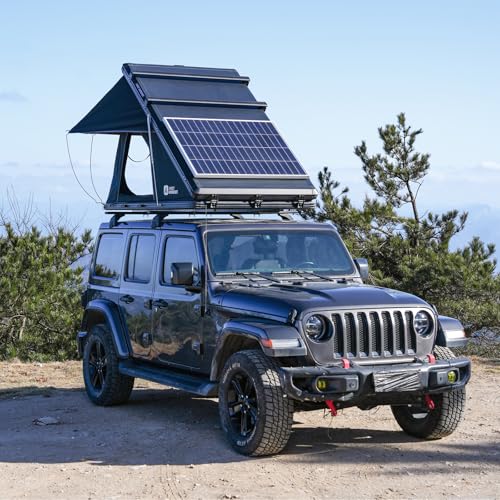
- Removable winter thermal layer for colder trips
- Solar panel plus 12V outlet for charging
- 10-second pop-up setup for one person
Best For: Solo campers who need warmth and onboard power
Heavy-Duty Aluminum Choice
Aluminum Rooftop Tent Hard Shell

- Aircraft-grade aluminum shell for durability
- 5000mm water resistance with 99% sun protection
- Flocked floor helps reduce condensation
Best For: Campers prioritizing durability and weather resistance
Solar-Powered Pick
Solar Panel Rooftop Tent Hard Shell

- 12V 216W solar panel for charging on the road
- All-aluminum shell and corners for durability
- Pop-up setup and 7-inch closed height
Best For: Travelers who want solar charging and quick hard-shell setup
Winter-Ready Choice
Rooftop Tent Hard Shell with Winter Insulation

- Removable winter thermal liner for cold-weather use
- Flocked floor helps reduce condensation
- Fast hydraulic opening and closing
Best For: Two-person camping in colder conditions
All-Season Upgrade
Rooftop Tent Hard Shell with Winter Thermal Layer

- Removable thermal layer for winter insulation
- Opens in about 10 seconds with air pressure rods
- Includes mattress, ladder, LED strip, and storage bags
Best For: Two-person overlanders wanting all-season comfort and accessories
Best Value Hard Shell – Adventurer Pro Rooftop Tent
If you want roof top tents that feel built for serious trips without overcomplicating setup, this hard shell option is worth a close look. It focuses on fast deployment, all-season protection, and a roomy interior that works well for couples or small families.
Best For: Campers who want a 2-3 person hard shell RTT with quick setup, solid weather protection, and practical storage.
Pros:
- Hydraulic pop-up design opens and closes in about 5 seconds.
- Aluminum hardshell, waterproof rubber seal, and 4-season weather protection.
- Spacious enough for 2 adults and 1 child, with 660 lb max load.
- Includes built-in LED light strip, side awning, and 13 storage pockets.
Cons:
- Requires mounting crossbars rated for at least 165 lbs.
- Heavier and more involved than a soft-shell rooftop tent.
Overall, this is a feature-packed hard shell choice for overlanders who value quick setup and a strong weather-ready build. The added storage and lighting make it especially practical for longer camping weekends.
Most Proven Pick – SmittyBilt Overland GEN2 Tent
For shoppers comparing roof top tents by space and straightforward specs, this model stands out as a proven all-rounder. It offers a full-size sleeping area, a durable waterproof build, and a classic vehicle-mounted design that fits traditional overland use.
Best For: Buyers who want a conventional rooftop tent with a full bed size, waterproof rainfly, and a higher-profile cabin feel.
Pros:
- Open size of 95″ W x 56″ L x 51″ H with sleep space for 2-3 people.
- Full-size bed dimensions of 92″ x 55″.
- 660 lb max load rating supports typical camping use.
- Waterproof construction with 2000 mm resistance and four windows.
Cons:
- Weighs 154 pounds, so installation is not lightweight.
- Uses a pull-on closure and sleeve-style setup rather than a fast hydraulic pop-up.
This is a solid choice if you prefer a familiar rooftop tent layout with clear sizing and established overland specs. It may not be the quickest to deploy, but it delivers a roomy, dependable camping platform.
Premium All-Season Pick – Explorer Pro Rooftop Tent
If you are shopping roof top tents for a mix of comfort and convenience, this hard shell model brings a strong feature set. It mirrors the fast-deploy approach and weather-ready construction of the category while adding small touches that matter on longer trips.
Best For: Travelers who want a 2-3 person hard shell tent with quick setup, built-in lighting, and organized storage.
Pros:
- Hydraulic automatic opening and closing in about 5 seconds.
- Aircraft-grade aluminum hardshell with waterproof rubber seal.
- Includes built-in LED light strip, side awning, and 13 storage pockets.
- Designed for all seasons with breathable, UV-resistant materials.
Cons:
- Needs crossbars that support at least 165 lbs.
- Like most hard shell RTTs, it is less compact than a low-profile ground tent.
Overall, this model is a strong fit for buyers who want a fast, weather-ready rooftop tent with useful extras already built in. The layout and included features make it appealing for regular overlanding and road-trip camping.
Best Feature-Packed Upgrade – Hard Shell Tent with Crossbars
This hard shell model is aimed at shoppers who want roof top tents with more utility built in. Along with quick setup and all-season comfort, it adds cargo crossbars and onboard power features that make it more versatile for extended trips.
Best For: Overlanders who want a 4-season hard shell rooftop tent with crossbars, insulation, and USB charging.
Pros:
- Two adjustable aluminum crossbars with 150 lb capacity for extra gear.
- Detachable thermal insulation liner and anti-condensation mat for 4-season use.
- Built-in USB power hub plus dual LED light strips with cool/warm modes.
- Hydraulic pop-up setup in under a minute with an ABS aerodynamic shell.
Cons:
- At 80 kg, it is a substantial rooftop system.
- Assembly time is listed at 15 minutes, so it is not a no-prep setup.
For buyers who want more than basic sleeping space, this roof top tent adds practical extras that support longer, gear-heavy trips. The combination of cargo capacity, power access, and insulation makes it especially versatile.
Fast-Deploy Hard Shell – Naturnest Sirius 1 Hardshell Rooftop Tent
If you want roof top tents that feel quick to deploy but still aim for real 4-season comfort, the Naturnest Sirius 1 is built around convenience and weather protection. Its hard-shell clamshell design, 30-second setup, and slim aerodynamic profile make it a practical pick for SUV, truck, Jeep, van, or trailer camping.
Best For: Campers who want a fast-deploy hard-shell tent with room for 2-3 people and strong all-weather protection.
Pros:
- 30-second opening and closing with a hydraulic automatic pneumatic boom
- 5000mm waterproof rating plus UV 50+ protection and integrated rain canopy
- Spacious sleeping area with 47.2 inches of headroom and a cloud foam mattress
- Useful extras like LED lighting, shoe bags, storage pockets, and mesh windows
Cons:
- At 143 pounds, it is heavy compared with smaller soft-shell options
- Single-room, one-door layout may feel limiting for some users
- Best suited to vehicles that can handle a larger rooftop load
Overall, this is a strong choice if your buying priority is speed, durability, and a comfortable sleeping space in a hard-shell roof top tent. The aerodynamic build and lockable shell add confidence for frequent travel and mixed-weather trips.
Cold-Weather Solo Pick – Hard Shell Rooftop Tent with Winter Thermal Layer
Among roof top tents, this hard-shell model stands out for camping in colder conditions thanks to its removable winter thermal layer and built-in solar charging setup. It is designed for one-person use, fast pop-up deployment, and all-season coverage with a low closed height for better clearance.
Best For: Solo campers who want a compact hard-shell rooftop tent with winter insulation and onboard charging.
Pros:
- Removable winter thermal layer helps block cold air and hold warmth
- Solar panel and 12V multi-function outlet support device charging on the road
- Fast 10-second pop-up setup with easy one-person operation
- Includes mattress, anti-condensation pad, LED strip, ladder, and storage bags
Cons:
- Designed for 1 person, so it is not ideal for couples or families
- At 198 pounds, it is a very heavy rooftop tent
- Assembly is listed at about 30 minutes, which is longer than the pop-up time
This is a niche but practical pick if you camp year-round and value insulation, power access, and a compact hard-shell design. The low closing height and waterproof build make it especially appealing for road travel where clearance and weather resistance matter.
Heavy-Duty Aluminum Choice – Aluminum Rooftop Tent Hard Shell
If you are comparing roof top tents for rugged use, this aluminum hard-shell option focuses on durability, weather resistance, and simpler daily setup. The aircraft-grade aluminum construction, hydraulic supports, and blackout-coated fabric make it a strong fit for overland-style camping and frequent travel.
Best For: Buyers who want a durable aluminum rooftop tent with quick setup and reliable weather protection.
Pros:
- Aircraft-grade aluminum shell is built for durability and load-bearing strength
- 4 hydraulic support rods help with smooth quick opening and closing
- 5000mm water resistance, 99% sun protection, and wind resistance up to grade 6
- Flocked lining floor helps reduce condensation and keep the mattress dry
Cons:
- At 178 pounds, it is still a heavy rooftop tent to manage
- Occupancy is limited to 2 people
- Lower profile height may feel less spacious than taller models
For campers who care more about toughness and weather performance than maximum interior space, this model is a sensible option. The included ladder, condensation pad, storage bags, and mesh windows round out a package that looks well-suited to regular car camping.
Solar-Powered Pick – Solar Panel Rooftop Tent Hard Shell
If you want roof top tents with built-in power support, this hard shell model stands out for its 12V 216W solar panel and all-aluminum construction. It is built for quick pop-up camping, with a low 7-inch closed height, four-season materials, and a roomy layout for car camping.
Best For: Campers who want a hard shell rooftop tent with integrated solar charging and fast setup.
Pros:
- 12V 216W solar panel supports charging mobile power banks while traveling.
- All-aluminum bottom plate, top cover, and corners add durability.
- Opens in about 10 seconds with air pressure rods and closes in two steps.
- Four-season build uses waterproof 320g polyester with W/R 5000 protection.
Cons:
- At 198 pounds, it is a heavy rooftop tent.
- Designed for 2 adults plus 1 child or pet, so it is not a large-group option.
Overall, this is a practical pick for travelers who value power access, fast deployment, and a hard shell design that emphasizes durability and weather protection.
Winter-Ready Choice – Rooftop Tent Hard Shell with Winter Insulation
For roof top tents meant to handle cold-weather trips, this hard shell option adds a removable winter thermal liner and a flocked floor to help with insulation and condensation control. It also keeps the quick-opening, all-aluminum formula, making it a strong choice for four-season camping where comfort matters.
Best For: Campers who expect winter use and want extra insulation in a hard shell rooftop tent.
Pros:
- Removable winter thermal liner adds windproof insulation for cold conditions.
- Aircraft-grade aluminum construction is designed for durability and load-bearing strength.
- Flocked lining floor helps reduce condensation and keep the mattress dry.
- Includes useful camping accessories like ladder, LED strip, mattress, and storage bags.
Cons:
- Weighs 178 pounds, so roof load and handling matter.
- Capacity is limited to 2 people.
This is a sensible choice if you want a rooftop tent built around cold-weather comfort without giving up the speed and convenience of a hard shell setup.
All-Season Upgrade – Rooftop Tent Hard Shell with Winter Thermal Layer
Among roof top tents, this hard shell model focuses on all-season versatility with a removable winter thermal layer, aluminum construction, and a triangular profile. It is designed for quick pop-up use, weather protection, and a more complete overland-style accessory package.
Best For: Buyers who want a winter-capable rooftop tent with a lighter closed profile and a full accessory set.
Pros:
- Removable thermal layer helps block cold air and improve winter comfort.
- Pop-up design opens in about 10 seconds and closes in two steps.
- All-aluminum shell and 316 stainless steel hardware improve durability.
- Includes mattress, condensation pad, ladder, LED strip, storage bags, and shoe bags.
Cons:
- Best suited to 2 people, so space is limited.
- At 166 pounds, it is still a substantial rooftop load.
If you want a hard shell rooftop tent that leans into all-season use, this one brings useful cold-weather features and a strong included-accessories package.
How We Picked These Roof Top Tents
We focused on the features shoppers compare most: shell construction, seasonal readiness, mounting compatibility, interior space, and added convenience like thermal liners, crossbars, and solar-ready designs. Since Roof Top Tents are a major investment, we prioritized models that aim to balance fast deployment with weather protection and everyday usability.
Quick Comparison
At a high level, hard shell tents are usually faster to open and close, and they tend to handle wind and rain better than softer designs. Among this group, some models emphasize winter insulation, while others lean toward lighter weight, compact profiles, or extra cargo-friendly features. If you camp year-round, insulation and sealing matter more than accessories; if you travel often, setup speed and packing efficiency may matter most.
Key Buying Factors for Roof Top Tents
Vehicle Fit and Load Limits
Check static and dynamic roof load ratings before buying. A tent may physically fit your rack, but your vehicle and crossbars still need to safely support it.
Shell Type and Setup Speed
Hard shell Roof Top Tents generally open faster and pack flatter than soft shells. Clamshell and pop-up designs can also reduce setup time, which is helpful for frequent stops or bad weather.
Seasonal Use
If you camp in cold or wet conditions, look for thermal liners, stronger sealing, and all-season waterproofing. For summer travel, ventilation and UV resistance become more important.
Space and Sleeping Comfort
Think about whether you need a true 2-person layout or extra room for gear and pets. Mattress quality, entry angle, and interior height can change how livable the tent feels on longer trips.
Added Features
Crossbars for carrying lightweight gear, integrated solar panel compatibility, and reinforced ladders can all improve real-world utility. Only pay for extras you will actually use.
Who Should Buy Which Roof Top Tents?
Frequent weekend campers often do best with a quick-deploy hard shell tent. Overlanders and long-distance travelers should look for weather resistance, low-profile packaging, and practical add-ons. If you camp through cold seasons, prioritize insulation over bells and whistles. If you want a simple upgrade from ground camping, choose the model with the easiest setup and the best fit for your vehicle and sleeping needs.