The best OBD2 car head-up displays put useful driving and vehicle information closer to your line of sight, helping you check speed, engine readings, and alerts without looking down at the instrument cluster.
These 10 options range from simple digital speedometers to multifunction HUDs with RPM, coolant temperature, voltage, fuel-consumption data, overspeed warnings, and GPS backup.
Best 10 Obd2 Car Head Up Displays Picks for 2026
Best Dual-Mode Value
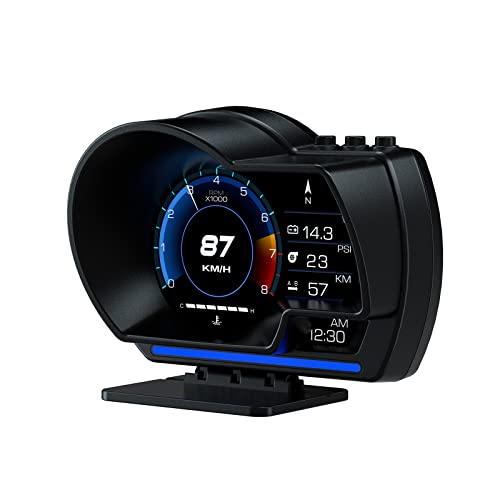
- OBD+GPS dual-mode operation
- Displays speed and extensive vehicle data
- Dashboard or windshield installation
Best For: Drivers wanting flexible mounting and GPS fallback
Best Feature-Rich Screen
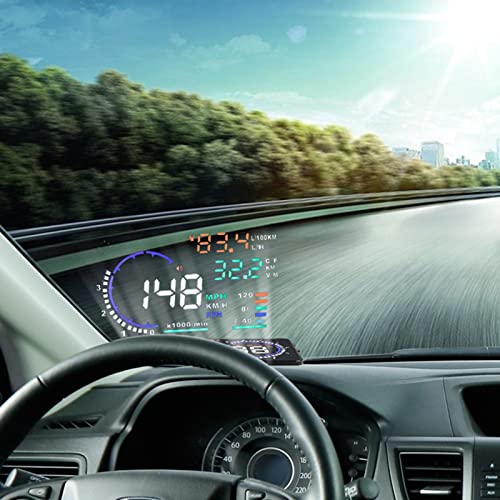
- Large 5.5-inch display
- Multiple vehicle readings and fault codes
- Overspeed and fatigue reminders
Best For: Drivers wanting a larger screen and varied alerts
Best Simple Daily Driver
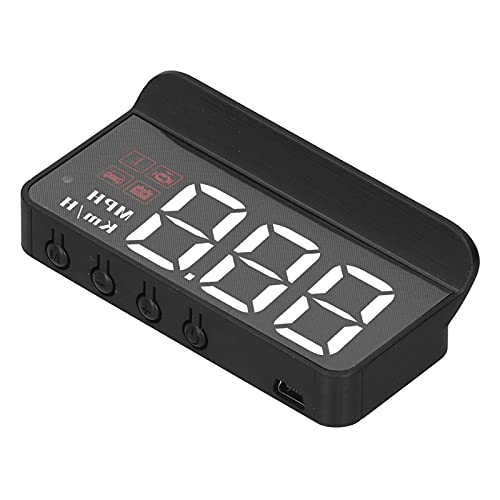
- Core speed and vehicle readings
- Automatic day/night brightness adjustment
- Includes driver-safety alarms
Best For: Everyday drivers wanting a simple readable display
Best for Diagnostics

- Reads and clears fault codes
- OBD2 and GPS dual-system modes
- Customizable data displays and alarms
Best For: Drivers wanting diagnostic tools with HUD data
Best Dual-System Pick

- OBD plus GPS dual-system data
- 13 themes with gesture control
- Performance tests and multiple alarms
Best For: Drivers wanting detailed vehicle monitoring and customization
Best Large-Screen Option
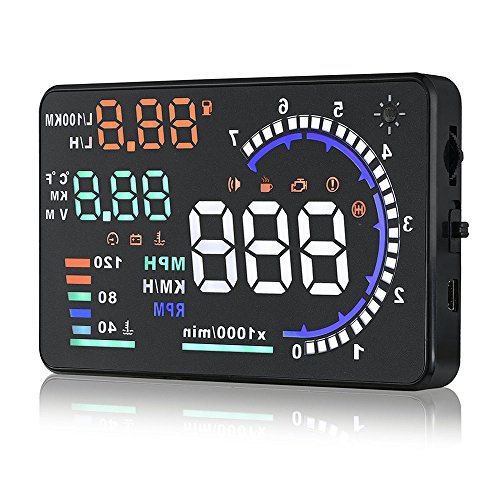
- Large 5.5-inch windshield display
- Shows speed, RPM, temperature, and voltage
- Automatic brightness and overspeed alerts
Best For: Owners of compatible gasoline vehicles wanting a simple large display
Best Compact Value

- Dashboard or A-pillar installation
- Eight switchable display interfaces
- Compact OBD and GPS data display
Best For: Drivers seeking a small HUD for essential readings
Best Integrated OBD2 HUD
MAIMEIMI Windshield Digital Speedometer

- Projects speed directly onto the windshield
- Displays RPM, temperature, voltage, and trip data
- Includes four driving and vehicle alarms
Best For: Compatible gasoline cars needing broad OBD2 data monitoring
Best Simple OBD2 Alarm HUD
Qiilu Multifunction Car Speedometer

- Plug-and-play connection with a secure buckle
- Shows speed, temperature, voltage, and mileage
- Adds five types of driving and vehicle alerts
Best For: Drivers wanting essential readings and easy installation
Best Clear-Display OBD2 HUD

- Provides a high-definition, ghosting-free display
- Monitors speed, temperature, voltage, and mileage
- Uses adaptive lighting and multiple safety alerts
Best For: Drivers prioritizing clear projected information and alerts
Best Dual-Mode Value – P6 OBD2 Gauge HUD
For drivers comparing OBD2 car head up displays, the P6 stands out with both OBD and GPS modes. It shows speed and other vehicle data, offers multiple screen interfaces, and can be mounted on the dashboard or windshield without a permanent installation.
Best For: Drivers who want broad vehicle data, GPS fallback, and flexible mounting.
Pros:
- Combines OBD and GPS functions, with GPS-only operation for vehicles without a compatible OBD2 protocol.
- Displays speed, voltage, fuel consumption, RPM, water temperature, and more.
- Offers overspeed color alerts and automatic brightness adjustment.
- Includes dashboard and windshield mounting options.
Cons:
- OBD features depend on vehicle compatibility.
- The feature-rich interface may take time to configure.
The P6 is a versatile choice if you want more than a basic speed readout. Its dual-mode design and diagnostic-style data make it especially useful for drivers who value flexibility.
Best Feature-Rich Screen – 5.5-Inch Multi-Color HUD
This 5.5-inch unit is a practical option among OBD2 car head up displays for drivers who want a larger, multi-color readout. It presents speed and vehicle information in the driver’s forward view while adding adjustable brightness and several safety reminders.
Best For: Drivers who prefer a larger display with configurable alerts and broad readouts.
Pros:
- Displays speed, engine RPM, water temperature, voltage, fuel consumption, mileage, and fault codes.
- Supports both OBD II and EUOBD systems.
- Provides overspeed, fatigue, high-temperature, low-voltage, and shift reminders.
- Uses automatic power control and adjustable brightness.
Cons:
- Compatibility is limited to vehicles with supported OBD II or EUOBD systems.
- The supplied details do not specify a GPS fallback mode.
Choose this model if display size and warning coverage matter more than diagnostic flexibility. Its broad alert set can be useful on commutes and longer drives.
Best Simple Daily Driver – Auto-Dimming OBD2 HUD
For everyday use, this compact OBD2 gauge keeps the important readings easy to scan. It combines speed, coolant temperature, voltage, and trip miles with auto-dimming brightness and a reflector sticker designed for a clear projection.
Best For: Daily drivers seeking a straightforward OBD2 display with automatic brightness control.
Pros:
- Shows speed, coolant temperature, voltage, and trip miles together.
- Automatically adjusts brightness for daylight and nighttime driving.
- Includes speed, drowsy-driver, and anti-sleep alerts.
- Designed for OBD2-compatible vehicles.
Cons:
- Requires an OBD2 interface and compatible protocol.
- Offers fewer listed vehicle readings than the more diagnostic-focused models.
This is a sensible pick when you want the core driving information without a long list of advanced functions. Its auto-dimming display and compact design suit routine driving.
Best for Diagnostics – MH OBD2+GPS HUD
The MH HUD is one of the more capable OBD2 car head up displays for drivers who want diagnostic functions alongside driving information. It can read and clear fault codes, show live data, and switch between OBD2 and GPS modes, subject to the vehicle restrictions listed by the manufacturer.
Best For: Drivers who want live vehicle data, fault-code functions, and customizable alarms.
Pros:
- Reads and clears engine fault codes and displays real-time data streams.
- Shows speed, RPM, fuel consumption, temperature, voltage, altitude, compass, and more.
- Switches between OBD2 diagnostics and GPS tracking functions.
- Offers adjustable brightness, multiple interfaces, unit choices, and configurable alerts.
Cons:
- Compatibility is restricted to supported OBDII/EOBD vehicles, generally produced after 2008.
- Listed exclusions include many diesel, hybrid, modified, and specific-brand vehicles.
- GPS mode provides fewer vehicle-diagnostic functions than OBD2 mode.
The MH is the strongest fit for buyers who will use its diagnostic capabilities rather than only its speed display. Check the compatibility exclusions carefully before ordering.
Best Dual-System Pick – P28 OBD2 Gauge HUD
For drivers comparing OBD2 car head up displays, the P28 stands out for combining OBD and GPS data in one unit. It can show speed, RPM, water temperature, voltage, fuel consumption, compass information, and more, while its gesture control and adjustable rotating bracket add convenience.
Best For: Drivers who want extensive vehicle data, customizable displays, and performance-testing features.
Pros:
- Combines OBD data with universal GPS functionality.
- Offers 13 display themes, gesture control, and a 3.6-inch screen.
- Includes speed, temperature, and voltage alarms plus fatigue reminders.
- Adds acceleration and braking tests with dynamic curves.
Cons:
- OBD compatibility varies by vehicle, so some cars may rely on GPS mode.
- The many settings and data options may be more than casual drivers need.
The P28 is a feature-rich choice for enthusiasts who want more than a basic speed display. Its dual-system design and broad data coverage make it especially appealing when customization and monitoring are priorities.
Best Large-Screen Option – 5.5-Inch A8 OBD2 HUD
This A8 is a practical choice among OBD2 car head up displays if you prefer a larger projected readout. Its 5.5-inch display shows speed, RPM, water temperature, voltage, and mileage on the windshield, with automatic or manual brightness adjustment for changing conditions.
Best For: Drivers with a compatible gasoline vehicle who want a large, straightforward windshield display.
Pros:
- Large 5.5-inch display provides easily visible readings.
- Plug-and-play setup for supported OBD II and EUOBD gasoline vehicles.
- Includes overspeed alerts and automatic ignition-linked power control.
- Anti-ghosting reflective film and adjustable brightness support clearer viewing.
Cons:
- Not compatible with several brands and some Hyundai/Kia models.
- Designed for gasoline vehicles meeting the stated compatibility requirements.
Choose the A8 when screen size and simple operation matter most. Check your vehicle carefully before ordering, since the listed exclusions are significant despite the otherwise convenient plug-and-play setup.
Best Compact Value – P8 OBD2/GPS Car HUD
The P8 is a compact option for shoppers seeking OBD2 car head up displays with flexible placement. It can mount on the dashboard or A-pillar, supports OBD and GPS modes, and displays core information such as speed, clock, RPM, voltage, and water temperature.
Best For: Drivers who want a small, adjustable HUD with basic vehicle data and simple installation.
Pros:
- Supports dashboard or A-pillar installation.
- Offers eight switchable display interfaces.
- Combines OBD and GPS modes with multiple vehicle readings.
- Includes mounting accessories, a one-year manufacturer warranty, and USB connectivity.
Cons:
- The 1.8-inch screen is smaller than the display on the A8.
- GPS may take about half a mile to lock onto a satellite before displaying speed.
- OBD mode is the default, while compatibility can vary by vehicle.
The P8 makes sense for buyers who value a compact footprint and flexible mounting over a large projection area. It covers the essentials without the more advanced customization and testing features of the P28.
Best Integrated OBD2 HUD – MAIMEIMI Windshield Digital Speedometer
If you want one of the more feature-rich obd2 car head up displays, the MAIMEIMI projects vehicle information onto the windshield and reads data through an OBD2/EOBD connection. It displays speed prominently while also offering RPM, trip, water temperature, voltage, and fuel-consumption modes.
Best For: Drivers of compatible gasoline cars made from 2008 onward who want projected speed plus multiple engine and trip readouts.
Pros:
- Projects large, real-time speed data onto the windshield.
- Offers multiple display modes, including RPM, water temperature, voltage, and trip data.
- Includes overspeed, fatigue-driving, speed, and engine-failure alarms.
- Automatic brightness adjustment helps adapt the display for day and night driving.
Cons:
- Compatibility is limited to supported OBDII/EOBD gasoline vehicles; many listed brands, hybrids, diesels, pickups, and modified vehicles are excluded.
- It does not support OBDI or JOBD systems.
- Speed accuracy may require manual adjustment after installation.
The MAIMEIMI stands out for its broad data selection and safety alerts, but buyers should verify vehicle compatibility carefully before ordering. Its plug-and-play installation is convenient when the car supports the required protocol.
Best Simple OBD2 Alarm HUD – Qiilu Multifunction Car Speedometer
Obdii Hud, Car Speedometer, Obd2 Hud Projector Multifunction Gauge Alarm Fatigue Driving Reminder
Check Price On AmazonThe Qiilu multifunction unit is a straightforward option among obd2 car head up displays. It connects to a compatible OBD2 vehicle and shows speed, water temperature, voltage, and one-way mileage, with alerts intended to highlight several driving and vehicle conditions.
Best For: Drivers seeking an easy-to-install OBD2 display with essential vehicle readings and multiple warning functions.
Pros:
- Plug-and-play installation uses a buckled connector designed to stay secure.
- Displays speed, water temperature, voltage, and one-way mileage.
- Provides overspeed, temperature, voltage, fatigue-driving, and fault alarms.
- Adaptive lighting provides brighter daytime and softer nighttime illumination.
Cons:
- Vehicle compatibility depends on having the required OBD2 interface and protocol.
- The supplied notes do not specify supported model years or a detailed compatibility list.
- Its feature set is focused on core readings rather than the broader data modes offered by some units.
With a lightweight ABS construction and simple connection process, this Qiilu display is practical for buyers who prioritize basic readings and alerts. Confirm that your vehicle uses the compatible OBD2 protocol before purchase.
Best Clear-Display OBD2 HUD – Keenso Windshield Speedometer
The Keenso windshield projector is a practical choice for shoppers comparing obd2 car head up displays for clear viewing. Designed for vehicles with an OBD2 interface and protocol, it projects key information such as speed, water temperature, voltage, and single mileage onto the windshield.
Best For: Drivers who want a high-definition projected display with automatic lighting and a range of safety alerts.
Pros:
- Supports speed, water temperature, voltage, and single-mileage monitoring.
- Includes overspeed, high-temperature, voltage, fatigue-driving, and fault alerts.
- Adaptive light sensing provides clear daytime backlighting and softer nighttime illumination.
- Includes a host unit and reflective film for a clear, ghosting-free view.
Cons:
- Compatibility requires a vehicle with the appropriate OBD2 interface and protocol.
- The supplied information does not identify specific supported makes, models, or years.
- It offers fewer described display functions than models that include RPM or fuel-consumption data.
The Keenso focuses on visibility and core monitoring rather than an extensive set of engine metrics. It is a sensible fit when clear projection, adaptive illumination, and multiple alerts matter most.
How We Picked the Best Obd2 Car Head Up Displays
We focused on displays that project or mount key vehicle information where it is easy to see while driving. The selection includes compact speed-focused models, multifunction gauge displays, and dual-system units that combine OBD2 data with GPS. We compared the information shown, compatibility claims, alert features, readability, installation approach, and overall usefulness for everyday drivers.
Because OBD2 support varies by vehicle, buyers should treat compatibility as a primary consideration rather than assuming every display will work with every car. Diesel vehicles, hybrids, electric vehicles, older cars, and vehicles with unusual diagnostic protocols may require extra checking.
Quick Comparison
- Best for basic speed visibility: Choose a straightforward OBD2 speedometer HUD with a clear, large readout.
- Best for vehicle monitoring: Select a multifunction model that displays RPM, coolant temperature, battery voltage, or fuel data.
- Best for signal backup: A dual OBD2/GPS HUD can continue providing speed information if OBD2 data is unavailable or inconsistent.
- Best for varied driving conditions: Look for adjustable brightness, automatic dimming, multiple units, and configurable alarms.
Key Buying Factors for OBD2 Car Head-Up Displays
Compatibility and Connection
Check whether the unit supports your car’s OBDII or EUOBD protocol and whether the vehicle has a standard diagnostic port. A plug-in design is usually simpler than a hardwired installation, but cable placement still matters for a clean, secure setup.
Information and Accuracy
Decide which readings you actually need. Speed is common, while RPM, water temperature, voltage, fuel consumption, and fault-code alerts are more useful for drivers who want additional vehicle feedback. GPS speed can be helpful when OBD2 speed data is unavailable, but it may respond differently in tunnels or areas with poor satellite reception.
Screen Visibility and Alerts
Prioritize adjustable brightness, automatic dimming, color options, and a readable windshield projection. Overspeed alarms can be useful, but alarms should be configurable so they do not become distracting. Avoid positioning the display where it blocks traffic or road signs.
Installation and Daily Use
Look for a unit with a stable base, manageable cable, clear controls, and simple startup behavior. Confirm whether the display automatically powers down with the vehicle and whether it retains your preferred settings.
Who Should Buy Which Obd2 Car Head Up Displays?
Drivers who want only a more visible speed readout should choose a compact, speed-focused model. Commuters and road-trip drivers may prefer a multifunction HUD with temperature and voltage information. Enthusiasts who monitor engine behavior should consider RPM and coolant-temperature support. If compatibility is uncertain, a dual OBD2/GPS system offers greater flexibility. Whichever model you choose, verify compatibility first and mount it low enough to preserve an unobstructed view of the road.