Water spots can appear after a careful wash when minerals in tap water dry on the paint or glass. A car wash water filter can help, but the right type depends on whether you need a low-cost hose attachment or a deionized final rinse.
These 10 picks cover compact inline filters and larger resin-based systems. The key is to match the filter to your water hardness, wash frequency, and willingness to replace cartridges or resin.
Best 10 Car Wash Water Filter Picks for 2026
Best Mobile DI System
Waterdrop CWE2 Spotless Water System

- Wheeled frame for moving between wash areas
- Bypass preserves filter capacity
- 200-rinse estimate assumes 50 ppm feed water
Best For: Frequent at-home washes needing a movable final-rinse system
Best Refillable DI Kit
Filterelated Spotless Water System
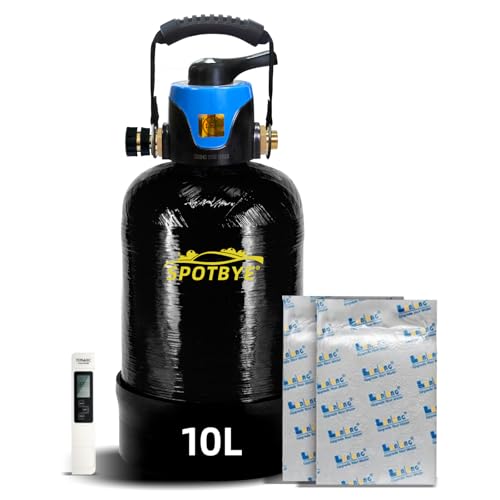
- Includes 10 liters of mixed-bed resin
- Bypass valve conserves resin
- TDS meter included; batteries sold separately
Best For: DIY detailers who want refillable resin and water-quality checks
Best Two-Pack Hose Filters
AQUA CREST Inline Car Wash Filters

- Two filters in the pack
- Fits standard 3/4-inch garden hose threads
- Compact option for cars and outdoor cleaning
Best For: Buyers seeking simple hose filtration with a spare filter
Best Hose-Protector Option
AQUA CREST Inline Filter with Protector

- Includes an anti-kink hose protector
- Fits standard 3/4-inch garden hose threads
- One compact filter for outdoor cleaning
Best For: Hose users concerned about twisting at the filter connection
Best Mobile Setup
iSpring WGB22BD Spotless Water System

- Rolling metal cart
- Up to 1,200-gallon rated capacity
- Tool-free 3/4-inch hose connections
Best For: Home detailers wanting a movable, straightforward DI setup
Best Dedicated Final Rinse
Aquatic Life Spot Free Rinse System
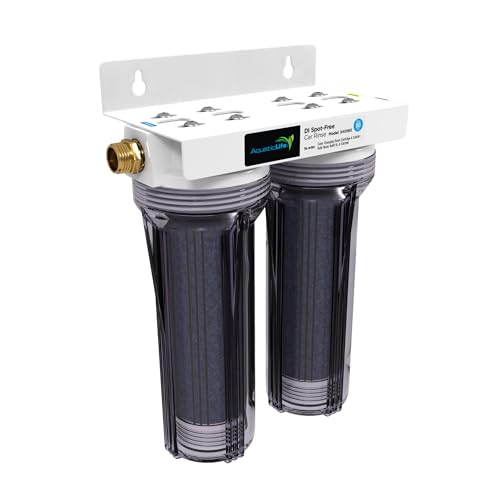
- Purpose-built for final rinses
- Two replaceable DI cartridges
- Includes mounting and connection parts
Best For: Drivers using DI water only for the final rinse
Best Built-In Bypass
iSpring WGB22BD-BP Spotless Water System

- Switches between tap and DI water
- Up to 1,200-gallon rated capacity
- Wheeled stand and quick hose connector
Best For: Frequent washers wanting a convenient DI final-rinse switch
Compact Inline Pick

- Fits a standard 3/4-inch garden hose
- DI media plus inlet and outlet sediment packs
- Rated for a maximum 0.5 gpm flow
Best For: Simple, space-saving inline rinsing
Frequent-Wash Pick

- Pre-filled 15L DI resin tank
- Bypass saves DI water for final rinses
- Refillable tank includes a mobility cart
Best For: Frequent car or RV final rinses
Portable Tank Pick
H&G lifestyles Water Deionizer

- Portable 12.52-pound unit
- Stated output of up to 500 gallons
- Flow may need adjustment to reach zero TDS
Best For: Portable DI rinsing for vehicles and other surfaces
Best Mobile DI System – Waterdrop CWE2 Spotless Water System
The Waterdrop CWE2 is a wheeled car wash water filter system for drivers who want to reserve mineral-reducing water for the final rinse. Its bypass switch lets you wash with tap water, then switch to filtered water when spotting matters most.
Best For: Frequent at-home washes of cars, larger vehicles, or boats where a movable final-rinse system is useful.
Pros:
- Ion-exchange resin reduces minerals that cause rinse spots.
- Bypass switch helps conserve filter capacity during washing.
- Wheeled, rust-resistant frame makes the system easier to move.
Cons:
- At 57.9 pounds, it is substantially heavier than an inline hose filter.
- Rinse capacity depends on incoming water quality; the stated 200-rinse estimate assumes 50 ppm TDS.
- Does not necessarily reduce TDS to zero.
This is a practical choice if you have room for a full-size unit and plan to use filtered water mainly for rinsing. Check the 3/4-inch MNPT connections against your setup before buying.
Best Refillable DI Kit – Filterelated Spotless Water System
This Filterelated car wash water filter uses 10 liters of mixed-bed resin to produce deionized rinse water. A bypass valve lets you use ordinary tap water for washing and switch to filtered water for the final rinse.
Best For: DIY detailers who want refillable resin and a way to check rinse-water quality.
Pros:
- Includes two vacuum-sealed 5-liter bags of resin and a TDS meter.
- Bypass valve helps avoid using resin during the main wash.
- Includes the tank, fittings, and other components needed for the system.
Cons:
- TDS meter batteries are not included.
- The approximate 560-gallon output is based on 200 ppm feed water and can vary with conditions.
- High flow may limit contact with the resin and leave TDS readings above zero.
The included meter makes it easier to decide when the resin needs attention rather than relying on a fixed rinse count. If readings stay high, the supplied guidance recommends fully filling the tank, allowing contact time, and reducing water pressure.
Best Two-Pack Hose Filters – AQUA CREST Inline Car Wash Filters
This two-pack of AQUA CREST inline filters offers a compact car wash water filter option for a standard garden hose. Its resin-based composite filtration is designed to reduce sediments and minerals associated with hard-water spots.
Best For: Buyers who want two lightweight hose filters for car washing and other outdoor cleaning.
Pros:
- Includes two filters that fit standard 3/4-inch garden hose threads.
- Five-micron filtration targets impurities, while the composite media reduces several listed contaminants.
- Compact design also suits window, fence, and yard cleaning.
Cons:
- No bypass valve or TDS meter is listed.
- Designed to reduce spotting, not specified to produce deionized or zero-TDS water.
- Not recommended for drinking water or fish farming.
Choose this set for simple hose hookup and a spare filter, rather than a dedicated spot-free rinse system. It can also be used with a pressure washer, according to the supplied product information.
Best Hose-Protector Option – AQUA CREST Inline Filter with Protector
This AQUA CREST car wash water filter pairs a compact inline filter with a flexible hose protector. It connects to standard 3/4-inch garden hose threads and is intended to reduce hard-water spotting during outdoor cleaning.
Best For: Garden-hose users who want an inline filter with added protection against kinking at the connection.
Pros:
- Included flexible protector helps limit twisting and kinking at the hose joint.
- Composite resin filtration and a five-micron aperture target listed impurities.
- Suitable for car, window, yard, and fence cleaning; also fits pressure washers.
Cons:
- Pack contains one filter, unlike the separate two-pack option.
- No bypass valve or TDS meter is listed.
- Not recommended for drinking water or fish farming.
The hose protector is the main reason to pick this version if your connection tends to twist during a wash. For a true deionized final rinse, consider a dedicated DI system instead.
Best Mobile Setup – iSpring WGB22BD Spotless Water System
The iSpring WGB22BD is a car wash water filter for buyers who want deionized water from a wheeled unit they can move around the driveway. Its 20-inch filter is rated for up to 1,200 gallons, with actual life depending on source water and use.
Best For: Home detailers who want a movable DI system without a separate bypass step.
Pros:
- Rolling metal cart makes the system easier to reposition.
- Standard 3/4-inch GHT quick connectors support tool-free hose setup.
- DI water helps reduce mineral spots when rinse water dries.
Cons:
- No built-in bypass for switching between tap water and DI water.
- At 43.2 pounds, it is a substantial unit to store or lift.
Choose this model if mobility and straightforward connections matter more than conserving resin with an integrated bypass. Filter life will vary with your water quality and how much DI water you use.
Best Dedicated Final Rinse – Aquatic Life Spot Free Rinse System
The Aquatic Life system is a car wash water filter designed specifically for the final rinse, not the entire wash. After washing and rinsing normally, pass water through its two DI resin cartridges to help reduce mineral spots as the vehicle dries.
Best For: Drivers who want a dedicated DI final-rinse step for cars, motorcycles, or RVs.
Pros:
- Kit includes two resin cartridges, a mounting bracket, adapters, a flow regulator, and a wrench.
- Replaceable cartridges allow continued use once the resin is depleted.
- Can also be used for a final DI rinse on suitable home windows.
Cons:
- Specified maximum flow rate is 0.75 gpm.
- Requires a separate switch to DI water after the normal wash and rinse.
This is a practical pick if you are comfortable reserving DI water for the last pass. Cartridge life depends on the dissolved solids in your source water.
Best Built-In Bypass – iSpring WGB22BD-BP Spotless Water System
The iSpring WGB22BD-BP is a car wash water filter with a built-in bypass that lets you use tap water for washing and switch to deionized water for the final rinse. That makes it easier to reserve the DI filter for the step where spotting matters most.
Best For: Frequent washers who want to switch between tap and DI water without disconnecting hoses.
Pros:
- Integrated bypass helps conserve filter capacity during the initial wash.
- 20-inch DI filter is rated for up to 1,200 gallons under the stated conditions.
- Wheeled metal stand and 3/4-inch GHT quick connector simplify positioning and hose attachment.
Cons:
- At 54 pounds, it is heavier than the non-bypass WGB22BD listed here.
- Quoted wash counts are based on 50 ppm source water; higher TDS can shorten filter life.
If you regularly wash larger vehicles or want a convenient final-rinse switch, the bypass is the reason to choose this version. Check your source-water TDS before relying on the stated capacity estimate.
Compact Inline Pick – WaterSentinel SF-20W
The WaterSentinel SF-20W is a compact car wash water filter for a standard 3/4-inch garden hose. Its deionizing media targets minerals that cause water spots, while inlet and outlet sediment packs help reduce particles such as sand, rust, and silt.
Best For: Occasional vehicle washes or window rinses when you want a simple inline setup without a large tank.
Pros:
- Tool-free inline installation with an included reinforced hose extension.
- Brass-crimped ends and reusable caps for storing the filter between uses.
- Combines DI media with sediment packs.
Cons:
- Specified maximum flow rate is 0.5 gpm.
- The instructions recommend wiping off excess water for best results.
This is the space-saving choice, but its stated flow rate and wipe-off recommendation make it less suited to buyers expecting a fast, entirely hands-off final rinse.
Frequent-Wash Pick – AKM 15L Spotless Water System
This AKM car wash water filter system uses a refillable tank pre-filled with 15L of DI resin. Its built-in bypass lets you use regular water for washing and switch to deionized water for the final rinse, helping conserve resin.
Best For: Frequent car or RV washing where a refillable, high-capacity final-rinse system is worth the space.
Pros:
- 15L resin capacity; the stated yield is approximately 1,500 gallons with 50 ppm TDS feed water.
- Built-in bypass helps reserve DI water for the final rinse.
- Includes a mobility cart, and the resin can be replaced when exhausted.
Cons:
- At 40.1 pounds, it is substantially heavier than the other listed options.
- Actual resin life varies with local water quality.
Choose this system for repeat washes rather than minimal storage. The bypass and replaceable resin are useful long-term features, but the stated gallon yield depends on the water going in.
Portable Tank Pick – H&G lifestyles Water Deionizer
The H&G lifestyles car wash water filter is a portable deionizer intended to reduce dissolved minerals in rinse water. The manufacturer states it can produce up to 500 gallons of DI water, making it an option for buyers who want a tank-style system without the weight of the listed 15L model.
Best For: Vehicle, motorcycle, boat, or solar-panel rinsing with a portable DI unit.
Pros:
- Designed to reduce TDS for a spot-free final rinse.
- Manufacturer-stated capacity of up to 500 gallons.
- Weighs 12.52 pounds, according to the supplied specifications.
Cons:
- Reaching zero TDS may require soaking the resin for five minutes and reducing water pressure.
- The stated gallon capacity is an upper-limit claim, not a guaranteed yield for every water source.
This model offers a portable route to DI rinsing, but check the output if zero TDS is your goal: the supplied instructions note that water passing through too quickly can affect the reading.
How We Picked These Car Wash Water Filters
We focused on the distinctions that matter when choosing a filter: filtration method, hose compatibility, resin or cartridge capacity, bypass options, and expected upkeep. The selection includes compact inline filters and larger deionization (DI) systems, so buyers can compare convenience against the cost of producing low-mineral rinse water. Published capacity figures are useful starting points, not guarantees; actual life depends heavily on your source water and how much filtered water you use.
Quick Comparison: Which Type Fits Your Routine?
Hose-end or inline filters are generally the simplest to attach and store. They may help with certain contaminants or reduce spotting, but check what a cartridge is designed to remove before expecting a truly spot-free rinse. DI resin systems remove dissolved minerals more directly and are the better match when your goal is a low-mineral final rinse. Larger resin tanks can be more practical for frequent washing, while compact DI units suit occasional use or limited storage. A bypass valve lets you use untreated water for the wash and reserve DI water for the last rinse.
Key Buying Factors for a Car Wash Water Filter
Start with Your Water’s TDS
Total dissolved solids (TDS) give you a practical estimate of the mineral load a DI filter must handle. Test your tap water with a TDS meter before buying, then check the rinse output periodically. Higher incoming TDS generally exhausts resin sooner. A DI system can lower TDS substantially, but results depend on resin condition and flow.
Compare Running Costs, Not Just Purchase Price
Look at the price and availability of replacement cartridges or DI resin, the amount of media included, and how easily you can refill or replace it. If you wash often or have hard water, consumables may matter more than the initial price. Be cautious with gallon ratings unless the manufacturer states the inlet-water conditions used to calculate them.
Check Connections and Flow
Confirm compatibility with your garden hose, pressure-washer setup, or quick-connect fittings. Check operating-pressure requirements and whether the unit can deliver enough flow for your rinse method. Plan for storage, too: larger tanks take more room, and resin should be protected according to the manufacturer’s instructions.
Who Should Buy Which Car Wash Water Filter?
For occasional home washes: start with a compact inline option if easy setup and storage are priorities, but verify its treatment claims. For the most reliable low-mineral rinse: choose a DI system and monitor output TDS. For frequent washing: consider a larger resin capacity to reduce changeouts. For water-conscious use: look for a bypass so you use treated water only when it counts. Whichever style you choose, rinse before soap dries and remember that a filter cannot remove spots already bonded to the surface.