The best car polishers can make waxing faster, improve gloss, and help remove light swirls without the fatigue of hand application. The right choice depends on your paint-correction goals, experience, workspace, and preferred power source.
This roundup compares corded, cordless, dual-action, and rotary options across a range of budgets and use cases, so you can choose a polisher that matches your vehicle and detailing routine.
Best 10 Car Polishers Picks for 2026
Professional Control
DEWALT DWP849X Buffer Polisher

- 12-amp motor with speeds up to 3,500 RPM
- Variable trigger and dial for application-specific control
- Durable build with protective maintenance features
Best For: Experienced users and frequent exterior detailing
Complete Starter Kit
Chemical Guys TORQX Random Orbital

- Nine-piece kit includes pads, polishes, and compounds
- 8mm random-orbital throw with a 700W motor
- Designed for paint, headlights, wheels, and more
Best For: Beginners and DIY detailers
High-Power Versatility
1600W Rotary Car Buffer Polisher

- 1,600W motor with seven speeds from 1,000–3,500 RPM
- Includes sponge pads, wool pads, and sandpapers
- Lightweight design with detachable and side handles
Best For: Power-focused users handling varied polishing tasks
Simple Waxing Option
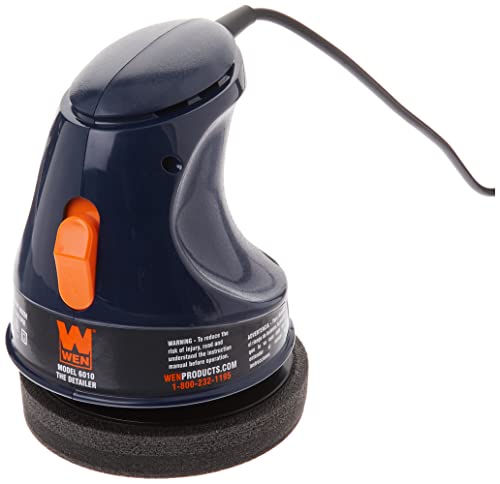
- Compact 6-inch design with a 3,500 RPM motor
- Includes applicator and terry-cloth bonnets
- Contoured grip supports one- or two-handed use
Best For: Casual home waxing and light polishing
Versatile DA Kit
SPTA 5-Inch Dual Action Car Polisher

- 750W dual-action motor with six speeds
- Includes pads, compounds, tools, and bag
- Side and D-handle options
Best For: DIY detailers seeking a versatile polishing kit
Best for Everyday Use
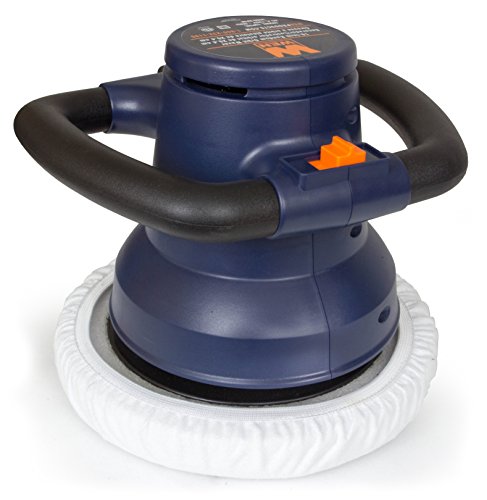
- 10-inch polishing surface
- Runs at 3,200 orbits per minute
- Includes three bonnets, mitt, and case
Best For: Routine waxing and broad-area polishing
Comfortable 6-Inch Option
AOBEN Dual Action Car Polisher
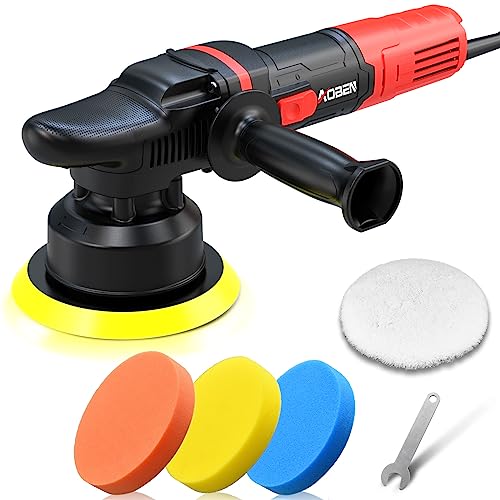
- 700W motor with six speeds
- 6-inch dual-action polishing setup
- Includes foam and synthetic wool pads
Best For: DIY detailing with adjustable speed and handling options
Best Cordless Pick
Beginner-Friendly DA Car Polisher

- Cordless 8mm random-orbital design
- Two batteries and six speed settings
- Includes pads, bonnets, and sanding discs
Best For: Beginners and detailers wanting a lightweight cordless kit
Best High-Power Pick
1600W Variable-Speed Rotary Buffer

- 1600W motor with seven speed settings
- Three handle configurations for control
- Pads included for automotive and surface work
Best For: Heavy-duty polishing and versatile corded detailing
Best for DeWalt Owners
Brushless 6-Inch Orbital Polisher

- Uses compatible DeWalt 20V batteries
- Brushless motor with six speeds
- Tool-only kit with pads and sandpaper
Best For: Existing DeWalt 20V battery owners
Professional Control – DEWALT DWP849X Buffer Polisher
For demanding car polishers work, the DEWALT DWP849X combines a 12-amp corded motor with a variable-speed trigger and dial reaching 3,500 RPM. Its durable construction, replaceable wool-ingestion shield, and multiple handle options make it suited to controlled detailing and heavier polishing tasks.
Best For: Experienced users and professional-style exterior detailing.
Pros:
- Variable-speed trigger and dial provide control for different applications.
- All-ball-bearing construction and steel gears support durability.
- Includes hook-and-loop backing pad, bale handle, and straight side handles.
- Pop-off brushes and a wool-ingestion shield help protect the tool.
Cons:
- Corded design limits mobility compared with cordless car polishers.
- Its 6.7-pound weight and 12-amp motor may be more machine than casual users need.
The DWP849X is a strong choice when you want broad speed control and a robust build for frequent polishing. Its professional-oriented features and three-year limited warranty add confidence for regular use.
Complete Starter Kit – Chemical Guys TORQX Random Orbital
The Chemical Guys TORQX is one of the more approachable car polishers for users who want the machine and detailing supplies together. Its 8mm random-orbital throw, 700W motor, pads, polishes, and compounds cover compounding, polishing, and finishing in one package.
Best For: Beginners and DIY detailers seeking an all-in-one polishing setup.
Pros:
- Complete nine-piece kit includes the polisher, pads, polishes, and compounds.
- Random-orbital action is designed for controlled polishing on paint, clear coat, headlights, and wheels.
- Ergonomic, balanced design is intended for comfortable extended use.
- Helps address light scratches, swirls, oxidation, and haze.
Cons:
- The 8mm throw is less oriented toward aggressive correction than a heavy-duty rotary.
- Warranty coverage listed in the supplied details is 30 days through Amazon.
With its included consumables and straightforward controls, the TORQX reduces the need to buy separate supplies before starting. It is a practical entry point for paint enhancement and routine vehicle detailing.
High-Power Versatility – 1600W Rotary Car Buffer Polisher
This 6- or 7-inch rotary buffer is among the more powerful car polishers in the roundup, using a 1,600W motor and seven adjustable speeds from 1,000 to 3,500 RPM. It includes sponge and wool pads, sandpapers, detachable handles, and a safety lock for varied polishing and surface-care jobs.
Best For: Users needing high power, adjustable speeds, and broad accessory compatibility.
Pros:
- 1,600W motor and constant-power control support extended polishing sessions.
- Seven speed settings accommodate delicate finishing through heavier polishing.
- Includes sponge pads, wool pads, and sandpapers for multiple tasks.
- Detachable D-handle, side handle, and 4.5-pound design support flexible handling.
Cons:
- As a rotary polisher, it may require more careful technique than a random-orbital model.
- The supplied details do not specify the exact quantity or range of included pads.
The PGJ offers substantial power and useful speed flexibility for automotive work, while its accessories also support furniture, floors, boats, marble, wood, and metal. A two-year warranty and stated 24-hour support provide additional ownership reassurance.
Simple Waxing Option – WEN 6010 Waxer/Polisher
The WEN 6010 is a compact, straightforward choice among car polishers for basic waxing and polishing. Its 6-inch format, 3,500 RPM permanent-magnet motor, contoured grip, and included applicator and terry-cloth bonnets keep the setup simple.
Best For: Casual users handling routine waxing and light polishing at home.
Pros:
- Compact 6-inch design is easy to handle for home garage use.
- Contoured palm and body grip support one- or two-handed operation.
- Includes both applicator and terry-cloth bonnets.
- Lockable on/off switch helps maintain continuous operation.
Cons:
- The 60W, 0.5-amp motor is less powerful than the other listed polishers.
- Its fixed 3,500 RPM speed offers less control for different polishing stages.
- The supplied details list a one-year warranty.
The WEN 6010 makes the most sense when affordability and uncomplicated waxing matter more than correction power or advanced speed control. It is a modest, focused tool for occasional vehicle care.
Versatile DA Kit – SPTA 5-Inch Dual Action Car Polisher
For shoppers comparing car polishers, the SPTA DAPSET-US stands out as a feature-rich dual-action kit with a 750W motor, six speed settings, and a broad accessory bundle. Its 2,000–5,200 RPM range supports waxing, polishing, cleaning, and paint-defect removal.
Best For: DIY detailers who want one corded polisher kit for cars and other household projects.
Pros:
- Dual-action operation with constant power and smooth-start electronics.
- Six adjustable speeds for waxing, polishing, and defect removal.
- Includes multiple pads, compounds, handles, towels, sandpaper, and a storage bag.
- Side and D-handle options help accommodate different working preferences.
Cons:
- The extensive accessory set may be more than a casual user needs.
- It is corded and requires a 110V power source.
- The 5-inch backing plate and included 5- and 6-inch pads may require setup matching.
With its strong motor, adjustable speed control, and unusually complete kit, this SPTA model is a practical choice for users who want flexibility beyond basic waxing.
Best for Everyday Use – WEN 10-Inch Waxer/Polisher
Among car polishers for straightforward waxing and polishing, the WEN 10PMC focuses on simple operation with a 10-inch format and a 3,200-orbit-per-minute motor. It comes with applicator, polishing, and wool-blend bonnets, plus a storage case.
Best For: Car owners who primarily want a simple waxer/polisher for routine exterior care.
Pros:
- Large 10-inch polishing surface can cover broad areas efficiently.
- Includes three bonnet types for application and polishing tasks.
- Comes with a washing mitt and storage case.
- High-impact insulated housing supports everyday handling.
Cons:
- It has a fixed 3,200 OPM speed rather than variable speed control.
- The 9-pound weight may feel substantial during extended use.
- Its design is more specialized for waxing and polishing than multi-purpose correction work.
The WEN is a sensible low-complexity option when your priority is applying wax and polishing larger painted areas, rather than tuning speed for different correction stages.
Comfortable 6-Inch Option – AOBEN Dual Action Car Polisher
The AOBEN AT3501 is one of the more adaptable car polishers for home detailing, combining a 700W dual-action motor with six settings from 1,000 to 4,500 RPM. Its 6-inch setup, multiple handle choices, and included foam and wool pads cover waxing, polishing, and light sanding applications.
Best For: DIY users who want variable speed and a moderately sized dual-action polisher for cars and other surfaces.
Pros:
- Six speed settings accommodate waxing, polishing, cleaning, and defect removal.
- Dual-action motion is designed to help produce a swirl-free finish.
- Includes three foam pads and a synthetic wool pad.
- Side and top handle options can help reduce fatigue and improve control.
Cons:
- The machine may stop under excessive pressure at speeds 1–3.
- It is corded and limited to a 120V power source.
- The included 6.5-inch pads are larger than the 6-inch backing plate.
With a useful speed range and ergonomic handle choices, AOBEN offers a balanced entry-level package for users who want more control than a fixed-speed waxer without moving to a larger professional setup.
Best Cordless Pick – Beginner-Friendly DA Car Polisher
If you want the freedom of cordless car polishers without giving up adjustable control, this dual-action kit is a practical option. Its 8mm random-orbital motion, six speed settings, LED display, and included batteries make it approachable for routine waxing, polishing, cleaning, and light scratch-removal work.
Best For: Beginners and detailers who want a lightweight, battery-powered polisher with a broad accessory selection.
Pros:
- Cordless design with two 21V 2000mAh batteries and a fast charger.
- Six speeds from 2800–5800 RPM with a real-time LED speed and battery display.
- Lightweight 3.3-pound body with an ergonomic grip and 8mm dual-action motion.
- Includes multiple foam, wool, microfiber, non-woven, and sanding accessories.
Cons:
- The batteries are proprietary and are not compatible with DeWalt or other third-party systems.
- Continuous high-speed use beyond 20 minutes may trigger automatic cooling shutdown.
This kit stands out for convenience and beginner-friendly operation. Fully charge the batteries before use, and plan around the built-in thermal protection during longer detailing sessions.
Best High-Power Pick – 1600W Variable-Speed Rotary Buffer
For demanding correction and polishing jobs, this corded rotary model gives car polishers shoppers a high-power option with a 1600W motor and seven speed levels. Its multiple handle configurations and assortment of pads make it suited to automotive detailing as well as larger household and marine surfaces.
Best For: Users who prioritize motor power, rotary correction capability, and flexible handling over cordless convenience.
Pros:
- Powerful 1600W motor with variable speeds from 1000 to 3500 RPM.
- Can be used with the body, D-handle, or side handle for different control preferences.
- Includes foam and wool pads for scratches, oxidation, stains, polishing, and light swirl work.
- Suitable for cars, boats, furniture, floors, marble, wood, and metal.
Cons:
- The corded design requires access to a 110V power outlet.
- It is a rotary buffer, so users should avoid excessive pressure and extended uninterrupted operation.
- The instructions recommend cooling after 15 minutes of work to help prevent overheating.
This is the strongest choice here for users who need sustained corded power and rotary performance. Its speed range and handle options improve versatility, but careful pressure and session management are important.
Best for DeWalt Owners – Brushless 6-Inch Orbital Polisher
If you already own compatible DeWalt 20V MAX batteries, this tool-only model offers a convenient way to add cordless car polishers capability without buying another battery system. The brushless motor, six-speed range, eccentric motion, and lock switch support controlled waxing, polishing, cleaning, and paint-defect work.
Best For: DeWalt 20V battery owners seeking a lightweight, cordless 6-inch orbital polisher.
Pros:
- Compatible with several DeWalt 20V lithium-ion batteries, including DCB200 through DCB240 series models listed by the manufacturer.
- Brushless motor is designed for lower noise, stronger performance, and longer motor life.
- Six speeds from 1800 to 5500 RPM for waxing, polishing, cleaning, and defect removal.
- Eccentric motion helps distribute polishing more evenly and includes a lock switch for added control.
Cons:
- Battery and charger are not included, so it is not a complete standalone kit.
- The accessory selection is more limited than some full kits, with no detailed pad-size variety specified.
This tool makes the most sense when you already have the required DeWalt battery and charger. Its compact orbital format and brushless motor offer a useful balance of portability, speed control, and finishing versatility.
How We Picked the Best Car Polishers
We evaluated these Car Polishers by looking at the features that matter during real detailing work: motion type, speed control, pad compatibility, ergonomics, power delivery, included accessories, and overall versatility. We also considered whether each model is better suited to occasional waxing, routine paint enhancement, or more demanding correction jobs.
Because specifications and kit contents can vary, confirm the current listing before buying—especially battery compatibility, included pads, backing-plate sizes, and whether a case or spare bonnets are included.
Quick Comparison
| Type | Best for | Main advantage | Trade-off |
|---|---|---|---|
| Dual-action | Most DIY detailers | Balanced correction and control | Usually slower than rotary tools |
| Rotary | Experienced users | Fast, powerful correction | Greater risk of heat or paint damage |
| Waxer/polisher | Wax application and light polishing | Simple operation | Limited correction capability |
| Cordless | Mobile detailing | No extension cord | Runtime and battery ecosystem matter |
Key Buying Factors for Car Polishers
Choose the Right Polishing Motion
Dual-action polishers are generally the safest starting point because the orbiting movement spreads heat and reduces the likelihood of creating severe defects. Rotary polishers spin on a fixed axis and can correct paint quickly, but they demand better technique and careful speed control. Basic orbital waxers are convenient for applying product and refreshing gloss, though they are not ideal for significant swirl removal.
Check Speed Control and Power
Variable speed lets you use lower settings for spreading compound or wax and higher settings for correction when appropriate. More power is useful on larger panels or harder paint, but it can also make mistakes more consequential. Soft start, a comfortable trigger or dial, and stable speed under load are valuable features for longer sessions.
Match the Pad Size and Accessories
Six-inch pads are a practical all-purpose size, while five-inch setups offer better control around curves and tighter areas. Larger pads cover broad panels faster but can be awkward on small sections. A useful kit should include compatible backing plates, several pad types, and bonnets or storage accessories that suit your intended work.
Consider Comfort, Cord Length, and Batteries
Weight, handle design, vibration, and balance affect control more than headline wattage. Corded models provide consistent power, while cordless tools improve mobility but require charged batteries. Battery-platform models are most convenient when you already own compatible packs; otherwise, include battery and charger costs in the budget.
Who Should Buy Which Car Polishers?
Beginners and occasional users: Choose a dual-action or simple waxer/polisher with manageable speed settings and included pads. These are easier to control for routine waxing and light gloss improvement.
DIY enthusiasts: A variable-speed dual-action kit offers the best balance of safety, correction ability, and versatility for maintaining one or more vehicles.
Experienced detailers: A powerful rotary model can make heavy correction more efficient, provided you understand pad selection, paint temperature, machine speed, and finishing technique.
Mobile users: A cordless polisher is convenient for driveways, car shows, and jobs where extension cords are impractical. Verify battery availability and expected runtime before committing to a platform.