Choosing the right amp for a small vehicle is mostly about balance: enough clean power, a compact footprint, and simple installation. The best picks can improve sound without crowding limited cabin or trunk space.
Below, we focus on compact, value-driven options that make sense for tight interiors, modest electrical systems, and everyday listening.
Best 10 Car Amplifiers for Small Cars Picks for 2026
Compact 4-Channel Flexibility
Taramps TS 400X4 400W RMS 4-Channel

- 4 x 100W RMS at 2 ohms
- High-level and RCA inputs
- Built-in HPF, LPF, full-range modes
Best For: Small cars and flexible factory-or-aftermarket installs
Ultra-Compact 4-Channel Daily Driver
SounDigital 400W 4-Channel Amp
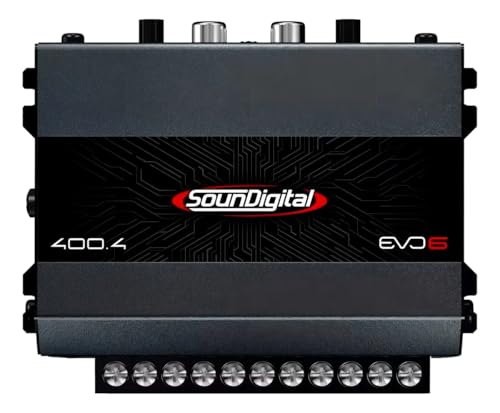
- Tiny 4.33 x 4.33 x 1.97-inch size
- 400W total across four channels
- Compact, durable design
Best For: Very tight installs where footprint is the top priority
Mini 4-Channel Power for Tight Spaces
PRV Audio QS400.4 Mini 4-Channel

- 4 x 100W RMS at 2 ohms
- Bridges to 2 x 200W RMS
- 4" x 5.40" x 2" compact chassis
Best For: Tight mounting spots and efficient small-car upgrades
Simple Two-Channel Bass and Speaker Upgrade
Pioneer GM-A3702 500W Max 2-Channel

- 60W RMS x 2 at 2 ohms
- 190W RMS x 1 bridged mode
- Automatic signal sensing and built-in filters
Best For: Small cars needing a simple, clean two-channel upgrade
Compact Multi-Channel Upgrade
Taramps TS 400x4 4-Channel Class D Amplifier

- 400 watts RMS total output
- Compact aluminum 4-channel design
- Supports 2 bridged channels and RCA input
Best For: small cars needing a compact 4-channel amp for speaker upgrades
Mini Analog Control Pick
XMSJSIY 2-Channel HiFi Mini Amplifier

- 20-watt compact amplifier with 12V support
- Treble and bass knobs for basic tone shaping
- Aluminum-alloy body with static-noise processing
Best For: small cars, DIY installs, and simple low-power audio boosts
Factory Radio Friendly Upgrade
Taramps TL 500 2-Channel OEM Amp
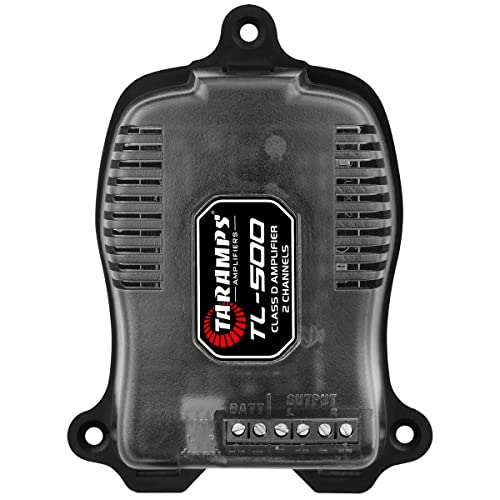
- 90W RMS total at 2 ohms
- Factory-radio-ready with auto turn-on
- Built-in thermal and short-circuit protection
Best For: small cars with factory radios and basic two-speaker upgrades
Compact Bass Pick
Timpano 400W Mono Subwoofer Mini Amp

- 400W RMS mono amp for bass-only systems
- Tiny 3.93" x 5.02" x 2" footprint
- Built-in crossover, bass boost, and auto turn-on
Best For: Small cars needing a compact subwoofer amplifier
High-Power Compact Option
Pyle 2000W 2-Channel Bridgeable Amp

- Up to 2000W bridgeable output
- Slim design fits tighter installation spaces
- Includes crossover, bass boost, and protection circuits
Best For: Compact vehicles needing a versatile, high-output 2-channel amp
Slim Budget Choice
Pyle 1400W 2-Channel Bridgeable Amp

- 1400W bridgeable output
- Very slim 1.38" profile for easier mounting
- Gold-plated RCA ports and built-in protection
Best For: Small cars that need a slim, budget-friendly dual-channel amp
Compact 4-Channel Flexibility – Taramps TS 400X4 400W RMS 4-Channel
If you’re comparing car amplifiers for small cars, the Taramps TS 400X4 is a practical pick when you want compact Class D power without a complicated install. It offers 4 x 100W at 2 ohms or 2 x 200W bridged at 4 ohms, plus high-level auto turn-on and RCA inputs for use with OEM or aftermarket stereos.
Best For: Small cars, compact builds, and drivers who want a flexible 4-channel amp with easy integration.
Pros:
- 4 x 100W RMS at 2 ohms or 2 x 200W bridged at 4 ohms for flexible setups
- High-level auto turn-on and RCA inputs work with factory and aftermarket stereos
- Built-in HPF, LPF, and full-range modes help tune speakers, tweeters, and compact subwoofers
- Compact Class D design is built for a range of vehicles and custom audio installs
Cons:
- Four-channel layout may be more than needed for a simple two-speaker upgrade
- Best results depend on matching the amp’s crossover modes to your system
Overall, this is a versatile small-footprint amplifier that fits well in space-conscious systems while still offering real tuning options. It makes sense for buyers who want efficient daily performance and installation flexibility.
Ultra-Compact 4-Channel Daily Driver – SounDigital 400W 4-Channel Amp
For shoppers looking at car amplifiers for small cars, this SounDigital 4-channel amp stands out for its tiny footprint and straightforward 400W output. Its 4.33 x 4.33 x 1.97-inch size makes it easy to place in tight spaces, and the 4-channel layout gives you room to run multiple speakers in a compact system.
Best For: Tight installs where a very small amplifier footprint matters most.
Pros:
- Very compact 4.33 x 4.33 x 1.97-inch chassis
- 400W total output across four channels
- Four channels support versatile speaker configurations
- Compact and durable design suits small-space installs
Cons:
- Product details are limited on tuning features and inputs
- At 400W total, it is aimed more at practical system upgrades than big power builds
This is a strong choice if your main priority is fitting an amplifier into a cramped vehicle without overcomplicating the setup. It focuses on size, simplicity, and enough power for a versatile small-car audio upgrade.
Mini 4-Channel Power for Tight Spaces – PRV Audio QS400.4 Mini 4-Channel
If you need car amplifiers for small cars and want a truly compact chassis, the PRV Audio QS400.4 is built for space-saving installs. It delivers 4 x 100W RMS at 2 ohms, can bridge to 2 x 200W RMS, and uses a small 4″ x 5.40″ x 2″ footprint that is easy to work into a tight vehicle layout.
Best For: Small cars, tight mounting spots, and efficient 4-channel systems.
Pros:
- 4 x 100W true RMS at 2 ohms for a compact four-channel setup
- Bridgeable to 2 x 200W RMS at 4 ohms minimum per bridged channel
- Small 4″ wide x 5.40″ long x 2″ high chassis fits tight spaces
- Class D full-range design is built for efficiency
Cons:
- 2-ohm stability and bridging limits require careful speaker matching
- Compact design means it is geared more toward efficient output than large-system expansion
As a small-footprint amp, this PRV model is a strong fit when installation space is limited but you still want real RMS power. Its efficiency and bridgeable design make it especially useful for practical compact builds.
Simple Two-Channel Bass and Speaker Upgrade – Pioneer GM-A3702 500W Max 2-Channel
For buyers comparing car amplifiers for small cars, the Pioneer GM-A3702 is a straightforward 2-channel option that keeps installation simple. It delivers 60W RMS x 2 at 2 ohms or 190W RMS x 1 in bridged mode, and its built-in filters and automatic signal sensing help it work cleanly in a basic upgrade path.
Best For: Small cars where a simple 2-channel amp is enough for louder, cleaner sound.
Pros:
- 2-channel Class AB design keeps the setup simple
- 60W RMS x 2 at 2 ohms or 190W RMS x 1 bridged
- Automatic signal sensing and turn-on simplify integration
- Built-in high-/low-pass filter and selectable low-pass filter add tuning control
Cons:
- Two channels offer less flexibility than a 4-channel amplifier
- Class AB design is not as space-focused as some compact Class D options
This Pioneer makes sense when you want a reliable, easy-to-understand amplifier instead of a highly configurable multi-channel unit. It is best suited to smaller systems that only need two channels of clean, controlled power.
Compact Multi-Channel Upgrade – Taramps TS 400×4 4-Channel Class D Amplifier
If you want car amplifiers for small cars that can add clean power without taking up much space, the Taramps TS 400×4 is built around a compact 4-channel design. It delivers 400 watts RMS total, supports 2 bridged channels, and uses RCA input, making it a practical fit for small systems that need flexible speaker hookup options.
Best For: Small cars needing a compact 4-channel amp for straightforward speaker upgrades.
Pros:
- Compact aluminum body with a small footprint for tighter installs.
- 4-channel layout with 2 bridged-channel support for flexible setup options.
- 400 watts RMS output for a modest but useful audio upgrade.
- Class D design with RCA input for simpler system integration.
Cons:
- Professional installation is strongly recommended by the manufacturer.
- Needs proper setup with the correct tools and protective equipment.
- Maximum supply voltage is 16V, so it must be matched to the system correctly.
This is a strong choice if your priority is a small, full-range amplifier that can serve multiple speakers without a bulky footprint. It is best suited to careful, qualified installation and everyday sound upgrades rather than extreme power builds.
Mini Analog Control Pick – XMSJSIY 2-Channel HiFi Mini Amplifier
For buyers comparing car amplifiers for small cars, this XMSJSIY mini amp is a simple low-power option that focuses on basic sound shaping and compact size. It is rated at 20 watts, runs on 12V DC, and includes treble and bass controls, so it can work as a lightweight audio booster for modest setups.
Best For: Small cars, DIY installs, and low-power audio setups where compact size and tone controls matter.
Pros:
- Compact aluminum-alloy build that is easy to place in tight spaces.
- Treble and bass knobs allow separate adjustment of high and low frequencies.
- Uses static-noise processing technology for cleaner playback.
- Can be used with cars and other devices like stereos, TVs, and computers.
Cons:
- Only rated at 20 watts, so it is not built for high-output systems.
- Maximum voltage is 12V, limiting it to basic low-voltage use cases.
- Not a dedicated high-power car audio amplifier.
This amplifier makes sense if you want a small, adjustable unit rather than a heavy-duty upgrade. It is better for simple listening setups and compact installs than for drivers looking for serious power.
Factory Radio Friendly Upgrade – Taramps TL 500 2-Channel OEM Amp
If you are shopping for car amplifiers for small cars and want to keep the factory radio, the Taramps TL 500 is designed for easy OEM-style integration. It delivers 90W RMS total at 2 ohms, offers 2 channels, and includes auto turn-on from the audio signal, making it a straightforward fit for factory audio upgrades.
Best For: Small cars with factory radios that need a simple two-channel speaker upgrade.
Pros:
- Factory-radio-ready design with auto turn-on from the audio signal.
- 2 x 45W RMS at 2 ohms for everyday door speaker upgrades.
- Wide 80Hz-40kHz response for mids and highs.
- Built-in thermal and short-circuit protection for added reliability.
Cons:
- Limited to 90 watts RMS total, so it is not for high-power builds.
- Two-channel layout is best for basic speaker upgrades only.
- 90-day warranty is shorter than many buyers may want.
This model is a practical option if you want a clean factory-style install in a small car without replacing the head unit. It focuses on simple integration and everyday speaker improvement rather than big bass or multi-amp expansion.
Compact Bass Pick – Timpano 400W Mono Subwoofer Mini Amp
If you want a compact option for car amplifiers for small cars, the Timpano TPT-BASS400 keeps the footprint tiny while focusing all of its output on bass. It is a 1-channel Class D monoblock built for subwoofer duty, with built-in crossover controls and high level inputs that make installation simpler in tight spaces.
Best For: Small-car owners who want a space-saving mono amp for a subwoofer setup with easy tuning.
Pros:
- 400 watts RMS designed specifically for bass applications
- Very compact size: 3.93″ deep x 5.02″ wide x 2″ high
- Built-in subsonic filter, LPF, bass boost, and variable gain control
- High level inputs with signal auto turn-on reduce wiring hassle
Cons:
- Monoblock design works only for bass/subwoofer use
- May be more power than needed for very modest systems
Overall, this is a practical small-space amplifier if your goal is adding subwoofer bass without giving up much room. The tuning tools and auto turn-on feature make it especially friendly for straightforward installs.
High-Power Compact Option – Pyle 2000W 2-Channel Bridgeable Amp
Among car amplifiers for small cars, the Pyle PLA2378 stands out if you want a slim, bridgeable 2-channel amp with plenty of adjustment options. It includes MOSFET power, a configurable electronic crossover, bass boost, and thermal protection, all in a form factor designed to be easy to place.
Best For: Drivers who need a slim dual-channel amp with bridgeable output and built-in protection features.
Pros:
- Up to 2000W bridgeable output
- Slim design makes installation easier in tight spaces
- Variable gain, bass boost, and electronic crossover included
- Thermal, overload, and short-circuit protection for safer operation
Cons:
- Larger than ultra-mini amps despite the slim profile
- Power rating may be more than some small-car setups need
This is a strong pick if you want flexibility more than minimal size. Its bridgeable design and protection features make it a versatile option for compact vehicles that still need meaningful output.
Slim Budget Choice – Pyle 1400W 2-Channel Bridgeable Amp
If you are comparing car amplifiers for small cars and want a slim, straightforward option, the Pyle PLA2200 is worth a look. It offers a bridgeable 2-channel layout, MOSFET power supply, gold-plated RCA connections, and a very thin 1.38-inch profile for easier placement.
Best For: Budget-minded small-car owners who want a slim amp with basic tuning and protection features.
Pros:
- 1400W bridgeable output in a slim 1.38″-thick design
- Includes variable gain, bass boost, and configurable crossover
- Gold-plated RCA ports help reduce signal loss
- Thermal, overload, and short-circuit protection are built in
Cons:
- Not as compact as mini monoblock sub amps
- Lower output than the 2000W Pyle model in this roundup
This model makes sense when you need a slim amp that can still deliver solid power and basic tuning controls. It is a practical fit for small cars where mounting space is limited, but not necessarily tiny.
How We Picked the Best Car Amplifiers for Small Cars
We prioritized compact size, sensible output for real-world use, and features that help in space-limited vehicles. That means looking at amplifier class, channel layout, bridgeability, thermal efficiency, and whether the design is friendly to small-car installs.
We also gave extra weight to models that can deliver clean sound without demanding oversized wiring, excessive power draw, or complicated tuning.
Quick Comparison: What Matters Most
For most buyers, the fastest way to narrow the list is by use case. A 2-channel amp works well for coaxials or a simple front-stage upgrade. A 4-channel amp is better if you want to power front and rear speakers. A mono amp makes more sense if your main goal is adding a subwoofer.
Among Car Amplifiers for Small Cars, compact Class D designs are usually the easiest fit because they run efficiently and stay relatively small. Class AB options can still be a good choice when you want a straightforward, full-range stereo setup and the extra size is manageable.
Key Buying Factors for Car Amplifiers for Small Cars
Physical Size and Mounting Flexibility
Measure your available space before you buy. In small cars, a few inches can determine whether the amp fits under a seat, behind a panel, or only in the trunk. Slim chassis and clean terminal placement can make installation much easier.
Power Output and Speaker Match
Choose an amp that matches your speakers’ RMS rating, not just peak wattage. Overbuying power can be wasted if your speakers cannot use it, while underpowering can lead to poor dynamics and distortion when you turn the volume up.
Channel Count and System Goals
If you are upgrading a basic system, decide first whether you need more clarity, more volume, or bass. Four-channel amps suit balanced speaker upgrades. Two-channel amps are better for simplified setups. Mono amps are the right call for dedicated sub bass.
Efficiency, Heat, and Electrical Load
Small cars often have less spare electrical capacity than larger vehicles, so efficiency matters. Class D amps are typically a smart fit because they waste less power as heat and are easier to package in tight spaces.
Who Should Buy Which Car Amplifiers for Small Cars?
If you want a clean, compact speaker upgrade, look at a small 2-channel or 4-channel amp. If you are building a modest full-range system with front and rear speakers, a 4-channel unit is usually the safest bet. If you want noticeable bass without taking up much room, a compact mono amplifier is the better path.
Buyers who value easy installation and lower heat should lean toward efficient Class D models, while those who want a traditional stereo amp experience may prefer Class AB, provided there is room for the larger chassis. For most shoppers comparing Car Amplifiers for Small Cars, the best choice is the one that fits the vehicle first and the sound goal second.