The right bench vise can make automotive repairs safer, faster, and more precise. Whether you are pressing bushings, holding brackets, cutting hardware, or working on small engine parts, a stable vise gives you reliable control at the workbench.
These 10 options cover compact homeowner models, heavy-duty ductile-iron vises, and larger workshop designs. Use the buying guide below to match jaw capacity, base movement, construction, and clamping power to the jobs you handle most often.
Best 10 Bench Vises for Automotive Work Picks for 2026
Heavy-Duty Choice
Forward CR60A 6.5-Inch Bench Vise

- 9,900-pound clamping force
- 6-inch maximum jaw opening
- 210-degree swivel with pipe jaws
Best For: Heavy automotive work on a permanent garage bench
Home-Garage Pick
Yost LV-4 4.5-Inch Homeowner's Vise

- 4.5-inch jaws with 3-inch opening
- 240-degree swivel head
- Compact 9-pound design
Best For: DIY garages and lighter automotive tasks
Balanced Workshop Option
PONY 4-Inch Heavy-Duty Bench Vise
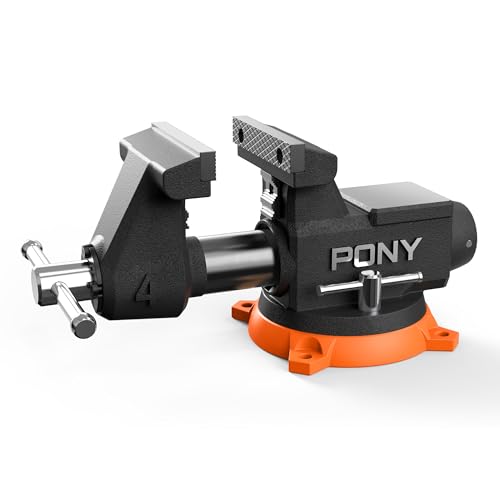
- 4,400-pound clamping force
- 360-degree rotatable base
- Pipe jaws and mounting hardware included
Best For: Versatile garage and professional workshop use
Maximum Capacity
VEVOR 8-Inch Two-Way Bench Vise

- Up to 11.5-inch reverse jaw opening
- 6,744-pound clamping force
- 360-degree base with four-bolt mounting
Best For: Large automotive parts and heavy workshop use
Heavy-Duty Value Pick
5-Inch Ductile Iron Bench Vise

- 60,000 PSI ductile iron body
- 8,800 lb stated clamping force
- 360° swivel base and anvil
Best For: General automotive and workshop clamping
Most Versatile
VEVOR 6.5-Inch Swivel Bench Vise

- 6.5-inch jaws with 5-inch opening
- 360° vertical and horizontal rotation
- Pipe jaws, V-jaws, pads, and anvil
Best For: Large automotive, pipe-repair, and metalworking jobs
DIY Workshop Pick
6-Inch Forged Steel Bench Vise

- Forged steel construction
- 6-inch jaws with pipe-jaw function
- 270° swivel base and mounting bolts
Best For: Home garages and general DIY repair work
Heavy-Duty Swivel Pick

- 5-inch jaws with up to 5512 pounds of clamping force
- 360-degree swivel base and front jaw
- Includes pipe jaws, anvil, and jaw pads
Best For: Versatile automotive fabrication and pipe work
Compact Garage Value

- 4.5-inch jaws with a 3.3-inch opening
- 240-degree swivel locking base
- Includes bolts, nuts, and replaceable serrated jaws
Best For: Space-conscious automotive workbenches
Large-Capacity Choice

- 6-inch jaws open to 5.9 inches
- 360-degree swivel base and ductile-iron body
- Handles pipe up to 2.9 inches and includes magnetic jaw pads
Best For: Larger automotive components and heavy bench work
Heavy-Duty Choice – Forward CR60A 6.5-Inch Bench Vise
For demanding automotive work, the Forward CR60A is one of the more capable bench vises for automotive work. Its ductile-iron construction, 6.5-inch jaws, 9,900-pound clamping force, and 210-degree swivel base suit substantial cutting, grinding, tapping, and holding tasks.
Best For: Mechanics and serious home-garage users who need broad jaw capacity, strong clamping, and multiple ways to secure workpieces.
Pros:
- 6.5-inch jaws open up to 6 inches, with a 3.8-inch throat depth.
- 9,900-pound clamping force and PSI 60,000 ductile iron construction support heavy-duty work.
- Includes flat, slot, and built-in pipe jaws for varied workpieces.
- 210-degree swivel base and reinforced anvil expand positioning and metalworking options.
Cons:
- Its 18.42-pound weight and large footprint require a sturdy, adequately sized workbench.
- The 210-degree swivel range is less than a full 360-degree rotation.
The CR60A is a strong fit when automotive projects call for substantial holding power and a wide working range. Its size and weight make it better suited to a permanent, solid installation than a portable bench setup.
Home-Garage Pick – Yost LV-4 4.5-Inch Homeowner's Vise
The Yost LV-4 is a compact, approachable option among bench vises for automotive work, particularly for lighter repairs and general garage tasks. Its 4.5-inch jaws, 3-inch opening, and 240-degree swivel head provide useful capacity without the bulk of a larger industrial vise.
Best For: Home workshops and DIY mechanics handling small parts, light fabrication, and routine holding tasks.
Pros:
- Heavy-duty 30,000 PSI gray-iron castings are designed for workshop durability.
- 240-degree swivel head helps position work from different angles.
- Built-in 3.5-by-2.7-inch anvil supports basic metalworking tasks.
- Pipe capacity ranges from 0.6 to 1.85 inches.
Cons:
- Its 3-inch maximum opening is smaller than that of heavy-duty alternatives.
- Mounting hardware is not included.
- The supplied specifications list a 500 PSI tensile strength, so buyers should verify the rating if that measurement is important.
For a home garage, the LV-4 balances useful adjustability with a manageable 9-pound weight. It is best viewed as a general-purpose vise rather than a choice for the heaviest automotive clamping demands.
Balanced Workshop Option – PONY 4-Inch Heavy-Duty Bench Vise
The PONY 4-inch vise offers a practical middle ground for bench vises for automotive work. It combines 4,400 pounds of clamping force with a 360-degree swivel base, pipe jaws, and an anvil, making it suitable for varied garage and workshop jobs.
Best For: Home garages and professional workshops needing a versatile, moderately sized vise for metalworking, drilling, cutting, and general repairs.
Pros:
- 4,400 pounds of clamping force handles many heavy-duty workshop tasks.
- 360-degree swivel base allows full-angle positioning and helps in tight spaces.
- Ductile iron construction is specified at 6,000 PSI tensile strength.
- Includes replaceable pipe jaws, an anvil, and mounting bolts and nuts.
Cons:
- The 4-inch jaw size provides less capacity than larger 6.5- and 8-inch models.
- The supplied notes do not specify the maximum jaw opening or throat depth.
The PONY is a well-rounded choice when full rotation and included mounting hardware matter more than maximum jaw size. Its enclosed design and round guide bar are also useful features for smoother, more protected operation in a busy workshop.
Maximum Capacity – VEVOR 8-Inch Two-Way Bench Vise
For large or awkward automotive parts, the VEVOR 8-inch model stands out among bench vises for automotive work. Its two-way jaws, 6,744-pound clamping force, 360-degree base, and four-bolt mounting design provide substantial capacity and stability for demanding bench tasks.
Best For: Heavy-duty garages and workshops that regularly clamp oversized workpieces, pipes, or parts from multiple angles.
Pros:
- 8-inch forward opening reaches 8 inches, while reverse jaws open to 11.5 inches.
- 6,744-pound clamping force and ductile-iron construction support demanding work.
- 360-degree rotating base and four-bolt mounting design improve positioning and stability.
- Built-in pipe jaws hold round stock from 0.59 to 2.36 inches.
Cons:
- At 44.3 pounds, it is substantially heavier and less convenient to relocate.
- The large 17.91-by-8.07-by-8.66-inch size requires considerable bench space.
- Its capacity may be excessive for small, light-duty repairs.
The VEVOR is the capacity-focused option in this group. Choose it when oversized jaws, full rotation, and secure four-bolt mounting are priorities, and make sure the workbench can support its size and weight.
Heavy-Duty Value Pick – 5-Inch Ductile Iron Bench Vise
For shoppers comparing bench vises for automotive work, this 5-inch model offers a sturdy ductile-iron build, strong clamping force, and a 360-degree swivel base. Its 5-inch jaws and 5-inch opening suit a range of workshop tasks involving metal, plastic, aluminum alloy, or wood.
Best For: General automotive and workshop use where high clamping force and a compact 5-inch jaw size are useful.
Pros:
- Ductile iron body rated at 60,000 PSI tensile strength.
- Up to 4,000 kg (8,800 lb) of clamping force.
- 360-degree swivel base with straight and round positioning scales.
- Includes an anvil and zinc-plated parts for added durability.
Cons:
- The 5-inch jaw width and 67 mm throat depth may limit larger workpieces.
- At 12.61 kg, it is substantial for a compact bench vise.
This is a practical choice when you want heavy-duty construction and very high stated clamping force without moving to a larger vise. Confirm that your workbench can support its weight and mounting footprint.
Most Versatile – VEVOR 6.5-Inch Swivel Bench Vise
Among bench vises for automotive work, this VEVOR model stands out for its 6.5-inch jaws, pipe and V-jaws, and rotating head and base. It is designed for substantial workpieces and provides flexibility when positioning parts for cutting, welding, repairs, or other shop tasks.
Best For: Automotive, pipe-repair, and metalworking tasks that benefit from broad jaws, specialized jaw surfaces, and multi-directional adjustment.
Pros:
- Ductile cast iron construction with up to 5,620 lb of stated clamping force.
- 6.5-inch jaw width and up to 5-inch jaw opening.
- 360-degree vertical and horizontal rotation for flexible positioning.
- Pipe jaws, V-jaws, magnetic protective jaw pads, and a large anvil are included.
Cons:
- At 38.9 pounds, it requires a strong, securely mounted workbench.
- Its larger industrial format may be more vise than needed for small DIY jobs.
This is the strongest all-around fit for users who regularly clamp pipes, irregular shapes, or larger components. The rotating head and base add useful positioning options, while the magnetic pads help protect more delicate surfaces.
DIY Workshop Pick – 6-Inch Forged Steel Bench Vise
This 6-inch forged-steel vise is a straightforward option for bench vises for automotive work, home workshops, and DIY projects. It combines a 6-inch jaw width with pipe-jaw capability, a 270-degree swivel base, and included mounting bolts for a secure setup.
Best For: Home garages and DIY users who need a versatile 6-inch vise for flat stock, pipe, and general repair work.
Pros:
- Industrial-strength forged steel construction with a corrosion-resistant sprayed surface.
- 6-inch jaws open to 4.3 inches and provide up to 2,200 lb of clamping force.
- Multi-jaw design accommodates flat materials, pipes, and tubes.
- 270-degree swivel base has dual lock-down nuts and includes four mounting bolts.
Cons:
- Its stated 2,200 lb clamping force is lower than the other listed models.
- The 2-inch throat depth may be limiting for deeper workpieces.
This vise offers a balanced feature set for routine garage work without the weight of a larger industrial model. Its included bolts and removable or fixed mounting options make it practical for setting up a home workbench.
Heavy-Duty Swivel Pick – 5-Inch PONY Bench Vise
For automotive work that involves cutting, grinding, sanding, or holding pipe, the PONY 5-inch vise offers a versatile workstation. Its 360-degree swivel design, replaceable serrated jaws, and integrated anvil give it the flexibility needed for varied garage projects.
Best For: Automotive DIYers who need broad workholding versatility and strong clamping performance on a substantial bench vise.
Pros:
- 5-inch jaws open to 5 inches and provide up to 5512 pounds of clamping force.
- Swivel base and front jaw rotate 360 degrees for flexible positioning.
- Includes flat jaws, permanent pipe jaws, a polished anvil, and jaw pads.
Cons:
- Its 16-inch length and 5-inch size require a suitably large, sturdy workbench.
- The supplied notes do not specify the vise’s weight, so bench capacity should be checked before installation.
The PONY is a strong all-around option for automotive benches where pipe handling, forming, and general fabrication are common. Its broad adjustment range and high stated clamping force make it especially useful when one vise needs to cover several tasks.
Compact Garage Value – 4.5-Inch VEVOR Bench Vise
The 4.5-inch VEVOR is a practical choice for automotive work when bench space is limited but you still need pipe and flat-material capability. Its 240-degree locking swivel base, replaceable carbon-steel jaws, and included mounting hardware support routine drilling, cutting, grinding, and sharpening.
Best For: Smaller home garages and automotive workbenches needing a compact, multipurpose vise with included bolts and nuts.
Pros:
- 4.5-inch jaws open to 3.3 inches, with a 2.3-inch throat depth.
- 240-degree swivel base helps position work without repeatedly removing it.
- Handles pipe from 0.6 to 1.8 inches and includes mounting hardware and a manual.
Cons:
- The 240-degree swivel range is less flexible than a full 360-degree base.
- Its 10-pound weight and smaller jaw capacity may be limiting for larger automotive components.
This VEVOR balances useful features with a relatively compact footprint. It makes sense for lighter-duty automotive maintenance and fabrication tasks where easy installation and flexible positioning matter more than maximum jaw size.
Large-Capacity Choice – 6-Inch VEVOR Bench Vise
For demanding automotive work, the 6-inch VEVOR provides a larger gripping area and deeper throat than compact bench vises. Its ductile-iron construction, 360-degree swivel base, magnetic jaw pads, and pipe capacity up to 2.9 inches suit substantial repair and fabrication tasks.
Best For: Automotive shops and serious home garages handling larger flat stock, tubing, and components.
Pros:
- 6-inch jaws open to 5.9 inches with a 3.5-inch throat depth.
- 60,000 PSI ductile iron construction and stated clamping force up to 4496 pounds.
- 360-degree swivel base, large anvil, magnetic jaw pads, and included mounting bolts.
Cons:
- At 25 pounds, it needs a solidly supported workbench and careful installation.
- The larger footprint may be excessive for small benches or light-duty jobs.
The 6-inch VEVOR is the most capable choice here for larger automotive workpieces. Its generous opening and pipe range add flexibility, while the ductile-iron body and full swivel base support demanding bench tasks.
How We Picked the Best Bench Vises for Automotive Work
We focused on the features that matter during automotive maintenance: secure workholding, durable construction, useful jaw capacity, and the ability to position a part comfortably. The selection includes several sizes and price points so you can compare compact vises for general garage use with larger models suited to heavier fabrication and repair tasks.
We also considered swivel-base designs, integrated anvils, pipe jaws, stated clamping force, and the balance between bench footprint and usable capacity. Product specifications can vary by seller, so confirm mounting dimensions, throat depth, jaw opening, and included hardware before ordering.
Quick Comparison
- Compact general-purpose options: Smaller 4- to 4.5-inch vises work well for light repairs, brackets, fasteners, and occasional garage projects.
- Balanced workshop choices: 5- to 6-inch models offer a useful middle ground for automotive parts without taking over a standard workbench.
- Large-capacity choices: 6.5- to 8-inch vises provide broader jaws and greater holding capacity for larger components, but require a stronger bench and more mounting space.
- Positioning flexibility: A 360-degree swivel base offers the widest adjustment range, while 210- or 240-degree designs may suit tighter benches.
Key Buying Factors for Bench Vises for Automotive Work
Jaw Width and Opening
Jaw width affects the size of the contact area, while jaw opening determines how large a component the vise can hold. For routine automotive work, a 5- or 6-inch vise is often a practical starting point. Choose a larger opening when you regularly handle suspension parts, brackets, housings, or other bulky components.
Construction and Mounting
Cast iron can be suitable for general repairs, but ductile iron or forged-steel construction typically provides better resistance to impact and repeated heavy use. A vise is only as effective as its bench: bolt it securely to a rigid surface and check that the mounting pattern fits your workbench.
Swivel Base and Work Positioning
Swivel bases let you turn a part toward you instead of leaning across the bench. This is valuable when filing, drilling, or accessing awkward automotive components. Locking mechanisms should hold the vise firmly under load; a swivel base should not replace solid bench mounting.
Clamping Force and Protection
High stated clamping force is useful, but excessive force can deform thin brackets or delicate parts. Use the minimum pressure needed and add soft jaw covers, aluminum plates, or wood blocks when protecting finished surfaces. An anvil and pipe jaws can also expand a vise’s usefulness for shop tasks.
Who Should Buy Which Bench Vises for Automotive Work?
Home mechanics and occasional users should prioritize a compact 4- or 4.5-inch vise that fits the bench and handles routine fastening, cutting, and holding tasks. Frequent DIY automotive users will usually benefit from a 5- or 6-inch model with a swivel base, stronger construction, and a generous jaw opening. Fabricators and professional shops should consider the largest suitable model, provided the workbench can support its weight and mounting load.
Before choosing, measure your bench, identify the largest parts you expect to hold, and decide whether repositioning or maximum strength matters more. For most garages, a securely mounted mid-size vise offers the best combination of versatility, durability, and value.