Rewiring a classic car or custom build means matching the harness to the vehicle—not just picking the one with the most circuits. Fuse-block layout, wire labeling, steering-column connections, and room for future accessories can all affect installation.
These 10 options include full-vehicle harnesses for restorations and hot rods, plus a dedicated light-bar harness. Use the guide below to narrow the field before checking the wiring diagram and fitment details for your build.
Best 10 Automotive Wiring Harness Kit Picks for 2026
Classic Chassis Pick
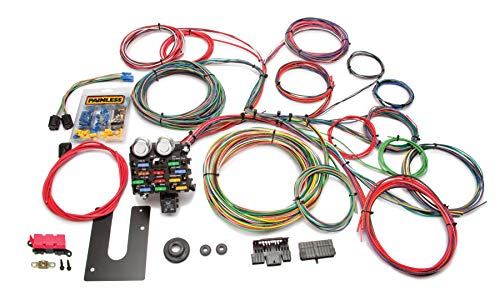
- 21 circuits for key-in-dash layouts
- Printed, GM-color-code wires
- Pre-terminated ATO fuse block
Best For: Classic builds with key-in-dash ignition
GM Column Pick

- 22 circuits for 12-volt builds
- Plug for 1968–96 GM tilt columns
- 17-foot tail-light leads
Best For: Custom builds with a compatible GM tilt column
Auxiliary Lighting Pick
Nilight Dual-Lead Light Harness

- Two 12-volt lighting outputs
- Relay and blade fuse included
- Illuminated rocker switch
Best For: Two auxiliary lights below 180W combined
Compact Rewire Pick

- 12 fused 12-volt circuits
- Printed wire labels every six inches
- Illustrated manual included
Best For: Modifications needing up to 12 circuits
Broad Circuit Coverage
Universal 21-Circuit Harness with 17 Fuses

- 21 circuits and 17 fuses
- Wire labels every five inches
- Extra-long copper-core wires
Best For: Custom builds needing broad circuit coverage
Flexible Fuse-Block Placement

- 12-circuit design
- Small, flexibly mounted fuse block
- Designed for future expansion
Best For: Hot rod builds with modest circuit needs
Detailed Installation Guidance
GM-Color-Coded 21-Circuit Harness

- GM-color-coded wires
- GM, Ford, and Mopar instruction pages
- Extra-long GXL 125 jacketed wire
Best For: Classic builds needing guidance for a 21-circuit install
Best for a 12-Circuit Rewire
A-Team Performance 12-Circuit Harness

- Pre-wired 12-circuit fuse block
- Long wires labeled every 12 inches
- Horn relay and two flashers included
Best For: Street-rod and custom-car builds needing 12 circuits
Most Circuit Options
Universal 21-Circuit Harness with 17 Fuses

- 21 circuits and 17 fuses
- Color-coded wires labeled every 5 inches
- Some reserved upgrade wires are unlabeled
Best For: Classic-car rewires with numerous electrical functions
Best Mid-Range Circuit Count
14-Circuit Universal Wiring Harness

- 14-circuit layout
- Copper-core wire
- Spare fuses, relays, and terminals included
Best For: Hot-rod or muscle-car builds needing 14 circuits
Classic Chassis Pick – Painless 21-Circuit Harness
Painless Performance 10102 Classic Customizable Chassis Harness, Key in Dash, 21 Circuits
Check Price On AmazonThis automotive wiring harness kit is a universal-fit option for a classic chassis project that needs 21 circuits and a key-in-dash layout. Printed GM-color-code wires and a full-color manual help make the connections easier to trace.
Best For: Classic vehicle builds using a key-in-dash ignition layout.
Pros:
- Each wire is printed with its circuit identification.
- Pre-terminated, machine-crimped fuse block uses modern ATO blade fuses.
- Full-color installation manual and Fort Worth-based technical support are available.
Cons:
- Universal fit still requires the installer to terminate the remaining wire ends.
- Key-in-dash layout may not suit a column-key project.
Choose this harness if clear wire identification and a pre-terminated fuse block matter more to you than a vehicle-specific, ready-to-connect harness.
GM Column Pick – Universal 22-Circuit Harness
This automotive wiring harness kit offers 22 circuits and a pre-wired ribbon plug for 1968–96 GM tilt steering columns. Its labeled, color-coded GXL wires are marked every six inches to help with routing and identification.
Best For: Restorations or custom 12-volt builds using a compatible GM tilt column.
Pros:
- Pre-wired plug connects to compatible 1968–96 GM tilt columns.
- OEM-style fuse block includes an integrated flasher-unit mount.
- 17-foot tail-light leads accommodate larger vehicles.
Cons:
- The pre-wired column plug is specific to the stated GM tilt-column range.
- Universal fit means other vehicle connections still need to be planned and installed.
The GM column connection is the main reason to choose this kit; check your column before relying on that convenience.
Auxiliary Lighting Pick – Nilight Dual-Lead Light Harness
This automotive wiring harness kit is for adding two auxiliary lights to a 12-volt vehicle or boat, not for rewiring the vehicle’s main circuits. It includes a relay, blade fuse and illuminated on/off rocker switch.
Best For: Wiring two 12-volt LED light bars or work lights with a combined load below 180W.
Pros:
- Two output leads support dual lighting fixtures.
- Relay and blade fuse provide circuit switching and protection.
- Red switch indicator shows when the lights are on.
Cons:
- Limited to auxiliary lighting rather than a full chassis rewire.
- Specified for dual fixtures below 180W.
For a focused lighting install, this kit groups the switch and protective components together; choose a chassis harness instead if you need vehicle-wide wiring.
Compact Rewire Pick – Universal 12-Circuit Harness
This automotive wiring harness kit provides 12 fused circuits for a standalone 12-volt wiring setup. Listed circuits include ignition, headlights, wipers, brake switch, heater and accessories, with wire labels printed every six inches.
Best For: Vehicle modifications that need a 12-circuit harness mounted under the dash or seat.
Pros:
- 12 fuses cover the kit’s listed circuits.
- High-temperature wire has easy-to-read markings every six inches.
- Includes an illustrated manual and allows expansion.
Cons:
- 12 circuits may not cover builds needing more electrical branches.
- Universal application requires checking the product details against your vehicle.
This is a practical option when the listed circuits match your project; map your electrical needs before deciding whether 12 circuits are enough.
Broad Circuit Coverage – Universal 21-Circuit Harness with 17 Fuses
This automotive wiring harness kit provides 21 circuits and 17 fuses for a broad range of vehicle electrical functions. Its wires have visible color coding and labels every five inches to help with identification during installation.
Best For: Builders who need a 21-circuit harness for a GM, Ford, Mopar, or similar custom vehicle project.
Pros:
- Covers functions including lighting, gauges, wipers, power windows, and an electric fuel pump.
- Labels every five inches help identify wires along their length.
- Copper-core wiring and extra-long wires suit varied installation layouts.
Cons:
- Universal fitment requires checking the vehicle’s wiring needs.
- The product notes recommend consulting a professional before installation.
Choose this kit when circuit count and wire identification matter more than a vehicle-specific, plug-in fit.
Universal 12 Circuit Wiring Wires Harness Fit for Muscle Car Hot Rod Street Rod XL Wires
Check Price On AmazonThis automotive wiring harness kit offers 12 circuits for muscle car, hot rod, and street rod projects. Its small fuse block can be mounted in various positions, including under the dash or seat.
Best For: Builders planning a 12-circuit installation with flexible fuse-block placement.
Pros:
- Small fuse block offers under-dash or under-seat mounting options.
- Design allows for future expansion.
- Described as easy to install.
Cons:
- Provides fewer circuits than the 21-circuit kits in this roundup.
- The supplied notes do not identify which vehicle functions the 12 circuits serve.
This is the simpler-circuit option to consider when fuse-block location and room for future growth are priorities; confirm that its circuit count suits your build.
This automotive wiring harness kit combines 21 circuits with GM-color-coded wires and instructions that include specific pages for GM, Ford, and Mopar. Extra-long wires give builders flexibility when routing through a classic car or hot rod.
Best For: Classic car builders who want 21 circuits and make-specific instruction pages.
Pros:
- Instructions include dedicated GM, Ford, and Mopar pages.
- Covers functions from lights and gauges to power windows and an electric fuel pump.
- Extra-long GXL 125 wire has a jacket described as resistant to grease, oil, gas, and acid.
Cons:
- Professional installation is recommended.
- Universal fitment still calls for checking your vehicle’s circuit requirements.
The documentation and wire-jacket specifications distinguish this kit, though it remains a universal harness rather than a vehicle-specific replacement.
Best for a 12-Circuit Rewire – A-Team Performance 12-Circuit Harness
This automotive wiring harness kit offers a pre-wired 12-circuit fuse block for street rods and custom cars. Long wires labeled every 12 inches help you identify and route connections during installation.
Best For: Builders who need a 12-circuit harness for a street rod, muscle car, or custom vehicle.
Pros:
- Pre-wired fuse block includes coverage for headlights, turn signals, and radio.
- Includes a horn relay, dimmer switch connector, two flashers, and a circuit breaker.
- Long, regularly labeled wires make circuits easier to trace.
Cons:
- 12 circuits may be limiting if your build needs more electrical functions.
- Universal fit still requires checking your vehicle’s wiring needs before installation.
This is a practical choice when its 12 circuits cover your planned equipment and you value included switching components and clearly marked wire runs.
Most Circuit Options – Universal 21-Circuit Harness with 17 Fuses
If your classic-car project needs room for many electrical functions, this automotive wiring harness kit provides 21 circuits and 17 fuses. Its standard-color wires have labels every 5 inches to help identify connections.
Best For: Classic-car rewires that need circuits for multiple accessories, lights, and controls.
Pros:
- Covers listed functions including lights, gauges, wipers, power windows, and an electric fuel pump.
- Color coding and frequent wire labels aid circuit identification.
- Includes instructions; the seller states that technical support is available for one year.
Cons:
- Wiring positions vary by vehicle, year, and configuration, so installation requires careful verification.
- Two to four reserved upgrade wires may be unlabeled.
The broad circuit list makes this a useful starting point for a more involved rewire, but check the instructions and your vehicle’s wiring layout before making connections.
Best Mid-Range Circuit Count – 14-Circuit Universal Wiring Harness
This automotive wiring harness kit sits between the 12- and 21-circuit options, with 14 circuits for a street car, hot rod, or muscle-car project. The supplied parts include relays, terminals, spare connectors, and instructions.
Best For: Builders seeking a 14-circuit setup with installation accessories included.
Pros:
- Organized 14-circuit layout is intended to simplify wiring management.
- Includes spare fuses, a fuse-extraction tool, relays, terminals, and auxiliary connecting wires.
- Uses copper-core wire; listed connector types include spade, ring, and butt.
Cons:
- The supplied notes do not specify which vehicle functions each circuit covers.
- Its universal fit should be checked against your vehicle’s wiring requirements.
Consider this kit if 14 circuits suit your plan and you want the listed installation supplies in one package; confirm the circuit assignments before starting the rewire.
How We Picked the Best Automotive Wiring Harness Kit
We organized the selected kits by their stated circuit counts, intended use, and advertised features, including pre-wired fuse blocks, labeled wires, relays, and column compatibility. The list spans 12-, 14-, 21-, and 22-circuit chassis harnesses, as well as one accessory-specific light-bar harness. Those descriptions are a starting point, not proof that every connector, wire length, or circuit matches your vehicle. Confirm the current manufacturer instructions and package contents before ordering.
Quick Comparison: Which Type Fits Your Build?
12-circuit harnesses suit simpler cars with mostly stock electrical equipment and few planned additions. A 14-circuit harness offers a little more room for accessories. 21- and 22-circuit harnesses are worth considering when you need separate circuits for equipment such as electric fans, power windows, or aftermarket lighting; check the actual circuit list rather than relying on the number alone. The Nilight two-lead light-bar harness serves a different purpose: it adds fused, relay-controlled power for auxiliary lights and is not a replacement for a full chassis harness.
Key Buying Factors for an Automotive Wiring Harness Kit
Map the Circuits Before Choosing a Count
List every load in your car, including ignition, charging, headlights, brake lights, turn signals, horn, wipers, heater, and planned accessories. Match that list to the kit’s circuit assignments and fuse ratings. Extra circuits can help with future upgrades, but a higher count cannot fix an unsuitable wire gauge or an incorrect connection.
Check Fitment and Installation Details
“Universal” usually means the harness needs routing, trimming, and termination for your vehicle. Check fuse-block mounting space, front-to-rear wire lengths, wire labels, and whether terminals, connectors, grounds, and a usable diagram are included. If your car has a GM tilt column—or a different column—verify the turn-signal and ignition connections specifically. Brand references in a listing do not guarantee plug-and-play fit for a Chevy, Ford, or Mopar.
Plan for Electrical Safety
Choose an Automotive Wiring Harness Kit with appropriate overcurrent protection for the circuits you will use. Verify wire gauge against the load, route wiring away from heat and moving parts, protect pass-throughs with grommets, and make sound grounds. Disconnect the battery during installation and test each circuit before finishing the interior. If you are unsure about high-current loads or charging-system wiring, consult a qualified automotive electrician.
Who Should Buy Which Automotive Wiring Harness Kit?
For a basic hot rod or restoration with limited accessories, start by comparing the 12-circuit kits and step up if your circuit map demands it. Consider the 14-circuit option for a modest amount of expansion. Look at the 21- and 22-circuit choices for more complex builds, selecting by circuit assignments, documentation, and fitment rather than count alone. The Painless 21-circuit kit is a candidate if its key-in-dash layout matches your plan; the 22-circuit GM tilt-column option merits a closer look if that column is installed. Buy the Nilight kit when the job is wiring auxiliary lights, not rewiring the car.