If a battery keeps going dead, the right tester can save hours of guesswork. An automotive parasitic draw tester helps you find unwanted current draw before it becomes a repeat comeback.
In this roundup, we focus on practical tools that make battery drain diagnosis faster, safer, and easier to read, whether you are a DIYer or a professional tech.
Best 10 Automotive Parasitic Draw Tester Picks for 2026
OBDII Monitoring Pick
Power Probe Parasitic Draw Monitor with OBDII Connection

- Monitors voltage and parasitic current draw
- Uses a 16-pin OBDII connector for 12V power support
- Graphing mode displays waveform-style readings
Best For: Technicians needing OBDII-powered monitoring and deeper electrical analysis
Classic Battery Post Tester
OTC 7645 Parasitic Draw Tester

- Digital amp meter for battery drain checks
- Works with side or top-post batteries
- Simple switch-and-meter test setup
Best For: People wanting a straightforward tester for standard battery-post vehicles
Fuse Panel Locator
Power Probe 80A Fuse Monitor with Built-in Flashlight

- Checks current flow on fuses to isolate draw
- Color display shows inactive, active, or open circuits
- Reads live current from common 1A to 80A fuses
Best For: Fast fuse-panel diagnosis without removing fuses
Budget Diagnostic Pick
Automotive Current Tester and Leakage Detector

- Supports battery drain testing and circuit checks
- Backlit LCD improves visibility
- Integrated front light helps in dark spaces
Best For: General-purpose electrical diagnostics and roadside use
Power Probe Essential Bundle
PPDRAW & PPFUSE Parasitic Draw Bundle
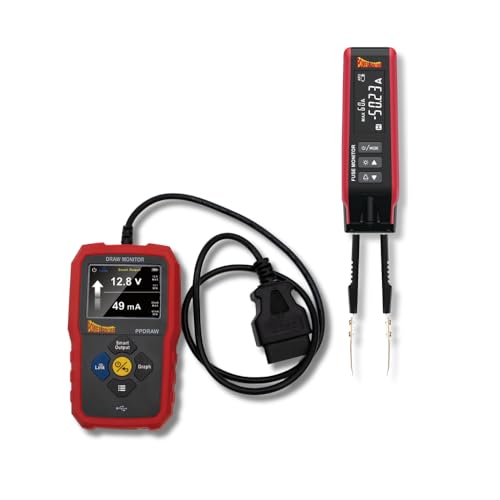
- Includes a fuse monitor and a multi-function probe tool
- Supports 12V vehicle systems like cars, SUVs, trucks, and motorcycles
- Uses LEDs and tone alerts for polarity, continuity, and voltage
Best For: Two-tool 12V troubleshooting with quick fuse checks
Quick-Read Drain Detector
12V Parasitic Battery Drain Tester

- Clamp-on tester with an integrated volt/current display
- Helps identify the drain source by pulling fuses one by one
- Built for 12V vehicles with stable spring-loaded clips
Best For: Fast, hands-free parasitic drain checks with a built-in display
Fuse-Slot Current Monitor
20A Blade Fuse Parasitic Draw Tester

- Plugs into the fuse slot for inline current monitoring
- Measures 0.01A to 20A with a real-time display
- Supports mini and standard blade fuses while keeping protection active
Best For: Pinpointing abnormal current at the fuse-circuit level
Continuous Monitoring Pick
Digital Automotive Parasitic Draw Tester

- Checks battery drain without disconnecting the battery
- Shows voltage and current in real time
- Built-in 10A fuse for safer testing
Best For: 12V vehicle owners who want simple continuous draw testing
Fuse-Level Troubleshooting Pick
Car Fuse Tester with Current Monitor

- Pins down the fuse causing battery drain
- Reads current directly in fuse circuits
- LED display with front light for low-light work
Best For: Quick fuse-by-fuse parasitic draw diagnosis
Portable Circuit Check Pick
Automotive Car Circuit Fault Probe Tester

- Measures 0.01A to 19.99A for circuit diagnostics
- Backlit LCD plus LED work light improve visibility
- PC/ABS build with anti-slip grip panels
Best For: Portable fuse and current checks in low-light work areas
OBDII Monitoring Pick – Power Probe Parasitic Draw Monitor with OBDII Connection
If you want an automotive parasitic draw tester that can monitor battery voltage and current draw while keeping power available through the OBDII port, this Power Probe monitor is built for that job. It also adds graphing mode for waveform-style analysis, plus a rechargeable battery and USB-C charging for shop-friendly use.
Best For: Technicians who want OBDII-powered monitoring, graphing, and battery-replacement support.
Pros:
- Monitors both car battery voltage and parasitic current draw for diagnostics
- Connects through a 16-pin OBDII connector to supply 12V power and help prevent data loss
- Graphing mode shows voltage and amperage as a waveform
- Rechargeable lithium-ion battery with USB-C charging and TFT display
Cons:
- Requires a vehicle with an OBDII port
- More feature-rich than a basic draw tester
This is a strong fit if you want a modern parasitic draw tester that does more than simple amperage checks. The OBDII connection, waveform display, and adjustable alarm settings make it especially useful for detailed electrical work and battery service.
Classic Battery Post Tester – OTC 7645 Parasitic Draw Tester
The OTC 7645 is a straightforward automotive parasitic draw tester for diagnosing battery drain on vehicles with side- or top-post batteries. It uses a digital amp meter and a simple switch setup between the negative battery cable and the battery, which makes it a practical choice when you want a direct test method without extra complexity.
Best For: Users who want a simple tester for side- or top-post battery setups.
Pros:
- Works on any vehicle with side or top-post batteries
- Digital amp meter helps take guesswork out of battery drain testing
- Simple switch connection between the negative cable and battery
- Limited lifetime warranty
Cons:
- Designed for vehicles with side or top-post batteries only
- Less advanced than monitor-style tools with graphing or display features
This is a practical pick if you want a proven parasitic draw tester with a direct, no-frills workflow. It focuses on the core task of measuring drain accurately and is best suited to conventional battery-post applications.
Fuse Panel Locator – Power Probe 80A Fuse Monitor with Built-in Flashlight
This automotive parasitic draw tester is aimed at quickly isolating draw by checking current flow on fuses instead of removing them one by one. The Power Probe 80A Fuse Monitor shows green, yellow, or red status, so you can move through the fuse panel fast while also reading live current in amps.
Best For: Diagnosing parasitic draw at the fuse panel without pulling fuses and risking module resets.
Pros:
- Helps isolate parasitic draw by finding current flow on fuses
- Color indicators show inactive, active, or open circuits
- Displays live current from common fuses rated 1A to 80A
- Replaceable tips and included carrying case improve long-term usability
Cons:
- Focused on fuse-panel testing rather than whole-system monitoring
- Battery powered, so it needs charging to stay ready
If your priority is fast fuse-by-fuse detection, this tool offers a very targeted approach. The visual status system and live amp display make it well suited to efficient parasitic draw diagnosis without unnecessary fuse removal.
Budget Diagnostic Pick – Automotive Current Tester and Leakage Detector
For a general-purpose automotive parasitic draw tester, this current tester and leakage detector is built for battery drain testing, circuit checks, and broader vehicle electrical diagnostics. It includes a backlit LCD and integrated front light, which should help when you need readable measurements in a garage or darker workspace.
Best For: Shops and mobile techs who want a basic diagnostic tester with a lit display and flashlight.
Pros:
- Suitable for battery drain testing, circuit checks, and electrical diagnostics
- Backlit LCD display improves readability
- Integrated front light helps in dark workspaces
- Made for on-site testing in garages, roadside assistance, and repairs
Cons:
- Product details are more general than the other testers here
- Less clearly specialized than dedicated monitor or fuse-panel tools
This is a flexible, everyday diagnostic option if you need one tool for current measurement and leakage detection. It looks best suited to practical field use where a clear display and simple troubleshooting features matter most.
Power Probe Essential Bundle – PPDRAW & PPFUSE Parasitic Draw Bundle
If you want an automotive parasitic draw tester setup that handles both fuse checks and current/polarity probing, this Power Probe bundle is built for straightforward 12V diagnostics. It combines a fuse monitor for quick blown-fuse or active-circuit checks with the PPDRAW tool for drawing current, detecting voltage, and checking polarity without piercing wires.
Best For: DIYers and techs who want a compact, two-tool bundle for 12V vehicle electrical troubleshooting.
Pros:
- Fuse Monitor helps identify blown fuses or active circuits without removing the fuse.
- PPDRAW can draw current and detect voltage or polarity without piercing wires.
- Designed for 12V vehicle systems, including motorcycles, sedans, SUVs, and trucks.
- Bright LEDs and tone alerts provide clear polarity, continuity, and voltage feedback.
Cons:
- Made for 12V vehicle systems, so it is not a universal all-voltage solution.
- It is a two-piece bundle, which may be more than you need for simple single-task checks.
This bundle makes sense if you want a pocket-sized, practical way to tackle parasitic draw and fuse diagnostics with clear visual and audio indicators. It is especially appealing for users who value convenience and don’t want to pierce wires during testing.
Quick-Read Drain Detector – 12V Parasitic Battery Drain Tester
This automotive parasitic draw tester is aimed at fast, no-fuss battery drain checks on 12V vehicles. It clamps to the battery terminals, shows the vehicle’s dark current after systems sleep, and helps you isolate the drain by pulling fuses one by one while watching the reading drop.
Best For: DIY owners and professional technicians who want a simple clamp-on tester with an integrated display.
Pros:
- Integrated volt/current readout removes the need for a separate multimeter.
- Clamp-on setup keeps both hands free in tight engine bays.
- Stable spring-loaded metal clips help maintain contact on battery posts.
- Also useful for checking static current and charging voltage.
Cons:
- Designed for 12V vehicles, so it is not intended for higher-voltage systems.
- It relies on fuse-pulling diagnosis, which still takes patience during troubleshooting.
Overall, this is a practical choice if you want a direct, readable way to spot parasitic drain without setting up a separate meter. The simple connect-read-pull workflow makes it easy to use for routine diagnostic work.
Fuse-Slot Current Monitor – 20A Blade Fuse Parasitic Draw Tester
For buyers who want a fuse-level automotive parasitic draw tester, this inline monitor focuses on pinpointing the exact circuit pulling abnormal current. It plugs into the fuse slot, keeps factory circuit protection active, and shows real-time current so you can see which fuse circuit behaves differently under load.
Best For: Technicians and DIYers diagnosing fuse-circuit drain with steady inline current readings.
Pros:
- Measures 0.01A to 20A with a clear real-time display.
- Inline fuse design keeps factory circuit protection active during testing.
- Works with mini and standard blade fuses across various vehicle makes and models.
- No loose probes or unstable contacts; it plugs directly into the fuse slot.
Cons:
- Designed around blade fuse circuits, so it is not a universal electrical tester.
- Requires access to the fuse slot you want to monitor, which may limit convenience in some setups.
This is a strong pick if your main goal is circuit-by-circuit diagnosis rather than broad probe-style testing. The steady fuse-slot connection and real-time display make abnormal draw easier to spot.
Continuous Monitoring Pick – Digital Automotive Parasitic Draw Tester
If you want an automotive parasitic draw tester that checks battery drain without disconnecting the battery, this model keeps the process simple. It shows voltage and current at the same time, uses clip-on leads for fast setup, and is built for 12V vehicles looking for standby current issues, electrical faults, or unwanted drain.
Best For: Drivers and DIYers who want continuous battery drain testing with no multimeter setup.
Pros:
- Continuous power detection without disconnecting the battery
- Dual display shows real-time voltage and current
- Built-in 10A fuse adds protection during testing
- Simple red and black alligator clips for secure hookup
Cons:
- Designed for 12V vehicles, so it is not a universal high-voltage solution
- Rated protection is centered around a 10A fuse limit
This is a practical choice if you want quick parasitic draw checks with minimal setup. The real-time display and clip-on design make it easier to trace battery drain while keeping the testing workflow straightforward.
Fuse-Level Troubleshooting Pick – Car Fuse Tester with Current Monitor
This automotive parasitic draw tester is built for pinpointing the fuse circuit behind excessive battery drain. Instead of setting up a multimeter, you can insert it into a fuse slot and read current directly, making it useful when you need to isolate overloaded circuits, parasitic drains, or relay-related faults quickly.
Best For: DIYers and mechanics who want fast fuse-by-fuse battery drain diagnosis.
Pros:
- Finds the exact fuse causing excessive current draw
- Tests and monitors current directly through fuse circuits
- Handles 0.01A to 20A with overcurrent detection
- LED display and front light help in dark engine bays
Cons:
- Works with Mini and Standard blade fuses, so compatibility is fuse-type dependent
- Designed for short-duration diagnostics rather than extended high-load testing
For fuse-based electrical troubleshooting, this model is a strong match because it focuses on the circuit causing the problem. The plug-and-play format should appeal to anyone who wants quicker diagnosis without loose probes or complicated meter setup.
Portable Circuit Check Pick – Automotive Car Circuit Fault Probe Tester
If you need an automotive parasitic draw tester for circuit checks across passenger vehicles and light trucks, this probe-style tool focuses on clear current readings and practical visibility. It measures from 0.01A to 19.99A, includes a backlit LCD, and adds a built-in LED work light for fuse boxes and engine bays with limited lighting.
Best For: Users who want a portable current tester for routine fuse and circuit diagnostics.
Pros:
- Measures current from 0.01A to 19.99A for electrical troubleshooting
- Backlit LCD improves readability in bright or low-light conditions
- Built-in LED work light helps illuminate fuse boxes and wiring paths
- Durable PC/ABS body with anti-slip grip panels
Cons:
- Maximum load is 20A and 48VDC for short-duration testing up to 10 seconds
- Uses a 23A 12V battery, so it is still a battery-powered diagnostic tool
This tester is a good fit when you want a compact circuit diagnostic tool with helpful lighting and a readable display. Its measurement range and sturdy grip make it suitable for frequent troubleshooting in garages, workshops, or outdoor settings.
How We Picked the Best Automotive Parasitic Draw Tester
We looked for tools that help diagnose parasitic draw without unnecessary setup or confusion. Priority went to models with clear current readings, reliable inline monitoring, usable protection for fuse circuits, and features that fit real-world automotive electrical work. We also considered vehicle compatibility, display clarity, and whether a tool is better suited to quick checks or deeper troubleshooting.
Quick Comparison
Some testers are designed for simple battery drain checks through the OBDII port, while others use inline fuse testing or circuit-probe styles for broader diagnostics. If you want the fastest setup, a plug-in monitor is convenient. If you need more flexibility across different fuse layouts and vehicle systems, a fuse-based or inline Automotive Parasitic Draw Tester is usually the better choice.
Key Buying Factors for Automotive Parasitic Draw Tester
Measurement Range and Accuracy
Choose a tester that matches the current levels you expect to diagnose. Low-resolution tools can miss small draws, while better units give you a more useful window into standby current and circuit behavior.
Connection Method
OBDII monitors are quick and noninvasive, but they may not cover every troubleshooting scenario. Fuse and circuit testers offer more flexibility when the problem is isolated to a specific branch or when the vehicle does not communicate well through the diagnostic port.
Display and Ease of Use
A clear voltage and current display matters more than flashy extras. Look for readable screens, simple controls, and obvious overcurrent protection so you can work efficiently without risking the tool or the vehicle.
Vehicle and System Compatibility
Make sure the tester supports the battery types, fuse styles, and electrical systems you work on most. One versatile Automotive Parasitic Draw Tester can be enough for many cars, but shops may want a bundle or a higher-rated circuit tool for broader coverage.
Who Should Buy Which Automotive Parasitic Draw Tester?
DIY users who mainly want to confirm battery drain should lean toward simple, easy-to-read monitors with minimal setup. Mobile techs and shop users often benefit from a more versatile fuse or circuit tester that handles a wider range of vehicles and fault types. If you want the most complete option, look for a tester that balances current range, protection, and compatibility rather than chasing the highest feature count.
For best results, pair the right tool with a consistent testing process: stabilize the vehicle, let modules sleep, then check current draw and isolate circuits one at a time. That approach turns a frustrating dead-battery mystery into a straightforward diagnosis.