Choosing the right automotive battery cable crimping tool can make the difference between a solid, low-resistance connection and a frustrating electrical failure. Whether you’re building custom battery cables, repairing terminals, or wiring a vehicle upgrade, the right tool helps you crimp cleanly and confidently.
In this roundup, we focus on practical options for different wire sizes, terminal types, and budgets so you can find a tool that matches your project, not the other way around.
Best 10 Automotive Battery Cable Crimping Tool Picks for 2026
Heavy-Duty Hex Crimping
iCrimp Battery Cable Lug Crimping Tool

- Fits 8, 6, 4, 2, 1, and 1/0 AWG lugs.
- Hex crimping helps create a strong cable-to-lug connection.
- Includes a cutter for copper and aluminum cable up to 1/0 AWG.
Best For: Heavy-duty vehicle and generator battery cable work
Hydraulic Reach for Tight Spaces
10 Ton Hydraulic Battery Cable Crimper
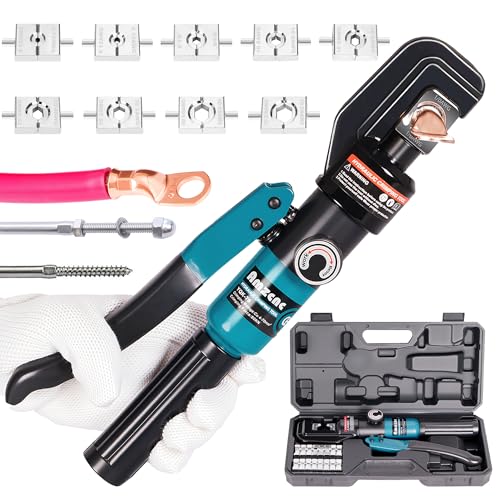
- Hydraulic action cuts down on hand effort.
- 9 dies cover 12 AWG to 2/0 AWG.
- 180 rotating head helps in narrow spaces.
Best For: High-force crimping in cars, RVs, and marine installs
All-in-One Starter Kit
Cable Lug Crimping Tool with Lugs

- Includes 74 copper lugs and 100 heat-shrink tubes.
- Covers AWG 10, 8, 6, 4, 2, and 1/0.
- 10-inch handle and rubber grip add leverage.
Best For: DIYers who want a complete cable termination kit
Single-Hand Hydraulic Crimping
YUZES 10 Ton Battery Cable Tool

- 10-ton hydraulic crimping for heavy cable work.
- Magnetic rails support stable one-handed operation.
- 180-degree rotating head helps in tight spaces.
Best For: Frequent battery cable work with one-handed hydraulic control
Heavy-Duty Pick
Hydraulic Crimper for 12AWG to 4/0AWG

- 10-ton hydraulic force for large cable crimps
- 11 labeled US hex dies from 12 to 4/0 AWG
- Includes case for organized storage
Best For: Large battery and power cable jobs
Balanced Value Pick

- 10-ton force for copper, aluminum, and steel
- EDM-cut hex dies for more precise crimping
- Ergonomic grip with portable case included
Best For: Everyday battery cable crimping
Compact Kit Pick
Hydraulic Crimper and Cable Cutter Combo

- Crimps and cuts cable up to 2/0 AWG
- 180-degree rotation helps in tight spaces
- Return spring supports easier one-handed use
Best For: Crimping plus cable cutting in one kit
Heavy-Duty Hydraulic Pick
Solsop 10 Ton Battery Cable Crimper with Cutter

- 10-ton hydraulic crimping force
- 9 dies cover 12 AWG to 2/0 AWG
- Includes cable cutter and rotating head
Best For: users needing a heavy-duty crimper for battery cables and lug work
Best Simple Pick
Solsop Battery Cable Crimper with Lugs and Cutter
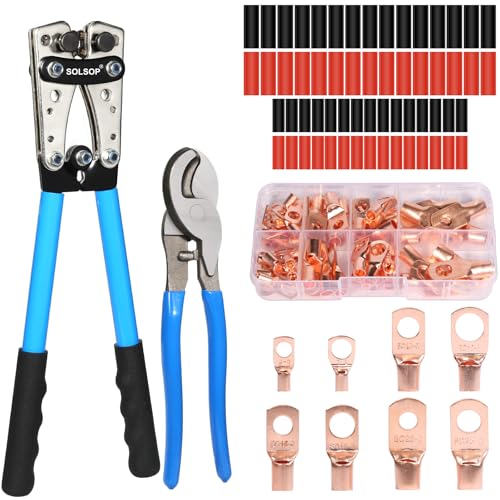
- 6 dies cover AWG 10 to 1/0
- Includes 62 lugs plus heat shrink tubing
- Rotating head and rubber-coated handles
Best For: buyers who want a complete lug-crimping kit for everyday wiring
Widest Range Option
Hydraulic Cable Crimper 12 AWG to 4/0 AWG
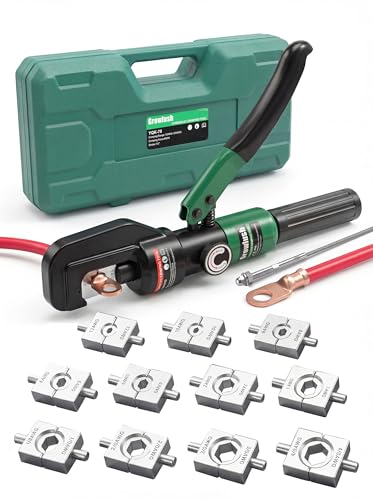
- 12 AWG to 4/0 AWG crimping range
- 11 US standard hex dies included
- 10-ton hydraulic force with magnetic die holders
Best For: buyers needing the broadest size range for battery and heavy cable work
Heavy-Duty Hex Crimping – iCrimp Battery Cable Lug Crimping Tool
If you need an automotive battery cable crimping tool for large-gauge lugs, this iCrimp model is built for 8, 6, 4, 2, 1, and 1/0 AWG work. The hex-crimp design is intended to create a wide, high-pressure contact area, which is useful when you want a secure connection on battery and power cables in demanding jobs.
Best For: Trucks, RVs, emergency vehicles, generators, and other heavy-duty cable installs.
Pros:
- Crimps 8 through 1/0 AWG battery lugs.
- Rotating EDM die set helps with accurate size matching and quick checks.
- Includes a cable cutter rated for copper and aluminum cable up to 1/0 AWG.
- Designed for harsh-duty and commercial vehicle use.
Cons:
- Manual tool, so it takes more effort than hydraulic crimpers.
- Best suited to larger cable sizes rather than small general wiring.
For buyers focused on rugged battery cable terminations, this is a straightforward mechanical crimper with the right size range and a matching cutter. It is a practical pick when durability and simple operation matter more than speed.
Hydraulic Reach for Tight Spaces – 10 Ton Hydraulic Battery Cable Crimper
This automotive battery cable crimping tool uses hydraulic force to handle 12 AWG through 2/0 AWG, making it a strong fit for battery cables, welding leads, and electrical cable work. The 1800 rotating head is especially useful when you need to crimp in narrow spaces without fighting the tool angle.
Best For: Users who want a high-force crimper for cars, RVs, marine setups, and cramped work areas.
Pros:
- Hydraulic crimping reduces hand effort on larger cables.
- 9 die pairs cover 12 AWG to 2/0 AWG.
- 1800 rotating head helps in tight spaces.
- Return spring and vinyl-dipped grip support one-handed operation.
Cons:
- Bulkier and heavier than manual crimpers.
- Includes 1/8-inch capability for stainless steel wire rope, which may be unnecessary for battery-only use.
If you want easier crimping force and better access around batteries or terminals, this hydraulic design is a strong practical option. It trades portability for power and convenience, which is often the right move for repeated cable work.
All-in-One Starter Kit – Cable Lug Crimping Tool with Lugs
For buyers who want an automotive battery cable crimping tool plus the parts to get started, this kit includes the crimper, 74 copper wire lugs, and 100 heat-shrink tubes. It covers AWG 10, 8, 6, 4, 2, and 1/0 sizes, so it works well for common vehicle, marine, solar, and DIY cable jobs.
Best For: First-time users or DIYers who want a complete crimping kit with terminals and heat shrink included.
Pros:
- Includes 74 copper lugs and 100 heat-shrink tubes.
- Covers six common crimp sizes from AWG 10 to 1/0.
- Long 10-inch handle and rubber grip improve leverage.
- Useful for vehicles, boats, golf carts, solar, and household wiring.
Cons:
- Manual crimper, so it is less effortless than hydraulic models.
- Best for users who value the included accessories, not just the tool.
This kit makes sense if you want one purchase that covers the tool and consumables. It is especially convenient for smaller projects or for anyone building battery cables and terminal connections from scratch.
Single-Hand Hydraulic Crimping – YUZES 10 Ton Battery Cable Tool
This automotive battery cable crimping tool is designed for users who want hydraulic power with easier one-handed control. It covers 12 AWG to 2/0 AWG, includes 9 hex dies, and can rotate 1800 for better access when terminal work has to happen in tight engine or battery spaces.
Best For: Automotive, electrical, and construction users who want a high-force crimper with one-handed operation.
Pros:
- 10-ton hydraulic force handles demanding cable terminations.
- Magnetic rails help keep dies stable for single-handed use.
- 180 rotating head improves access in narrow areas.
- Includes a storage box and 9 dies for 12 AWG to 2/0 AWG.
Cons:
- More complex than a simple manual crimper.
- Includes a 1/8-inch die for steel cable railing, which may not be needed for battery work.
For shoppers who want hydraulic performance and a more controlled workflow, this YUZES model offers a strong balance of force and usability. It is a sensible pick when you expect to crimp battery cables often and want the tool to do more of the work.
Heavy-Duty Pick – Hydraulic Crimper for 12AWG to 4/0AWG
If you need an automotive battery cable crimping tool for large-gauge work, this hydraulic crimper is built for demanding connections like battery cables, welding leads, RV wiring, and marine power setups. Its 10-ton hydraulic force and full 12AWG to 4/0AWG range make it a strong fit for bigger cable jobs where consistent, repeatable crimps matter.
Best For: High-current battery, welding, and power cable crimping across a wide AWG range.
Pros:
- Supports a broad 12AWG to 4/0AWG crimping range for heavy battery cables.
- Includes 11 clearly marked US standard hex dies for accurate size matching.
- 10-ton hydraulic force helps reduce hand fatigue on larger crimps.
- Comes with a carrying case for organized storage and transport.
Cons:
- Built for heavy-duty work, so it may be more tool than you need for small terminals.
- Designed around hex dies, which may not suit every preferred crimp style.
For shoppers prioritizing maximum cable size coverage, this is the most capable option in the group. It is especially useful if your automotive projects also extend into welding, solar, RV, or marine electrical work.
Balanced Value Pick – 10-Ton Crimper with 9 Dies
This automotive battery cable crimping tool is aimed at users who want a practical hydraulic crimper for battery, welding, and general power wiring work. With a 10-ton rating, a 12AWG to 2/0AWG range, and precision-machined hex dies, it offers a solid middle ground for DIY and professional use.
Best For: General battery cable crimping with a focus on usability and versatile everyday work.
Pros:
- 10-ton force and 12AWG to 2/0AWG range cover common battery cable sizes.
- EDM wire-cut hex dies are described as more precise than ordinary casting dies.
- Ergonomic, non-slip handle is designed to save effort during crimping.
- Includes a portable storage case and seal rubber rings.
Cons:
- Does not reach the larger 3/0 or 4/0 sizes found in some heavy-duty alternatives.
- Also includes stainless-steel wire rope sizes, which may be irrelevant if you only crimp cables.
This is a balanced choice if you want a dependable hydraulic crimper without stepping up to the largest-size tool. The precise dies and comfortable handle make it a sensible pick for regular battery cable work.
Compact Kit Pick – Hydraulic Crimper and Cable Cutter Combo
If you want an automotive battery cable crimping tool that also handles cutting, this combo kit is built for crimping and trimming copper or aluminum cable. It covers 12 AWG to 2/0 AWG, includes 9 pairs of hex dies, and adds a cable cutter for jobs where you need one kit for basic electrical and maintenance work.
Best For: Users who want a crimper and cable cutter in one compact kit.
Pros:
- Crimps 12 AWG to 2/0 AWG and cuts up to 2/0 AWG cable.
- Includes 9 pairs of hex dies for common battery and power cable sizes.
- 180-degree rotation helps when working in tighter spaces.
- Return spring is designed to make one-handed operation easier.
Cons:
- Cutting is limited to copper or aluminum cables; it cannot cut wire rope.
- Does not reach larger 3/0 or 4/0 battery cable sizes.
This kit makes sense if you want a practical, space-friendly option for smaller automotive and electrical tasks. The added cutter and one-handed operation features improve convenience, though the size range is narrower than on heavier-duty crimpers.
Heavy-Duty Hydraulic Pick – Solsop 10 Ton Battery Cable Crimper with Cutter
If you need an automotive battery cable crimping tool that can handle thick cables and lug connections, this Solsop hydraulic set is built for serious work. Its 10-ton hydraulic action, 12 AWG to 2/0 AWG range, and included cable cutter make it a practical all-in-one option for battery cables, welding leads, and other heavy-gauge wiring.
Best For: DIYers and pros who want a hydraulic battery cable crimper for 12 AWG to 2/0 AWG with a cutter included.
Pros:
- 10-ton hydraulic force with a 0.45″ stroke for strong, repeatable crimps
- 9 interchangeable hex dies covering 12 AWG through 2/0 AWG plus 1/8″ stainless steel rope
- 360° rotating head helps in tighter or awkward spaces
- Includes a cable cutter and ergonomic handles for more efficient use
Cons:
- Cutter is for copper and aluminum cables only, not wire rope
- Range tops out at 2/0 AWG, so it is not the widest option here
Overall, this is a straightforward pick if you want a durable hydraulic crimper for common automotive and electrical cable jobs without buying extra accessories separately.
Best Simple Pick – Solsop Battery Cable Crimper with Lugs and Cutter
This automotive battery cable crimping tool is aimed at buyers who want a complete kit instead of just the tool. With 6 die sizes for AWG 10 through 1/0, a cable cutter, copper ring terminals, and heat shrink tubing, it covers the basics for battery cables, solar wiring, marine work, and other common electrical connections.
Best For: Anyone who wants a battery lug crimper kit with lugs, heat shrink, and a cutter included.
Pros:
- 6 interchangeable dies cover AWG 10, 8, 6, 4, 2, and 1/0
- Includes 62 pieces of copper lugs and heat shrink tubing for immediate use
- Rotating head makes size changes quick and keeps the setup compact
- Ergonomic rubber-coated handles help reduce hand fatigue
Cons:
- Crimp range stops at 1/0 AWG, so it is not for very large battery cables
- Best suited to standard lug work rather than the broadest heavy-duty applications
If you want a ready-to-go kit for vehicle and small project wiring, this set offers a convenient balance of coverage and included accessories.
Widest Range Option – Hydraulic Cable Crimper 12 AWG to 4/0 AWG
For an automotive battery cable crimping tool with a wider size range, this hydraulic model stands out with support from 12 AWG all the way to 4/0 AWG. That makes it a strong fit for high-current battery work, RV systems, marine maintenance, solar wiring, and other heavy cable projects where a larger die range matters.
Best For: Users who need a hydraulic crimper with an extended 12 AWG to 4/0 AWG range for demanding cable jobs.
Pros:
- Large crimp range from 12 AWG to 4/0 AWG for heavy-duty use
- 11 US standard hex dies provide broad size coverage
- 10-ton hydraulic force reduces manual effort on thick lugs
- Magnetic die holders and organized case help keep everything aligned and stored neatly
Cons:
- Bulkier and heavier than smaller manual-style crimpers
- More tool than needed if you only work with mid-size automotive cables
This is the most flexible choice in the group if your cable work spans from common battery leads to larger terminal connections and you want room to grow into bigger jobs.
How We Picked the Best Automotive Battery Cable Crimping Tool
We looked for an Automotive Battery Cable Crimping Tool that delivers consistent crimps, handles common automotive wire gauges, and offers enough leverage or hydraulic force for dependable results. We also prioritized tools with clear die sizing, cutter compatibility, and a design that suits both DIY users and frequent installers.
Build quality, ease of use, and cable range mattered as much as raw crimping power. A good tool should reduce guesswork, keep terminals aligned, and create repeatable connections without excessive effort.
Quick Comparison
Manual crimpers are best for lighter use, smaller cable jobs, and tighter budgets. Hydraulic models are better for thicker battery cables, repeated installations, and users who want more control with less hand fatigue. If you work across multiple gauge ranges, choose a kit with clearly labeled dies and a cutter that can handle the same projects end to end.
Key Buying Factors for an Automotive Battery Cable Crimping Tool
Wire Gauge Range
Match the tool to the cable sizes you actually use. Many automotive projects involve 10 AWG to 1/0 AWG, while larger setups may require 2/0 or 4/0 capability. Buying too small means limited use; buying too large can add cost and bulk you don’t need.
Crimp Type and Die Quality
Hex dies are common because they produce a strong, even compression on lugs. Check that the dies fit your terminals and are machined well enough to avoid crushing or uneven deformation.
Hydraulic Vs. Manual
Hydraulic crimpers are easier on the hands and better for thick cable, but they tend to be heavier and more expensive. Manual tools are simpler, lighter, and often ideal for occasional use or smaller-gauge work.
Cutter, Case, and Accessory Value
Some kits include a cable cutter and multiple dies, which can save time and money if you’re starting from scratch. Look for accessories that are genuinely useful rather than just padding the package.
Who Should Buy Which Automotive Battery Cable Crimping Tool?
If you only need occasional battery terminal work, a manual Automotive Battery Cable Crimping Tool is usually enough. If you build custom cables, service marine or truck batteries, or want faster, more consistent results on larger lugs, a 10-ton hydraulic model is the better fit. For users who want one setup for multiple projects, a bundled kit with cutters, dies, and lugs offers the best convenience and value.
In short, choose the simplest tool that comfortably covers your cable size range and the volume of work you expect. That approach gives you cleaner crimps, less wasted effort, and better long-term value.