The right wheel balancer depends on what rolls through your bay. Passenger-car wheels, heavy truck assemblies, and mixed fleet work place very different demands on a machine.
These 10 picks include standalone balancers and tire changer combos. Use the guide below to narrow them by wheel capacity, available power, and the work your shop actually performs.
Best 10 Commercial Tire Balancer Picks for 2026
Garage-Friendly Pick

- Fits 3–12-inch wheel widths
- Multiple rim-specific modes
- Steel body and reinforced sensor support
Best For: Garages balancing car, truck, and SUV wheels within its size limits
Heavy-Duty Shop Pick
ATLAS WBT-210 Truck Wheel Balancer
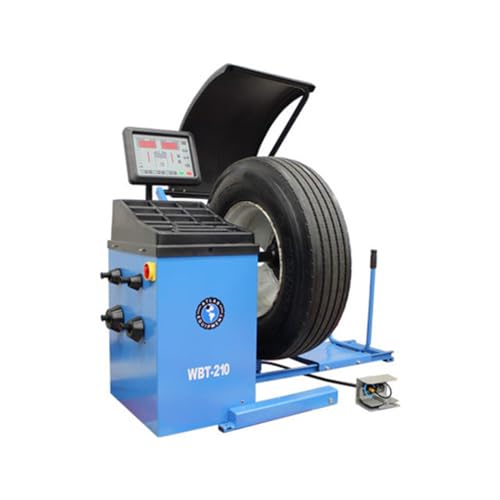
- Handles tires up to 300 pounds
- Includes truck and car cone sets
- Pneumatic lift and self-calibration
Best For: Shops servicing passenger vehicles and heavy-duty trucks
Custom-Rim Pick

- Longer shaft for wider wheels
- Multiple rim-specific modes
- Copper-winding motor
Best For: Garages handling wider wheels and custom rims
Changer-and-Balancer Combo
CHIEN RONG Tire Machine and Balancer

- Combines changer and balancer
- Balancer supports 10–24-inch rims
- Includes four centering cones
Best For: Shops buying tire-changing and balancing equipment together
Heavy-Duty Truck Pick
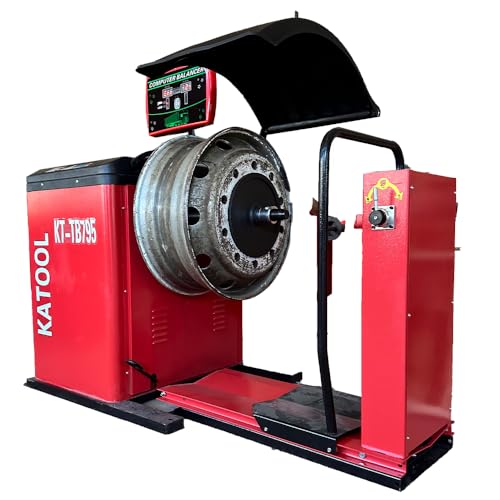
- Up to 51-inch rims
- 8-second measurement cycle
- Laser-guided weight placement
Best For: Shops servicing large truck and bus wheels
110V Shop Combo
XK Tire Changer and 690 Balancer
- Changer and balancer package
- 110V balancer; 6–9-second cycle
- 155-pound balancer wheel limit
Best For: Shops buying mounting and balancing equipment together
Wide-Clamp Combo

- Changer and balancer package
- 12–24-inch outside clamping
- Protective covers for rims
Best For: Shops prioritizing changer clamp range and rim protection
Wider Wheel Capacity
XK 988-690 Tire Changer and Balancer Combo

- 41-inch changer diameter limit
- 44-inch balancer diameter limit
- Four centering cones included
Best For: Shops buying a changer and balancer together
Run-Flat Assist
XK 960-690 Tire Changer and Balancer Combo

- Professional tire-changer assist arm
- Bead blaster and air tank
- 155-pound balancer wheel limit
Best For: Shops seeking run-flat tire-changing assistance
Guided Balancing
KATOOL KT-T835 and KT-B750 Combo

- Automatic measurement ruler and laser guide
- Double-sided changer assist arm
- 12-month all-parts warranty stated
Best For: Buyers wanting guided setup and changer assist features
Garage-Friendly Pick – KATOOL KT-B750 Wheel Balancer
The KATOOL KT-B750 is a commercial tire balancer option for garages servicing car, truck, and SUV wheels. It supports rim widths from 3 to 12 inches and wheel diameters under 880 mm, with multiple balance modes for different rims.
Best For: Garages balancing a range of car, truck, and SUV wheels within the stated size limits.
Pros:
- Multiple rim-specific balance modes.
- 3 mm steel body with welded construction.
- Pure-copper-winding motor and reinforced sensor support.
Cons:
- Wheel diameter must be under 880 mm.
- Stated wheel-width range tops out at 12 inches.
This is a practical choice when you want a dedicated balancer with clearly stated wheel-size limits; check your largest assemblies before ordering.
Heavy-Duty Shop Pick – ATLAS WBT-210 Truck Wheel Balancer
For a shop handling everything from passenger cars to semi-truck tires, the ATLAS WBT-210 is the commercial tire balancer with the broadest stated heavy-duty range in this group. It accommodates 14-inch steel rims through tires weighing up to 300 pounds and includes a pneumatic wheel lift.
Best For: Shops balancing both passenger-vehicle wheels and heavy-duty truck or bus wheels.
Pros:
- Supports tires up to 300 pounds.
- Includes cone sets for cars, light trucks, BUDD-style wheels, and truck or bus tires.
- Self-diagnosis, self-calibration, and static and dynamic modes.
- Pneumatic wheel lift and automatic hood-linked start/stop.
Cons:
- At 725 pounds, it requires planning for delivery and placement.
Its lifting aid and included adapters make the WBT-210 especially compelling when heavy wheels are part of the daily workload.
Custom-Rim Pick – KATOOL KT-B700 Wheel Balancer
KATOOL Wheel Balancer KT-B700 Machines HomeGarageEquipment Service Shop Tools Repair
Check Price On AmazonThe KATOOL KT-B700 is a commercial tire balancer option worth considering if your shop regularly handles wider wheels or custom rims. Its longer shaft is designed for those fitments, while multiple rim-specific balance modes let operators match the mode to the wheel type.
Best For: Garages seeking a longer balancer shaft for wider wheels and custom rims.
Pros:
- Longer shaft designed to accommodate wider wheels and custom rims.
- Multiple balance modes for different rim types.
- Pure-copper-winding motor designed for heat dissipation.
Cons:
- The supplied specifications do not state exact supported rim or wheel sizes.
- No included accessories are specified.
The longer shaft is its clearest differentiator, but confirm the fitment and included equipment against your wheel inventory before buying.
Changer-and-Balancer Combo – CHIEN RONG Tire Machine and Balancer
If you need mounting equipment alongside a commercial tire balancer, this CHIEN RONG combo packages a tire changer and a balancer. The listed balancer specifications include 10–24-inch rim diameters, 1.5–20-inch rim widths, a 155-pound maximum wheel weight, and dynamic, static, ALU 1–3, and motorcycle modes.
Best For: Shops setting up both tire-changing and wheel-balancing capability in one purchase.
Pros:
- Includes both a tire changer and a wheel balancer.
- Balancer lists a 4–7-second cycle time and ±1 g accuracy.
- Includes four centering cones and a quick-release wing nut.
- Tire changer lists 5,600 pounds of bead-breaking force.
Cons:
- Motorcycle adapter shown in the product material is not included.
- Tire changer requires 120–145 psi operating pressure.
This combo makes the most sense when you need both machines; verify each unit’s fitment and utility requirements for your shop before purchase.
Heavy-Duty Truck Pick – KATRAX KT-B795 Wheel Balancer
If your search for a commercial tire balancer centers on truck and bus wheels, the KATRAX KT-B795 is built for that work. It supports rims up to 51 inches, steel wheel widths from 1.5 to 20 inches, and an 8-second measurement cycle.
Best For: Professional shops balancing large truck, bus, and commercial van wheels.
Pros:
- 51-inch maximum rim capacity suits large-vehicle service.
- Positioning lasers indicate where to place weights.
- Large display and 8-second measurement cycle support a clear, quick workflow.
Cons:
- Requires 220V power.
- At 485 pounds, it needs a planned installation spot.
This is the purpose-built large-wheel option in the group. Check your shop’s power and available floor space before choosing it.
110V Shop Combo – XK Tire Changer and 690 Balancer
The XK combo pairs a tire changer with a commercial tire balancer for shops that want mounting and balancing equipment together. Its 690 balancer runs on 110V, accepts wheels up to 44 inches in diameter and 155 pounds, and offers a 6–9-second cycle.
Best For: Shops seeking a 110V changer-and-balancer package for wheels within the stated limits.
Pros:
- Includes both a tire changer and wheel balancer.
- Balancer offers dynamic, static, Alu 1–3, and motorcycle modes.
- Includes three centering cones and a quick-release wing nut.
Cons:
- Balancer wheel capacity tops out at 155 pounds.
- Motorcycle adapter is not included, despite the motorcycle mode.
- Changer requires 120–145 psi operating pressure.
This package makes sense when you need both machines and have the required air supply. Verify wheel weight and changer clamping ranges against the jobs you handle most often.
Wide-Clamp Combo – KATOOL KT-T830 and KT-B700
The KATOOL KT-T830 and KT-B700 package combines a tire changer with a commercial tire balancer for a mount-to-balance workflow. The stated changer range covers 12–24-inch outside clamping and 14–26-inch inside clamping.
Best For: Shops that need a changer-and-balancer package with the stated wide rim-clamping ranges.
Pros:
- Pairs tire changing and balancing equipment in one package.
- Soft jaw covers and a protective mount-head cover help guard rims during tire changes.
- Closed body helps shield internal parts from shop debris.
Cons:
- Supplied notes do not state the balancer’s wheel capacity or cycle time.
- At 583 pounds, the package requires handling and space planning.
The changer’s clamping range and rim-protection features are the clearest reasons to consider this combo. Confirm the KT-B700 balancer specifications before buying for particular wheel sizes.
Wider Wheel Capacity – XK 988-690 Tire Changer and Balancer Combo
For shops comparing a commercial tire balancer with a matching changer, the XK 988-690 combo pairs a 110V tire machine with a balancer rated for wheels up to 44 inches in diameter and 155 pounds.
Best For: Shops that want a changer and balancer together, with a 41-inch tire-diameter limit on the changer.
Pros:
- Changer includes a bead blaster and clamps rims from 12–20 inches outside or 12–24 inches inside.
- Balancer offers dynamic, static, ALU 1–3, and motorcycle modes.
- Includes four centering cones and a quick-release wing nut; listed balancing cycle is 4–7 seconds.
Cons:
- Changer’s maximum wheel width is 12.5 inches.
- The listing reports an 840-pound item weight, so plan for equipment handling.
The balancer’s stated 10–24-inch rim-diameter range gives this combo broad coverage, but check both machines’ separate size limits against the wheels you service.
This commercial tire balancer combo stands out for its tire changer’s professional assist arm, which the listing describes as helpful with run-flat tires. The 110V setup also includes a bead blaster and air reserve tank.
Best For: Shops seeking a changer with run-flat assist alongside a wheel balancer.
Pros:
- Assist arm and bead-blast system support tire-changing work.
- Balancer accepts 10–24-inch rim diameters and wheels up to 155 pounds.
- Dynamic, static, ALU 1–3, and motorcycle balancing modes are listed.
Cons:
- Changer is limited to 37-inch tire diameter and 12-inch wheel width.
- Requires 110V power and 120–145 psi operating air pressure.
Choose this over a basic changer-and-balancer pairing if the assist arm matters to your workflow; verify the changer’s size limits before ordering.
If you want a commercial tire balancer bundled with a well-equipped changer, the KATOOL KT-T835 and KT-B750 combo lists an automatic measurement ruler and laser guide on the balancer, plus a double-sided assist arm on the changer.
Best For: Buyers prioritizing changer assist features and guided balancer setup.
Pros:
- Changer has a double-sided assist arm and bead-blast seater with a post tank.
- Stainless mounting head includes a plastic cover intended to protect the rim.
- Both machines are covered by a stated 12-month all-parts warranty.
Cons:
- The supplied listing does not specify rim-size range or maximum wheel weight.
- Balancer cycle time and accuracy are not stated in the supplied notes.
The feature list is promising, but confirm wheel-fit specifications with the seller before choosing it for a particular tire-service workload.
How We Picked These Commercial Tire Balancers
We organized the 10 selected options around the decisions a working shop needs to make: standalone balancer or tire changer combo, passenger-vehicle or heavy-truck capability, stated wheel limits, and electrical requirements. We also considered listed workflow features such as automatic measurement, laser guidance, self-diagnostics, and static or dynamic balancing. A product name or listing is not a substitute for a current specification sheet, so confirm the exact configuration before ordering.
Quick Comparison
For a shop that already owns a tire changer, the KATOOL KT-B700 and KT-B750 are standalone balancers to compare for routine car, SUV, and light-truck work. The ATLAS WBT-210 lists support for tires up to 300 pounds and merits a closer look when assembly weight is a deciding factor. The KATOOL KT-B795 is the dedicated heavy-truck option in this group; its listing specifies 220V power and rims up to 51 inches.
If you need mounting equipment as well, compare the listed tire changer and balancer packages from KATOOL and XK. These bundles may simplify a new-bay purchase, but the changer’s clamping range, balancer capacity, and power needs must each fit your work. Do not assume every machine in a combo has the same wheel-size limit.
Key Buying Factors for a Commercial Tire Balancer
Wheel Capacity and Vehicle Mix
Start with the largest and heaviest assembly you service regularly, not just its tire diameter. Check rim diameter, maximum wheel diameter, width, and weight against the balancer’s published limits. A machine suited to passenger vehicles is not automatically suitable for bus or heavy-truck wheels. Also verify that the included cones and adapters fit your customers’ wheel centers; specialty wheels may require additional accessories.
Power, Space, and Workflow
Check your bay’s electrical supply before buying: several listed combos specify 110V, while the KT-B795 specifies 220V. Confirm the installation requirements for the exact model. Allow room to lift and position wheels safely, operate a tire changer if included, and store adapters and weights. Features such as measurement aids and diagnostics can reduce manual steps, but they do not replace correct wheel mounting and calibration.
Total Setup Cost
Compare what ships in the box, not just the headline price. Ask about adapters, calibration supplies, warranty terms, parts availability, freight, and installation. For a combo, evaluate the changer and balancer separately: a useful deal is one where both machines suit your tire sizes and expected workload.
Who Should Buy Which Commercial Tire Balancer?
Established passenger-vehicle shop: Start with a standalone KT-B700 or KT-B750 if your current changer meets demand. Shop needing both machines: Compare the KATOOL and XK combos against your clamping, balancing, and electrical requirements. Mixed or heavier assemblies: Check the WBT-210’s published limits and accessories against your actual wheels. Heavy-truck or bus service: Focus on the KT-B795, then verify its full capacity and 220V installation needs. The best Commercial Tire Balancer is the one that handles your real wheel mix without forcing capacity compromises or avoidable bay changes.