Choosing among the best air compressors for spray painting means matching airflow, tank capacity, noise level, and spray-gun requirements to your project. The right setup helps deliver a more consistent finish while reducing overspray, pauses, and compressor strain.
This roundup includes compact oil-free compressors, quieter wheeled models, and complete HVLP or LVLP spray-gun options for jobs ranging from small touch-ups to larger painting projects.
Best 10 Air Compressors for Spray Painting Picks for 2026
Balanced Workshop Choice
VEVOR 6.3-Gallon Air Compressor

- 6.3-gallon tank with 3.35 CFM at 90 PSI
- Oil-free, portable design with casters
- Silencers and automatic safety protection
Best For: DIY spray painting and mixed workshop tasks
Precision Spray Gun Pick

- Uses 3.0–3.9 CFM for controlled spraying
- Three nozzle sizes cover varied coatings
- Includes regulator and 600 cc paint cup
Best For: Automotive and furniture finishing with a compatible compressor
Quiet Compact Option

- 5.65 CFM at up to 115 PSI
- Compact 2.4-gallon steel tank
- Oil-free motor with 70 dB operation
Best For: Portable painting and repair work in smaller spaces
Handheld Finishing Alternative
HomeRight Super Finish Max Sprayer

- Standalone corded HVLP sprayer
- Three brass tips and spray patterns
- Designed for stains, sealers, and latex paint
Best For: DIY furniture, cabinets, decks, and household projects
Quiet Workshop Pick
MZB 6.4-Gallon 1.2HP Air Compressor

- 6.4-gallon steel tank with 115 PSI maximum pressure
- Oil-free motor and portable wheeled design
- Listed 5.65 CFM airflow for painting and workshop tasks
Best For: DIY painting, auto repair, and quieter workshops
Complete Spray Gun Kit
InoKraft D1 LVLP Paint Sprayer

- Includes three nozzle sizes and a 600cc paint cup
- Comes with regulator, separator, filters, and cleaning kit
- Designed for automotive, furniture, and DIY painting
Best For: DIYers wanting a ready-to-use LVLP spray-gun package
Higher-Output Quiet Pick
MZB 6.4-Gallon 1.5HP Compressor

- Listed 7.41 CFM airflow at up to 115 PSI
- Oil-free 1.5HP motor with a 6.4-gallon steel tank
- Portable wheeled design with a 70 dB noise rating
Best For: DIY spray painting requiring more airflow in a portable format
Versatile Starter Kit

- Three stainless steel nozzle sizes
- 600 ml gravity-feed cup
- Includes gauge, adapters, and filter
Best For: Beginners and varied DIY painting projects
Regulated High-Capacity Kit
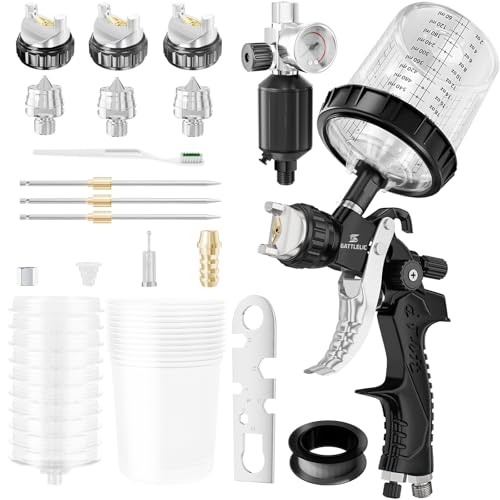
- Includes filter regulator
- Three nozzle sizes and 10 cups
- 275 L/min stated air consumption
Best For: Automotive and furniture painting with easier cleanup
Simple Everyday Sprayer

- 600 cc gravity-feed cup
- Three spray adjustment valves
- 1.4 mm stainless steel nozzle
Best For: Touch-ups and light-to-medium viscosity projects
Balanced Workshop Choice – VEVOR 6.3-Gallon Air Compressor
For shoppers comparing air compressors for spray painting, the VEVOR 6.3-gallon model offers a useful balance of tank capacity, portability, and pneumatic-tool versatility. Its oil-free motor delivers 3.35 CFM at 90 PSI, while the automatic protection features and noise-reduction design support regular workshop use.
Best For: DIY spray painting, tire inflation, nailing, and general auto or woodworking projects.
Pros:
- 6.3-gallon tank and 3.35 CFM at 90 PSI support a range of tools.
- Oil-free design requires less routine maintenance.
- Silencers, cooling fans, and automatic overheating protection improve usability.
- Casters and a portable design make repositioning easier.
Cons:
- At 43 pounds, it is portable but not especially lightweight.
- Its 70 dB noise rating may still be noticeable in small workspaces.
With its larger tank and dedicated spray-painting support, this VEVOR is a practical pick when you want one compressor for several workshop tasks rather than painting alone.
Precision Spray Gun Pick – AEROPRO R500 LVLP Spray Gun
The AEROPRO R500 is a spray gun rather than a compressor, but it is an important component to consider when building a setup around air compressors for spray painting. Its LVLP design uses 3.0–3.9 CFM at 2.0–3.5 bar, and the included nozzle sizes accommodate several coating types.
Best For: Automotive paint, furniture, cabinets, varnish, and top coats when paired with a compatible compressor.
Pros:
- LVLP operation is designed for controlled atomization and efficient air use.
- Includes 1.3 mm, 1.5 mm, and 1.7 mm nozzles for different viscosities.
- Two-stage trigger helps control airflow and paint delivery.
- Teflon-coated body and stainless steel nozzle and needle components aid cleanup and durability.
Cons:
- It does not include an air compressor, so a suitable compressor is required.
- Its 600 cc gravity-feed cup may require refills during larger projects.
This is a versatile gun for shoppers who already have, or are selecting, an air compressor capable of meeting its 3.0–3.9 CFM air demand.
Quiet Compact Option – MZB 2.4-Gallon Air Compressor
For air compressors for spray painting in tighter work areas, the MZB combines a compact footprint with a stated 5.65 CFM air delivery at up to 115 PSI. Its 2.4-gallon steel tank, oil-free motor, and 70 dB noise rating make it suited to portable painting and repair work.
Best For: Compact workshops, painting areas, auto repair, carpentry, nailing, and intermittent spray-gun use.
Pros:
- 5.65 CFM air delivery at 115 PSI provides strong stated airflow for its size.
- Compact 2.4-gallon tank and portable form are easy to move.
- Oil-free 1.2 HP motor avoids oil contamination.
- Professional silencers and filter cotton help limit operating noise and dust entry.
Cons:
- The smaller tank may provide less reserve air than a larger compressor.
- Its 70 dB rating is quiet for this category but not silent.
The MZB is appealing when space and portability matter most, though users planning extended continuous spraying should consider the practical limits of its smaller tank.
Handheld Finishing Alternative – HomeRight Super Finish Max Sprayer
The HomeRight Super Finish Max is a corded HVLP sprayer, not a tank-style compressor, so it offers a simpler alternative for shoppers researching air compressors for spray painting. It is designed to spray stains, sealers, and latex paint with less thinning and includes three brass tips for different applications.
Best For: DIY furniture, cabinets, trim, fences, decks, crafts, and other household finishing projects.
Pros:
- Standalone corded design does not require a separate air compressor.
- Three brass tips and three spray patterns support varied coatings and projects.
- Lightweight 3.5-pound body is easier to handle during household jobs.
- Includes a cleaning kit, wrench, nozzle adaptor, and instruction guide.
Cons:
- It is not a conventional compressor-powered spray-gun setup.
- The 40-ounce cup may require refilling on larger projects.
Choose this HomeRight when convenience and straightforward DIY finishing are more important than the larger air reserves and compressor compatibility of a traditional spray-painting system.
Quiet Workshop Pick – MZB 6.4-Gallon 1.2HP Air Compressor
For shoppers comparing air compressors for spray painting, this MZB model offers a practical balance of portability, tank capacity, and low-noise operation. Its 6.4-gallon steel tank, oil-free motor, 115 PSI maximum pressure, and listed 5.65 CFM airflow suit painting, tire inflation, nailing, and general workshop tasks.
Best For: DIY painting, compact workshops, auto repair, and users who prioritize quieter operation.
Pros:
- Oil-free 1.2HP motor helps avoid oil contamination during spraying.
- 6.4-gallon tank and 115 PSI maximum pressure support a range of workshop uses.
- Portable wheeled design with a listed 70–78 dB noise range.
- Includes an accessory bag and automatic shut-off feature.
Cons:
- The listed 5.65 CFM airflow may be less suitable for very air-hungry spray equipment.
- It is corded and requires a 110V power source.
This is a versatile choice when portability and reduced maintenance matter more than maximum airflow. Confirm that your spray gun’s CFM requirements match the compressor’s listed output before buying.
Complete Spray Gun Kit – InoKraft D1 LVLP Paint Sprayer
While comparing air compressors for spray painting, remember that the spray gun also affects finish quality and setup time. The InoKraft D1 LVLP kit includes a 600cc cup, three nozzle sizes, a regulator, oil-water separator, filters, hose connector, and cleaning supplies for a ready-to-start painting setup.
Best For: DIYers painting cars, furniture, and household projects who want a bundled LVLP spray-gun setup.
Pros:
- Includes 1.3mm, 1.5mm, and 1.7mm nozzle sets for different painting tasks.
- Comes with a pressure regulator and oil-water separator for more controlled spraying.
- Forged aluminum body with Teflon coating is designed for easier cleaning.
- Includes a 600cc paint cup, cleaning kit, storage box, and quick-start materials.
Cons:
- This is a spray gun kit, not an air compressor.
- Its maximum listed pressure is 50 PSI, so compressor settings must be matched accordingly.
- The included hose is listed at 1.8 meters, which may limit reach in larger work areas.
The D1 is a useful companion for an air compressor for spray painting, especially if you want accessories included rather than purchased separately. Check your compressor’s pressure and airflow compatibility before starting a project.
Higher-Output Quiet Pick – MZB 6.4-Gallon 1.5HP Compressor
Among air compressors for spray painting, this MZB model stands out for its higher listed airflow while retaining a compact 6.4-gallon format. The oil-free 1.5HP motor delivers up to 7.41 CFM at 115 PSI, and the wheeled design makes it practical for painting, auto repair, carpentry, and other workshop applications.
Best For: DIY spray painting and workshop users who need more airflow from a portable compressor.
Pros:
- Listed 7.41 CFM airflow provides more capacity than the comparable 1.2HP MZB model.
- 6.4-gallon steel tank and 115 PSI maximum pressure support varied applications.
- Oil-free operation reduces the need for oil-related maintenance.
- 70 dB noise rating, silencers, and wheels support more convenient workshop use.
Cons:
- The 6.4-gallon tank may still require cycling during extended spraying.
- It requires a 110V outlet and uses a corded power connection.
- Actual spray-gun suitability depends on the gun’s required CFM and pressure.
This is the stronger option of the two MZB compressors for users who value the higher listed airflow. Pair it with a compatible spray gun and verify CFM requirements for continuous or larger-area painting.
Versatile Starter Kit – ENDOZER HVLP Spray Gun Set
If you are comparing air compressors for spray painting, this ENDOZER HVLP set provides useful control and nozzle flexibility for common coating projects. It includes a 20 oz. gravity-feed cup, 1.4, 1.7, and 2.0 mm stainless steel nozzles, an air pressure gauge, and adjustment controls for fluid, pattern, and airflow.
Best For: Beginners and DIY users painting furniture, cars, murals, models, and other small-to-medium projects.
Pros:
- Includes three nozzle sizes for topcoats, primers, and different application needs.
- Gravity-feed 600 ml cup helps support efficient paint use.
- Brass hood and stainless steel nozzle and needle are designed for durability and consistent atomization.
- Includes a pressure gauge, quick adapters, and paint filter.
Cons:
- It is an air-powered spray gun, so a compatible compressor is required.
- The supplied notes specify that it is not intended for latex paint.
This is a flexible choice when you want one spray gun to cover several coating types and project sizes. The included controls and accessories also make it approachable for first-time users, provided your compressor can support the gun.
Regulated High-Capacity Kit – GATTLELIC HVLP Spray Gun
For shoppers evaluating air compressors for spray painting, this GATTLELIC HVLP gun stands out for its stated 275 L/min air consumption, included regulator/filter, and disposable cup accessories. Its three interchangeable nozzles and adjustable spray controls support primers, topcoats, clear coats, furniture work, and automotive painting.
Best For: Automotive and furniture projects where pressure control and easier cleanup are priorities.
Pros:
- Includes 1.4, 1.7, and 2.0 mm nozzles for different coatings and coverage needs.
- Built-in package includes an air compressor filter regulator for pressure adjustment and filtration.
- Ten disposable 600 cc cups can reduce cleanup time and solvent use.
- Provides adjustable fluid, fan, and airflow controls.
Cons:
- The stated 275 L/min air consumption calls for a compressor with substantial airflow capacity.
- Changing a nozzle requires changing the matching needle to help avoid leakage.
- Disposable cups may add ongoing consumable costs.
This package is especially practical for users who value included pressure regulation and faster cleanup. Before buying, verify that your compressor can meet the gun’s 2.5–3.5 bar working-pressure range and airflow demand.
Simple Everyday Sprayer – PNTGREEN 600CC HVLP Gun
If you need a straightforward option among air compressors for spray painting, the PNTGREEN H827 offers a 600 cc gravity-feed cup, a 1.4 mm stainless steel nozzle, and three adjustment valves. Its 3 bar operating pressure and 15 cfm air-consumption specification make compressor compatibility an important part of the buying decision.
Best For: Touch-ups and light-to-medium viscosity painting on cars, walls, wood, metal, leather, and household items.
Pros:
- Three controls adjust liquid volume, air volume, and spray range.
- Detachable 600 cc gravity-feed cup is designed to minimize leftover paint and simplify cleaning.
- Ergonomic handle and easy trigger are intended to reduce operating fatigue.
- 360-degree nozzle-cap adjustment helps direct the spray pattern.
Cons:
- Only one 1.4 mm nozzle is supplied, limiting nozzle-size flexibility.
- The 15 cfm air-consumption specification requires a suitably capable compressor.
- It is intended for light-to-medium viscosity materials rather than every coating type.
This gun keeps the setup relatively simple while still offering independent spray adjustments. It is a sensible fit for general touch-up work, as long as your compressor can deliver the specified airflow and pressure.
How We Picked the Best Air Compressors for Spray Painting
We focused on the specifications that matter most during spraying: delivered airflow, maximum pressure, tank size, duty demands, portability, noise, and compatibility with common HVLP and LVLP guns. We also considered whether each product is a standalone compressor, a spray gun, or a bundled painting solution, since buyers may need different parts of a complete setup.
Advertised CFM can differ from the compressor’s actual delivered CFM at a stated pressure. Treat manufacturer ratings as a starting point, and confirm the spray gun’s air requirement before buying. Oil-free models generally require less maintenance, while larger tanks can reduce cycling during continuous work.
Quick Comparison
| Setup type | Best suited to | What to check |
|---|---|---|
| Compact compressor | Small projects and touch-ups | Usable CFM, recovery time, tank size |
| Larger wheeled compressor | Furniture, panels, and longer sessions | Continuous airflow, duty cycle, portability |
| HVLP or LVLP spray gun | Controlled paint application | Required CFM, nozzle size, regulator |
| Complete spray setup | First-time buyers | Included fittings, hose, cups, and tips |
Key Buying Factors for Air Compressors for Spray Painting
Airflow and Spray-Gun Compatibility
CFM is usually more important than maximum PSI for painting. Compare the compressor’s delivered CFM at working pressure with the gun’s required CFM, leaving some headroom for stable atomization. A mismatch can cause pulsing, poor coverage, or an uneven finish.
Tank Capacity and Duty Cycle
A larger tank provides a reserve of compressed air and can reduce frequent motor starts, but it does not replace adequate continuous airflow. For brief jobs, a compact tank may be practical; for doors, panels, or multiple coats, choose a model with stronger recovery and a suitable duty cycle.
Noise, Oil, and Maintenance
Oil-free compressors are convenient for home workshops and reduce the risk of oil contamination, though they may run louder or have different durability characteristics than oil-lubricated designs. Quieter models are useful indoors, especially when spraying requires repeated compressor operation.
Moisture Control and Finish Quality
Use a regulator, moisture separator, and appropriate air filter. Condensation in the hose or tank can contaminate paint and create defects. Drain the tank regularly, use the correct hose fittings, and follow the spray gun’s recommended pressure and thinning guidance.
Who Should Buy Which Air Compressors for Spray Painting?
Choose a compact compressor for occasional touch-ups, small crafts, trim, and limited-area projects where portability matters more than nonstop airflow. A larger wheeled compressor is the better choice for furniture, automotive panels, and longer spray sessions, provided its delivered CFM meets the gun’s requirements.
HVLP guns suit users prioritizing transfer efficiency and reduced overspray, while LVLP models can work well with lower air consumption and smaller compressors. Buyers who already own a compatible compressor can purchase a spray gun separately; newcomers may prefer a kit with a regulator, cups, nozzles, and fittings. Before ordering, verify voltage, outlet requirements, hose connections, paint viscosity guidance, and the manufacturer’s CFM specifications.