Choosing among the best welding machines for automotive work means balancing sheet-metal control, portability, power requirements, and the flexibility to handle repairs beyond body panels.
This roundup compares 10 compact welders and multiprocess machines, from straightforward 120V flux-core units to dual-voltage models with TIG and plasma-cutting functions.
Best 10 Welding Machines for Automotive Work Picks for 2026
Versatile Garage Pick

- 4-in-1 MIG, flux-core, stick, and lift TIG capability
- 110V/220V input with synergic and manual controls
- Portable 19.4-pound design for garage or mobile work
Best For: Automotive DIYers needing multiple welding processes
All-in-One Shop Solution
MIG205MP Welder and Plasma Cutter

- Nine modes include welding, plasma cutting, cleaning, and spot welding
- 120V/240V operation with app-based controls and memory
- 60% duty cycle and up to 18mm listed maximum cut
Best For: Shops needing welding and plasma cutting versatility
Budget Bodywork Choice
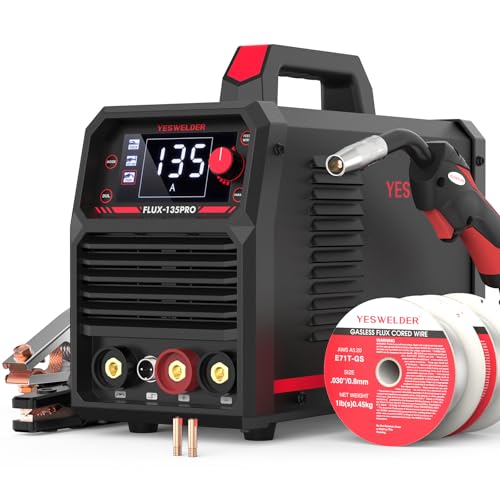
- Gasless flux-core MIG, stick, and lift TIG modes
- Includes .030-inch and .035-inch flux-core wire
- 11.4-pound body suits mobile repairs and thin panels
Best For: Beginners handling light automotive bodywork
Cutting and Welding Combo

- MIG, flux-core, HF TIG, stick, and plasma cutting functions
- 110V/220V input with synergic and manual MIG modes
- Compact 25.5-pound design includes a 2-year warranty
Best For: Automotive repairers needing welding and cutting in one unit
Best Compact Pick
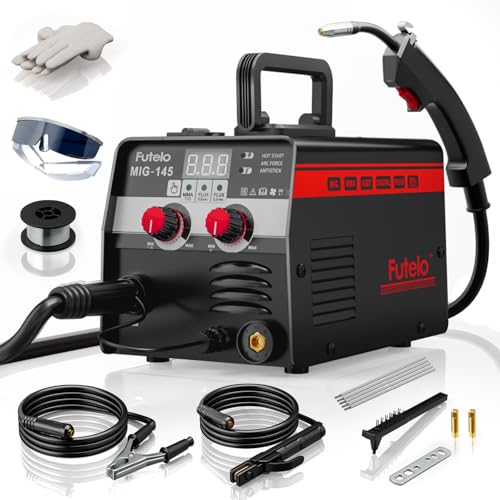
- MIG, stick, and lift TIG functions
- Lightweight 7.5-pound portable design
- Synergic controls and starter accessories included
Best For: Home garages and light automotive repairs
Best Simple Flux-Core Option
Lincoln Electric Weld-Pak 90i FC

- 120V flux-core wire-feed welder
- Portable 15-pound inverter with shoulder strap
- Two-knob controls and protective metal case
Best For: Small repairs, hobby projects, and mobile maintenance
Best All-in-One System

- Six welding and plasma-cutting functions
- 110V/220V dual-voltage operation
- Includes multiple torches and air accessories
Best For: Workshops needing versatile welding and cutting capability
Portable All-Rounder
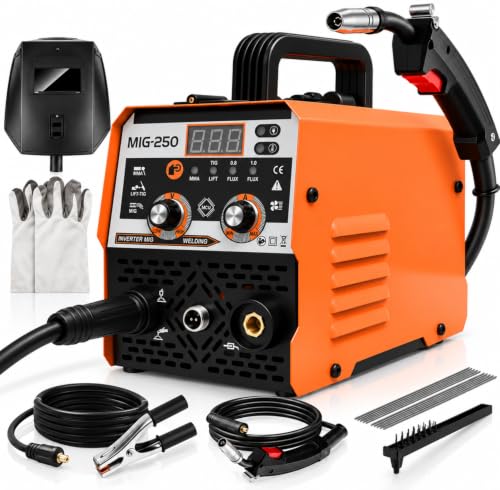
- MIG, Lift TIG, and Stick modes
- Synergic LED controls with manual adjustment
- Portable kit includes helmet, gloves, wire, and rods
Best For: Mobile workshops, home garages, and light automotive repairs
Feature-Rich Flexible Pick
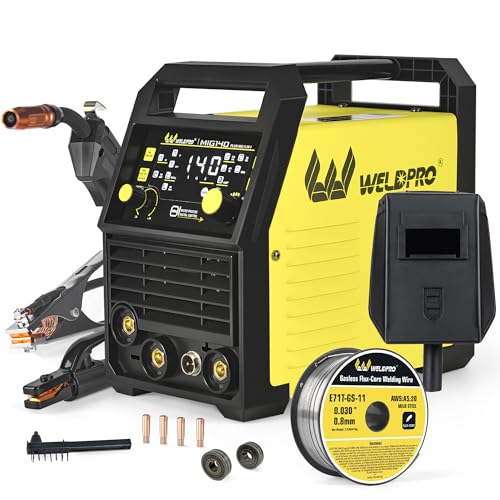
- Five functions, including spot welding
- Automatic 110V/220V voltage detection
- Includes flux-core wire, helmet, torch, and tips
Best For: Versatile garage and automotive repair work
Beginner-Friendly Garage Choice

- Flux Core MIG, Lift TIG, and Stick modes
- Synergic or manual control with LED display
- Includes auto-darkening helmet and core accessories
Best For: Beginners tackling light automotive and home repairs
Versatile Garage Pick – 160A Dual-Voltage MIG Welder
For shoppers comparing welding machines for automotive work, the YESWELDER 160A stands out as a flexible, portable option with MIG, flux-core, stick, and lift TIG capabilities. Its 110V/220V input and synergic controls make it practical for both garage projects and more demanding fabrication tasks.
Best For: Automotive DIYers who want one compact machine for multiple welding processes.
Pros:
- Supports gas MIG, flux-core MIG, stick, and lift TIG.
- Dual-voltage 110V/220V operation suits different workspaces.
- Synergic settings help beginners while manual controls serve experienced users.
- Lightweight 19.4-pound design includes a carrying handle.
Cons:
- Lift TIG torch must be purchased separately.
- Its 160A output may be less suitable for especially heavy-duty work.
The combination of process flexibility, spool compatibility, and adjustable controls makes this a well-rounded choice for automotive repairs, fabrication, and general DIY welding.
All-in-One Shop Solution – MIG205MP Welder and Plasma Cutter
The ARCCAPTAIN MIG205MP is a feature-rich option for welding machines for automotive work, combining MIG, TIG, stick, plasma cutting, cleaning, spot welding, and additional functions. Dual-voltage operation, app control, and a 60% rated duty cycle make it suited to varied garage and repair work.
Best For: Experienced DIYers and repair users who want welding and plasma cutting in one machine.
Pros:
- Offers nine operating modes, including MIG, TIG, stick, plasma cutting, and spot welding.
- 120V/240V dual-voltage design supports flexible power setups.
- App control provides parameter adjustment, monitoring, and saved presets.
- Plasma cutter reaches a listed maximum cutting thickness of 18mm.
Cons:
- The optional spool gun for aluminum welding is not included.
- At 46.2 pounds, it is substantially heavier than the other listed portable options.
- Power must be turned off before switching between 120V and 240V.
Choose this model when cutting capability and extensive process control matter as much as welding. Its broader feature set is useful for shops handling body repairs, equipment maintenance, and fabrication.
Budget Bodywork Choice – 135A Flux-Core MIG Welder
For thin automotive panels and outdoor repairs, the YESWELDER 135A offers a straightforward approach to welding machines for automotive work. It runs on 110V power, includes flux-core wire, and uses synergic control to help manage settings while reducing the risk of burn-through.
Best For: Beginners and mobile DIY users working on mild steel, thin panels, and outdoor projects.
Pros:
- Handles gasless flux-core MIG, stick, and lift TIG.
- Includes E71T-GS .030-inch and .035-inch flux-core wire.
- Synergic control and ±3V adjustment help fine-tune work on thin metal.
- Very portable 11.4-pound design with a carrying handle.
Cons:
- Only supports 110V input.
- Lift TIG torch is an extra purchase.
- Its listed mild-steel capacity is up to 3/32 inch, limiting heavier work.
This is a practical entry-level pick when portability, included wire, and gasless operation are priorities. Its 135A output is better matched to light automotive work than thick structural fabrication.
Cutting and Welding Combo – 6-in-1 Dual-Voltage Machine
This 6-in-1 machine broadens the usefulness of welding machines for automotive work by combining MIG, flux-core MIG, HF TIG, stick, plasma cutting, and spool-gun compatibility. Its 110V/220V support and compact 25.5-pound design make it suitable for workshops, outdoor repairs, and on-site maintenance.
Best For: Automotive users who need both welding and plasma cutting without buying separate machines.
Pros:
- Combines MIG, flux-core, HF TIG, stick, plasma cutting, and spool-gun compatibility.
- Synergic and manual MIG modes support beginners and experienced welders.
- HF TIG provides non-contact arc starting for thin and delicate metals.
- Plasma cutting offers listed clean-cut capacity up to 12mm at 220V.
Cons:
- Spool gun is compatible but not included.
- Plasma cutting requires compressed air.
- Its highest listed MIG output depends on 220V power.
The combination of HF TIG and plasma cutting gives this machine strong coverage for automotive fabrication and repair tasks. It is especially appealing when workspace and budget favor one multipurpose unit.
Best Compact Pick – 145A 3-in-1 MIG Welder
For shoppers comparing welding machines for automotive work, this 145A 110V model offers a lightweight option for repairs, DIY projects, and outdoor metalwork. It combines MIG, stick, and lift TIG functions in a 7.5-pound body, with synergic controls that can simplify setup for beginners.
Best For: Home garages, light automotive repairs, and portable DIY welding where compact size matters.
Pros:
- Three welding modes: MIG, stick, and lift TIG.
- Lightweight 7.5-pound design is easy to carry.
- Synergic control automatically adjusts voltage and wire speed based on selected settings.
- Includes a MIG torch, wire, rods, safety goggles, gloves, and other starter accessories.
Cons:
- TIG torch is not included and must be purchased separately.
- Its 145A output is aimed more at home repairs and light-duty work than demanding fabrication.
This is a practical entry-level choice when portability and simple controls are more important than maximum output. The included accessories make it convenient to start, but TIG users should budget for the additional torch.
Best Simple Flux-Core Option – Lincoln Electric Weld-Pak 90i FC
The Lincoln Electric Weld-Pak 90i FC is a straightforward choice among welding machines for automotive work, especially for small repairs and maintenance tasks. Its 120V input, two-knob control layout, protective metal case, and shoulder strap make it convenient for home workshops or mobile use.
Best For: Beginners, hobbyists, and small home or mobile repair jobs involving flux-core welding.
Pros:
- Works anywhere 120V input power is available.
- Portable 15-pound inverter design includes a shoulder strap.
- Simple controls adjust wire speed and voltage.
- Protective metal case helps shield the welder from the elements.
Cons:
- Flux-core-only design offers fewer process options than multiprocess welders.
- Best suited to small jobs and welds up to 1/4 inch, rather than heavier fabrication.
Choose this model if you want a recognizable, uncomplicated flux-core machine for occasional repairs. It gives up TIG, stick, and gas-MIG versatility in exchange for easier operation and convenient portability.
Best All-in-One System – FEMEROL 200A 6-in-1 Welder
For demanding versatility, the FEMEROL 200A is one of the most capable welding machines for automotive work in this group. It combines gas or gasless MIG, HF TIG, stick, spot welding, and plasma cutting, while supporting 110V or 220V input and cutting up to 10mm cleanly under the stated conditions.
Best For: Experienced DIY users and automotive workshops needing welding and plasma-cutting functions in one machine.
Pros:
- Six functions include MIG, HF TIG, stick, spot welding, and plasma cutting.
- Dual-voltage 110V/220V operation supports different work environments.
- HF TIG provides non-contact arc initiation for more precise work.
- Package includes MIG, TIG, and plasma torches plus an air filter regulator and other accessories.
Cons:
- At 42 pounds, it is substantially less portable than the smaller welders here.
- Plasma cutting requires compressed air and has its strongest stated performance at 220V.
- The broad feature set may be more than needed for occasional light repairs.
This is the strongest choice when a single machine must cover fabrication, detailed TIG work, and cutting. Its size and more involved setup make it better suited to a dedicated workshop than quick, grab-and-go repairs.
Portable All-Rounder – 145A 3-in-1 MIG Stick Welder
For shoppers comparing welding machines for automotive work, this 145A unit offers MIG, flux-core, Lift TIG, and Stick functionality in a compact package. Its synergic controls and LED display make setup approachable, while manual adjustments give experienced users more control for repairs and DIY projects.
Best For: Home garages, mobile repairs, and light-duty automotive or metalwork projects where portability matters.
Pros:
- Combines MIG, Lift TIG, and Stick welding in one machine.
- Synergic settings automatically adjust voltage and current based on selected wire and process.
- Compact 7.16-pound design and included helmet, gloves, wire, and rods support a ready-to-weld setup.
- Overheat, overcurrent, and overvoltage protection are built in.
Cons:
- Its 145A output is better suited to DIY, maintenance, and light industrial work than demanding heavy-duty fabrication.
- The supplied notes do not specify a dual-voltage input, so confirm compatibility with your available power.
This is a practical choice when one portable welder needs to cover several processes. The included accessories reduce setup costs, while the digital controls help beginners get started without eliminating manual adjustment options.
Feature-Rich Flexible Pick – WELDPRO 140A 5-in-1 Welder
Among welding machines for automotive work, the WELDPRO stands out for its five welding functions and automatic 110V/220V detection. It supports gasless flux-core MIG, Lift TIG, MMA, synergic or thickness-based MIG, and spot welding, giving repair-focused users flexibility across materials and tasks.
Best For: Automotive DIYers and workshop users who want multiple modes, dual-voltage convenience, and spot-welding capability.
Pros:
- Offers five functions, including spot welding, Lift TIG, MMA, and flux-core MIG.
- Automatically detects 110V or 220V input without manual switching.
- Synergic controls, a large LED display, and 2T/4T trigger modes simplify setup and longer jobs.
- Includes a helmet, 2-pound flux-core wire, contact tips, torch, and electrode holder.
Cons:
- The 140A output and stated thickness ranges may limit heavy automotive fabrication.
- Its many operating modes may require more setup familiarity than a basic single-process welder.
This model is the most versatile option in the group for users who value process variety. Automatic voltage detection is especially useful when moving between a home garage and other work locations, while the included accessories help get projects started quickly.
Beginner-Friendly Garage Choice – FEMEROL 140A 3-in-1 Welder
For buyers seeking welding machines for automotive work, the FEMEROL 140A combines Flux Core MIG, Lift TIG, and Stick modes with a simple synergic-control workflow. It supports welding up to 1/8 inch, accepts common flux-core wire sizes, and includes an auto-darkening helmet for a convenient home-workshop setup.
Best For: Beginners and DIY users handling home repairs, automotive maintenance, and light projects on carbon or stainless steel.
Pros:
- Three-process design covers Flux Core MIG, Lift TIG, and Stick welding.
- Synergic or manual control accommodates both beginners and experienced users.
- Lightweight 8.9-pound body includes a handle or shoulder strap for transport.
- Ready-to-use kit includes wire, torch, tips, clamps, holders, and an auto-darkening helmet.
Cons:
- Its 140A output and 1/8-inch stated capacity are aimed at light-to-medium work rather than thick fabrication.
- The supplied information lists 110V power only, limiting flexibility compared with dual-voltage models.
The FEMEROL is a straightforward option for a garage user who wants multiple processes without a complicated setup. Its lightweight design and included helmet are useful advantages for occasional automotive repairs and general DIY work.
How We Picked the Best Welding Machines for Automotive Work
We focused on machines suited to common automotive tasks such as patching rust, repairing brackets, fabricating exhaust components, and working with mild steel. The comparison emphasizes process versatility, input-voltage flexibility, portability, controls, duty-cycle practicality, and the availability of useful accessories.
Because product listings can vary by package and seller, verify the included torch, gun, ground clamp, regulator, consumables, and warranty before ordering. Specifications such as maximum amperage and process count are useful, but real-world results also depend on material thickness, shielding gas, wire selection, and operator technique.
Quick Comparison
| Machine type | Best suited to | Main advantage | Potential limitation |
|---|---|---|---|
| 120V flux-core or MIG | Home garages and light repairs | Simple setup and standard outlet compatibility | Less headroom on thicker steel |
| 110V/220V multiprocess | Mixed automotive fabrication | More power and process flexibility | Usually costs more and requires more setup |
| MIG/TIG/stick combinations | Users who want one general-purpose machine | Handles varied projects and materials | Accessory quality and controls vary |
| Welder/plasma combos | Repair and cutting stations | Combines welding and metal cutting | May compromise convenience versus dedicated tools |
Key Buying Factors for Automotive Welding Machines
Process and Material Control
MIG is generally the easiest starting point for automotive steel because it offers fast, controllable welds. Flux-core operation is useful outdoors or where shielding gas is impractical, while gas MIG typically produces cleaner results on visible bodywork. Lift TIG can help with precise work, but it is slower and usually requires more skill.
Voltage, Amperage, and Duty Cycle
A 120V machine is convenient for a home garage, especially for thin panels and light brackets. Dual-voltage models provide more operating flexibility and may deliver better performance on thicker material when connected to 220V. Do not judge capacity by peak amperage alone; check the rated output, duty cycle, recommended material range, and circuit requirements.
Controls, Portability, and Consumables
Synergic settings, thickness guidance, an LED display, and an included spool gun or TIG accessories can simplify setup. Compact weight matters when the welder must move around a vehicle. Also confirm wire-size compatibility, torch connections, replacement parts, and whether the machine supports the gas cylinder and regulator arrangement you plan to use.
Safety and Workspace Requirements
Use proper eye and skin protection, ventilation, fire-resistant clothing, and a clear work area. Remove or shield combustible materials, disconnect sensitive vehicle electronics as appropriate, and follow the manufacturer’s grounding and duty-cycle instructions.
Who Should Buy Which Welding Machines for Automotive Work?
Choose a compact 120V MIG or flux-core model if you mainly repair thin automotive steel and want simple garage operation. Choose a dual-voltage multiprocess welder if you expect to fabricate brackets, work on thicker components, or want room to expand into TIG or stick welding. Choose a welder/plasma combo if cutting sheet and plate is as important as joining them, provided you can support its electrical and air requirements. For frequent professional use, prioritize duty cycle, serviceability, torch quality, and warranty support over the largest process-count claim.