Choosing your first welder can feel complicated, especially when machines combine MIG, flux-core, TIG, and stick capabilities in one compact package. The best welding machine for beginners should make setup straightforward while providing enough control for common repairs and small fabrication projects.
This roundup compares 10 accessible options across power input, welding processes, portability, controls, and included accessories. Use the buying guide below to narrow the list based on your materials, workspace, and experience level.
Best 10 Welding Machine for Beginners Picks for 2026
Best Beginner MIG Kit
BESTMIG 135A 3-in-1 Flux Core Welder

- MIG, Lift TIG, and Stick modes
- Synergic controls simplify setup
- Helmet, gloves, and wire included
Best For: New welders starting home and DIY projects
Best Compact Stick Starter

- Portable lunchbox-sized design
- Hot Start and Anti-Stick support beginners
- 20 rods and basic accessories included
Best For: Light home repairs and stick-welding practice
Best Multifunction Upgrade
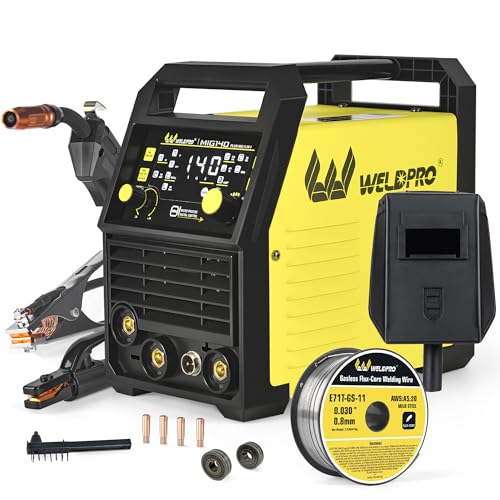
- Five welding functions in one unit
- Automatic 110V/220V detection
- Helmet, wire, torch, and leads included
Best For: Beginners wanting flexibility to grow
Best Budget Portable Stick Welder

- Ultralight 3.7-pound portable design
- Hot Start, Arc Force, and Anti-Stick
- 20 rods, gloves, and chip hammers included
Best For: Portable DIY repairs and beginner practice
Best Beginner MIG Pick
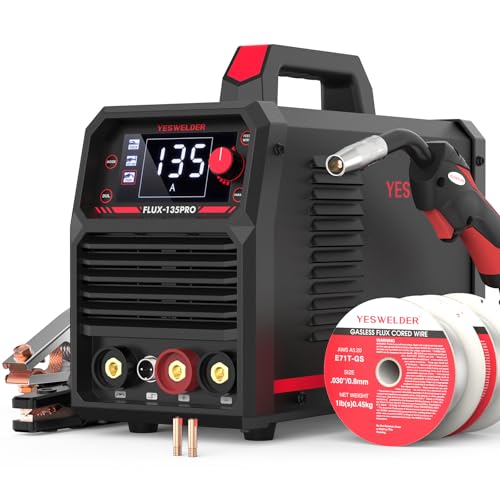
- Synergic control simplifies setup for new welders
- Includes flux-core wire and core accessories
- Lightweight 110V design for DIY and outdoor work
Best For: Beginners doing light-duty mild-steel repairs and DIY projects
Best Beginner Stick Option
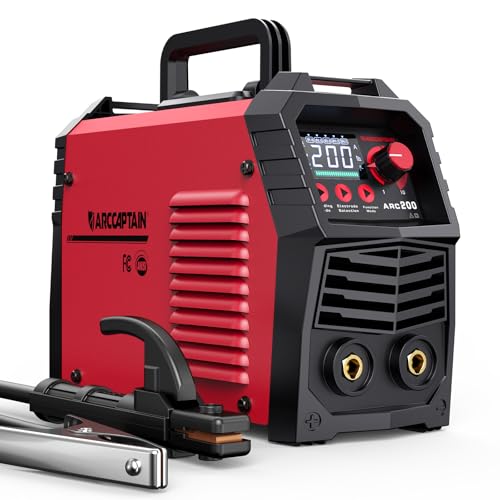
- Synergic control supports easier electrode setup
- Works with 110V or 220V power
- Portable design includes strap and long leads
Best For: DIY, farm, garage, and outdoor stick-welding repairs
Best Feature-Rich Starter
Dual-Voltage 4-in-1 Pulse Welder
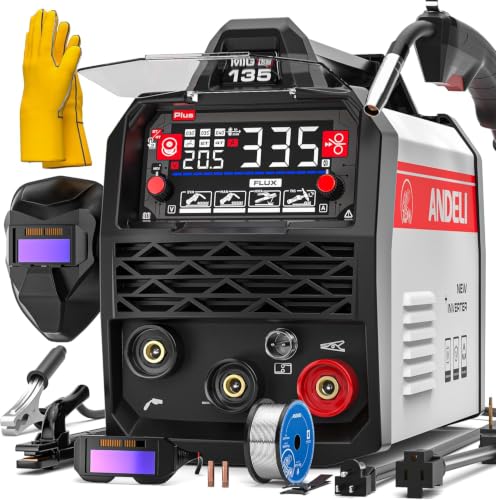
- Offers pulse MIG, MIG, lift TIG, and stick modes
- Runs on 110V or 220V power
- Includes helmet, gloves, wire, and accessories
Best For: Beginners wanting a versatile setup for varied home and field projects
Best Lightweight Starter
FEMEROL 140A 3-in-1 MIG Welder

- Three welding modes for varied DIY tasks
- Synergic controls help simplify setup
- Includes helmet and essential accessories
Best For: Beginners prioritizing portability and a ready-to-weld kit
Best Dual-Voltage Option

- Works with 110V or 220V power
- Offers four welding processes
- Synergic and manual controls support skill growth
Best For: Beginners needing flexible power and multi-process capability
Best Feature-Rich Kit

- Three welding processes with synergic control
- Includes helmet and flux-core starter supplies
- Adds 2T, 4T, and Spot trigger modes
Best For: Beginners wanting a feature-rich 110V workshop setup
Best Beginner MIG Kit – BESTMIG 135A 3-in-1 Flux Core Welder
If you want a welding machine for beginners that is ready to use with minimal setup, the BESTMIG 135A is a practical option. Its synergic digital controls help adjust settings, while MIG, Lift TIG, and Stick modes provide room to grow. The included helmet, gloves, wire, and basic leads make it especially convenient for home workshop projects.
Best For: Beginners who want a versatile, mostly ready-to-weld kit for DIY and home metalwork.
Pros:
- Offers MIG, Lift TIG, and Stick welding in one portable machine.
- Synergic controls and a full-color LED display simplify setup.
- Includes flux-core wire, helmet, gloves, torch, electrode holder, and ground clamp.
Cons:
- The TIG torch is not included.
- Its 135A output is intended for materials up to about 1/8 inch thick.
For a first welder, the BESTMIG combines approachable controls with useful process flexibility. It is a strong fit if included safety gear matters, though buyers specifically planning TIG work will need to purchase the torch separately.
Best Compact Stick Starter – 250A 110V Portable Arc Welder
This compact stick welder is a straightforward welding machine for beginners who primarily need to handle home repairs. Hot Start, Arc Force, and Anti-Stick functions can make arc initiation and rod control less frustrating. It runs from a standard 110V outlet and includes rods and basic accessories, but you will need to supply a welding helmet.
Best For: DIY users tackling steel, iron, stainless steel, and light repair work with stick electrodes.
Pros:
- Small, portable design with adjustable settings from 20A to 250A peak.
- Hot Start, Arc Force, and Anti-Stick features support easier arc control.
- Includes 20 rods, gloves, brush, electrode holder, and earth clamp.
Cons:
- The welding helmet is not included.
- The stated effective output at 110V is 150A, despite the 250A peak rating.
- Not suitable for aluminum welding.
Its simple stick-welding format and small footprint make it convenient for occasional repairs and practice. Use a dedicated 20A circuit for best results, and remember that thin sheet metal requires extra care to avoid burn-through.
Best Multifunction Upgrade – WELDPRO 140A 5-in-1 Welder
For beginners who want a welding machine for beginners with more room to expand, the WELDPRO 140A offers five welding functions and automatic voltage detection. Its intelligent controls adjust voltage and wire feed speed based on material and thickness, while the LED display and 2T/4T modes add convenience for short or extended jobs.
Best For: New and improving welders who want MIG flexibility, outdoor gasless operation, and multiple process options.
Pros:
- Combines synergic and traditional MIG, MMA, Lift TIG, and spot welding.
- Automatically detects 110V or 220V input.
- Includes helmet, 2-pound flux-core wire, torch, tips, holder, clamp, and brush.
- Compact 7.5-pound design with 2T and 4T trigger modes.
Cons:
- Its MIG thickness range is listed as 1–4mm, so it is not aimed at very heavy material.
- The supplied information lists the power source as gas-powered, while the welder is designed for gasless flux-core use; buyers should verify configuration details.
The WELDPRO stands out when versatility and future expandability matter more than the simplest possible machine. Automatic input detection and synergic controls are useful for newcomers, while the additional modes can remain valuable as skills develop.
Best Budget Portable Stick Welder – Hpoouo 200A Mini Arc Welder
The Hpoouo 200A is a basic welding machine for beginners who value portability and a low-complexity stick setup. Its 110V input, 20–200A adjustment range, and Hot Start, Arc Force, and Anti-Stick functions support practice and small repairs. Twenty rods, gloves, and chip hammers are included, although eye and face protection is not listed.
Best For: Beginners and hobbyists who need an ultracompact stick welder for light home, garage, or remote repairs.
Pros:
- Very compact 3.7-pound machine that fits in a toolbox or backpack.
- Supports common 1/16- to 1/8-inch electrodes, including E6013, E6011, E6010, E7018, and E308.
- Includes 20 rods, gloves, two chip hammers, and protective operating features.
Cons:
- A welding helmet is not listed among the included accessories.
- Stainless steel use is specified for E308L-16 rods.
- Stick welding requires more technique on thin material to prevent burn-through.
Choose this Hpoouo model if easy transport is a priority and your projects fit within the stated 0.06- to 0.2-inch thickness range. Its beginner-friendly arc features help, but complete safety gear still needs to be part of your setup.
Best Beginner MIG Pick – Portable 135A 3-in-1 Welder
If you want a welding machine for beginners that is easy to start with, the YESWELDER 135A offers synergic control to help match voltage and wire-feed speed. Its gasless flux-core setup is practical for outdoor work, while MIG, stick, and lift-TIG capability provide room to expand.
Best For: Beginners handling light-duty mild-steel projects, thin material, outdoor repairs, and general DIY work.
Pros:
- Synergic control and voltage micro-adjustment help simplify setup and reduce burn-through risk on thin panels.
- Includes .030-inch and .035-inch E71T-GS flux-core wire, plus a MIG torch, electrode holder, and ground clamp.
- Compact 135A, 110V design weighs about 11.4 pounds and includes over-current, overload, and overheating protection.
Cons:
- Its 135A output is intended for mild steel up to 3/32 inch, limiting heavier fabrication work.
- Lift-TIG requires an additional torch.
The straightforward controls, included flux-core wire, and portable design make this a practical entry point for beginners. Choose it if you prioritize easy gasless MIG welding and occasional multiprocess flexibility over high-output capacity.
Best Beginner Stick Option – Dual-Voltage 200A ARC Welder
The ARCCAPTAIN ARC200 is a welding machine for beginners who prefer stick welding and want the flexibility of 110V or 220V input. Its synergic control, readable LED display, and adjustable hot start and arc force help make electrode welding easier to learn.
Best For: Home DIY, farm maintenance, garage repairs, and outdoor stick welding with mild or stainless steel.
Pros:
- Supports common 6010, 6011, 6013, and 7018 electrodes and provides up to 200A output.
- Synergic control automatically matches settings to electrode diameter, while anti-stick helps prevent electrodes from sticking.
- Dual-voltage capability, a shoulder strap, 10-foot leads, and a weight of about 7.2 pounds support portable use.
Cons:
- Lift-TIG is available, but the torch is not included.
- Stick welding requires learning electrode handling and produces slag that must be removed.
- The instructions caution users to wait for the screen and fan to stop before powering off.
With strong stick-welding support and adjustable arc controls, this model offers useful learning assistance without limiting you to a single voltage. It is a better fit than a basic MIG unit if outdoor repair work and electrode welding are your main priorities.
Best Feature-Rich Starter – Dual-Voltage 4-in-1 Pulse Welder
For beginners seeking a welding machine for beginners with room to grow, the ANDELI 135A combines pulse flux-core MIG, gasless MIG, lift TIG, and stick modes. Dual-voltage operation, synergic control, and an included helmet and gloves make this a versatile starter package.
Best For: Beginners who want a broad multiprocess setup for home projects, field work, carbon steel, stainless steel, and somewhat thicker material.
Pros:
- Four welding modes include pulse flux-core MIG, gasless MIG, lift TIG, and MMA stick welding.
- Supports 110V and 220V input, .030-inch to .040-inch flux-core wire, and material up to 3/16 inch according to the supplied notes.
- Includes flux-core wire, contact tips, torch components, a helmet, and leather gloves, with a 4.1-inch protected LED display.
Cons:
- Lift-TIG torch is sold separately.
- The many modes and adjustments may take longer for a complete beginner to learn than a single-process welder.
- Although the machine itself is listed at 9.04 pounds, the package weight is about 18.46 pounds.
This is the most versatile option of the three, particularly if you want one machine for changing projects and both household and higher-voltage outlets. Its included protective gear reduces startup purchases, while the extra modes and controls offer useful long-term flexibility.
Best Lightweight Starter – FEMEROL 140A 3-in-1 MIG Welder
For beginners seeking a welding machine for beginners, the FEMEROL 140A offers a straightforward starting point with synergic controls that match voltage and wire speed to the selected wire diameter. Its 110V design, compact size, and included helmet make it practical for home repairs and DIY work.
Best For: Beginners who want a lightweight, ready-to-use machine for flux-core MIG, Lift TIG, and stick welding.
Pros:
- Three welding modes: Flux Core MIG, Lift TIG, and Stick.
- Synergic control simplifies initial setup for newer welders.
- Includes a welding helmet, flux-cored wire, torch, clamps, and consumables.
- Weighs 8.9 pounds and includes a handle and shoulder strap.
Cons:
- Limited to 110V operation.
- Lift TIG torch is not listed among the included components.
- Its 140A output is specified for materials up to 1/8 inch.
The FEMEROL is a particularly accessible choice when portability and an out-of-the-box setup matter most. Its safety protections and digital display add reassurance, while manual controls leave room to develop welding skills.
Best Dual-Voltage Option – YESWELDER 160A 4-in-1 Welder
The YESWELDER 160A is a flexible welding machine for beginners who may need to work from either 110V or 220V power. Its synergic controls provide recommended settings automatically, while manual adjustment supports users who want more control as their experience grows.
Best For: DIYers and beginners who want dual-voltage flexibility plus MIG, flux-core, stick, and Lift TIG capability.
Pros:
- Supports Flux Core MIG, Gas MIG, Stick, and Lift TIG.
- 110V/220V operation suits different workshop power setups.
- Handles 2-pound and 10-pound spools with compatible wire sizes.
- Includes a gas hose, drive roller, torches, clamps, and a 220V-to-110V adapter.
Cons:
- Lift TIG torch must be purchased separately.
- At 27.5 pounds, it is heavier than the FEMEROL option.
- The supplied notes list an adapter, but users should verify their intended power setup before welding.
This model stands out for its combination of beginner-friendly automation and longer-term flexibility. Dual-voltage support is useful if your workspace changes, and the 160A output broadens its suitability for automotive, fabrication, and general DIY applications.
Best Feature-Rich Kit – BILT HARD 135A 3-in-1 Welder
The BILT HARD 135A is a welding machine for beginners that combines automatic synergic setup with useful operating modes. Its 110V IGBT inverter design, LED display, and included solar-powered helmet make it suited to garage, farm, rooftop, and other DIY projects.
Best For: New welders who want multiple trigger modes, visible settings, and a complete flux-core starter package.
Pros:
- Supports Flux Core MIG, Lift TIG, and Stick welding.
- Synergic control automatically adjusts voltage and wire feed speed.
- Includes 2T, 4T, and Spot modes for different welding tasks.
- Comes with a solar helmet, MIG gun, ground clamp, wire, tips, and brush-hammer.
Cons:
- Lift TIG torch is not included.
- Operates on 110V only.
- Its listed item weight is 76 pounds, so portability may be a concern.
The BILT HARD offers more operating controls than a basic starter welder, including burn-back, inductance, hot-start, and arc-force functions. Error codes and automatic shutdown add a useful safety layer, though its listed weight makes it better suited to a fixed work area.
How We Picked the Best Welding Machine for Beginners
We focused on machines that balance approachable operation with useful long-term capability. Key considerations included 110V compatibility for standard household outlets, dual-voltage flexibility where available, process selection, output range, portability, control simplicity, and the availability of beginner-friendly features such as synergic settings or LED displays.
We also considered whether a welder can handle common home tasks, including mild-steel repairs, brackets, gates, hobby fabrication, and maintenance work. Product bundles with helmets, electrode holders, or starter consumables may improve initial value, but protective equipment and consumables should still be checked for quality and compatibility.
Quick Comparison
| Best For | Look For | Most Useful Feature |
|---|---|---|
| Simple home repairs | Flux-core or stick operation | Minimal setup without shielding gas |
| Cleaner steel welds | Gas MIG capability | Better appearance and less spatter |
| Multiple project types | 3-in-1 or 5-in-1 operation | MIG, stick, and lift-TIG flexibility |
| Frequent workshop use | Dual-voltage input | Compatibility with 110V and 220V circuits |
| Occasional portability | Compact inverter design | Lower weight and easier transport |
Key Buying Factors for a Welding Machine for Beginners
Power and Electrical Requirements
A 110V welder is convenient for garages and household outlets, but output and duty cycle can be limited on thicker material. Dual-voltage models offer more headroom when a suitable 220V circuit is available. Verify outlet requirements, input amperage, and extension-cord guidance before buying.
Welding Processes
Flux-core welding is often the easiest starting point for outdoor repairs because it does not require shielding gas. MIG with gas can produce cleaner results, while stick welding is practical for heavier steel and less-than-perfect surfaces. Lift TIG is useful for precise work but generally requires more technique and additional accessories.
Controls, Duty Cycle, and Usable Output
Simple amperage controls and synergic presets can shorten the learning curve. Do not judge a machine by peak amperage alone: duty cycle, stable arc performance, wire-size compatibility, and the manufacturer’s material recommendations matter more for sustained work.
Safety and Included Equipment
A helmet, gloves, flame-resistant clothing, ventilation, and proper eye protection are essential. If a bundle includes a helmet or rods, treat those items as convenient starters rather than a substitute for verified safety gear. Keep a fire-safe work area and follow the manual’s grounding and setup instructions.
Who Should Buy Which Welding Machine for Beginners?
Choose a compact 110V flux-core or stick model if you mainly need basic repairs, portability, and low setup complexity. A 3-in-1 MIG, stick, and lift-TIG machine is a better fit if you want to experiment with several processes without purchasing multiple welders.
Buy a dual-voltage model when you expect to weld thicker material, work regularly in a shop, or want flexibility for future projects. More advanced 4-in-1 and 5-in-1 machines suit users who value process variety and adjustable settings, provided they are willing to spend time learning correct setup.
Whichever model you select, start with scrap steel, match wire or electrode size to the material, and practice consistent travel speed before working on structural or safety-critical parts.