Oil Extractor Pump 12V 80W review is for buyers who want a cleaner way to handle routine oil changes without wrestling with drain plugs.
If you are looking for an electric fluid transfer pump for cars, mowers, boats, or similar DIY maintenance, this model is aimed squarely at that use case.
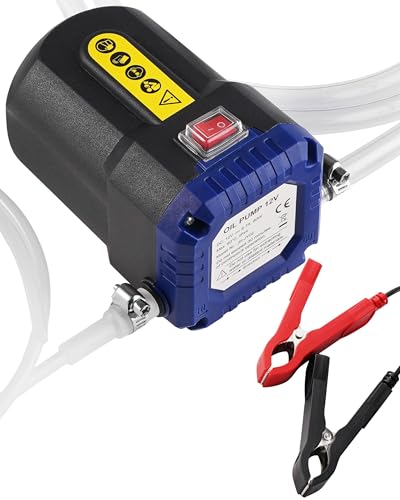
Oil Extractor Pump 12V 80W Review Summary
The main reason to consider this oil extractor pump is simple: it turns a messy job into a more controlled one.
The listing positions it as a dipstick-tube extractor for motor oil, gear oil, and transmission fluid, which makes it a strong fit for owners who service multiple small vehicles and want a quicker, cleaner process than traditional draining.
Best for: practical DIY maintenance, occasional home garage use, and buyers who value spill control and simplicity over speed.
Less ideal for: anyone wanting a universal pump for gasoline, diesel, or water, since the listing explicitly excludes those fluids.
Review Scorecard
| Category | Score | Editorial rationale |
|---|---|---|
| Ease of use | 8/10 | One-touch built-in power switch and electric pumping reduce hand work and setup friction. |
| Cleanup and control | 9/10 | Extracting through the dipstick tube is the biggest advantage for keeping the job contained. |
| Fluid versatility | 7/10 | Supports motor oil, gear oil, and transmission fluid, but not gasoline, diesel, or water. |
| Safety features | 8/10 | Overcurrent protection and a built-in stop are useful for avoiding run-on and overload issues. |
| DIY practicality | 8/10 | Well matched to cars, motorcycles, lawn mowers, boats, and Jet Skis. |
| Power and throughput | 6/10 | The listed 0.5L/min output is workable for light maintenance, but not especially fast. |
Key Features and Specifications of Oil Extractor Pump 12V 80W
This is a 12V DC, 80W electric oil transfer pump with a copper motor and a listed pumping rate of up to 0.5L/min for motor oil.
That combination tells you a lot about the intended buyer: someone with a battery-powered or vehicle-powered 12V setup who wants a simple extraction tool for routine fluid changes.
The most important feature is the dipstick-tube extraction method.
Instead of crawling under the vehicle and waiting for fluid to drain, the pump is designed to pull oil out from above.
For many home users, that alone is the difference between putting off maintenance and actually doing it.
The listing also emphasizes safety and control.
A one-touch built-in power switch is meant as an emergency stop, and the pump has overcurrent protection that powers it off if foreign objects are detected.
Those details matter more in a small workshop than they might seem on paper, because a compact extractor is only useful if it can be stopped quickly and protected from misuse.
What the listing says
| Spec | Detail |
|---|---|
| Power | 12V DC |
| Motor | 80W |
| Pump rate | Up to 0.5L/min of motor oil |
| Supported fluids | Motor oil, gear oil, transmission fluid |
| Not for | Gasoline, diesel, water |
| Use cases | Cars, motorcycles, lawn mowers, boats, Jet Skis |
| Control | Built-in power switch / emergency stop |
| Protection | Overcurrent protection |
The buyer takeaway is that this is a focused tool, not a general-purpose fluid transfer machine.
If your maintenance tasks are mostly oil-related, the feature set makes sense.
If you want something for fuel, coolant, or wet-shop cleanup, this is the wrong category.
Pros and Cons of Oil Extractor Pump 12V 80W
Pros
- Cleaner than traditional under-car draining for many routine oil changes.
- Electric operation reduces hand pumping and repeated physical effort.
- Built-in power switch adds a quick stop option.
- Overcurrent protection is a useful safeguard for a budget-minded DIY tool.
- Works across several common maintenance tasks, not just one vehicle type.
Cons
- The listed transfer speed is modest, so patience is part of the process.
- Not suitable for gasoline, diesel, or water.
- Best suited to fluid extraction, not broad workshop use.
- The product looks more specialized than premium, so expectations should stay aligned with the category.
The overall pros and cons profile is clear: this is a convenience-first extractor with sensible safety touches, but it is not a high-output shop pump.
That is a good trade if your priority is cleaner maintenance, not bulk transfer.
Who Should Buy Oil Extractor Pump 12V 80W?
Buy it if you maintain a car, motorcycle, mower, boat, or Jet Ski and want a straightforward way to remove old oil without laying on the ground.
It also makes sense if you service gear oil or transmission fluid at home and prefer a powered tool over manual siphoning or draining.
It is a better fit for practical DIY users than for heavy-duty mechanics.
The listed 0.5L/min flow suggests a tool for occasional maintenance, not a shop that needs to move large volumes quickly.
Skip it if you need one pump for many fluid types, especially fuel or water.
The listing is explicit about what it should not be used for, and that limit is important.
Also skip it if you want the fastest possible oil change workflow; this model is about control and convenience, not speed.
How the Oil Extractor Pump 12V 80W Fits a DIY Garage
Dipstick-tube extraction
The biggest practical advantage is the extraction method itself.
Pulling oil through the dipstick tube avoids the mess and awkward positioning of a conventional drain.
For users who do not want to mess with floor jacks, drain pans, or stubborn drain plugs every time, that matters more than almost any other specification.
Safety and shutdown behavior
The built-in power switch is more than a convenience feature.
In a small garage, being able to stop the pump quickly helps limit spills if the hose slips or the container is filling faster than expected.
The overcurrent protection is also valuable because it gives the product a basic layer of fault handling instead of leaving the motor unprotected.
Fluid compatibility
Its usefulness depends on staying within the intended fluid types.
Motor oil, gear oil, and transmission fluid are the core use cases here, and the listing supports that clearly.
The exclusion of gasoline, diesel, and water is not a minor footnote; it defines the product’s lane.
Buyers who respect that boundary are more likely to be satisfied with it.
Throughput and patience
At up to 0.5L/min for motor oil, this pump is not trying to win a speed contest.
That rate is acceptable for light-duty home maintenance, but it means the experience will feel deliberate rather than fast.
In practice, that is fine if your goal is a cleaner method, not a faster one.
Alternatives to Oil Extractor Pump 12V 80W
If you want a more established name in oil extraction, look at Mityvac oil extractor pumps.
They are a common reference point for hand and vacuum extraction setups.
If you prefer a broader DIY/garage tool brand, OEMTOOLS oil extractors are worth comparing for similar maintenance workflows.
If you want something more compact and transferable between small jobs, Draper fluid extractors can be a relevant alternative depending on the exact use case.
If your priority is less about extraction and more about moving fluids in a controlled way, 12V electric oil transfer pumps give you a broader Amazon search pool with different hose and motor configurations.
Is Oil Extractor Pump 12V 80W Worth It?
Yes, if your goal is a cleaner, simpler DIY oil-change tool for the fluids this unit is actually meant to handle.
The combination of dipstick-tube extraction, built-in shutdown control, and overcurrent protection makes it a sensible buy for routine home maintenance.
It is not the right pick if you need maximum speed, broad chemical compatibility, or heavy workshop durability.
For the right buyer, though, this oil extractor pump looks like a practical, focused tool that solves a real mess problem without much complexity.